
Triple offset butterfly valves (also known as Triple Eccentric Butterfly Valves) are high-pressure and high-temperature industrial valves widely used in petrochemical, natural gas, power generation, metallurgy, and other fields.
Their design features a triple eccentric structure (shaft eccentricity, sealing surface eccentricity, and conical eccentricity) to achieve zero leakage with metal-to-metal hard sealing, making them suitable for high-temperature, high-pressure, corrosive media, and frequent switching conditions.
However, the term “welded” has a dual meaning in the valve industry, leading to potential confusion during selection. Therefore, this article aims to thoroughly analyze the differences between these two meanings, their structural characteristics, manufacturing processes, applicable scenarios, and selection considerations to help engineers and purchasing personnel accurately understand and apply them.
1. First Meaning: Welded Connection (Weld Ends)
1.1 What is Butt Welding?
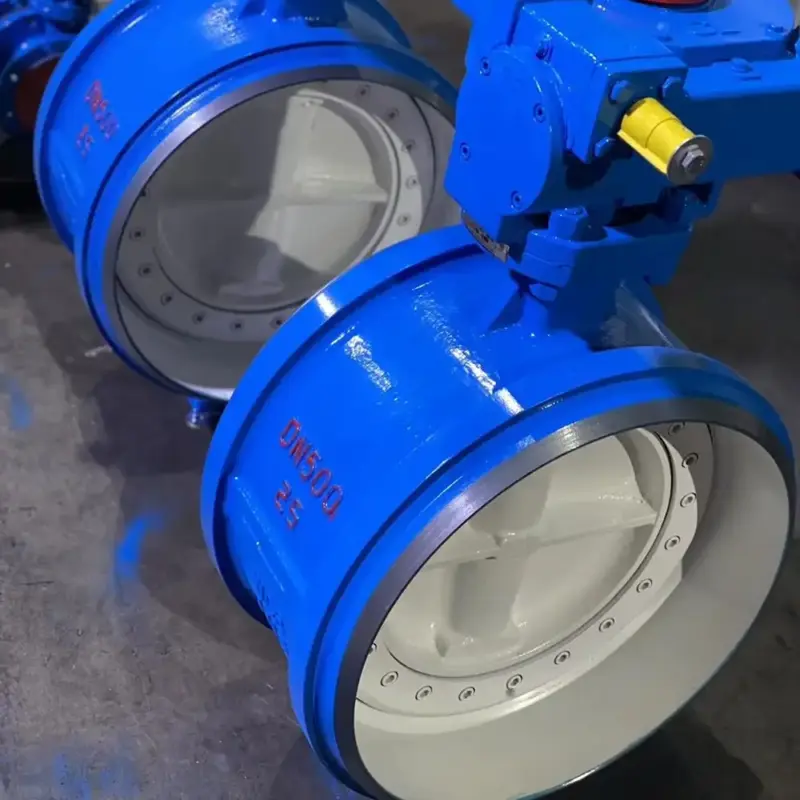
The two most common welding methods in valves are socket welding and butt welding. However, socket welding is generally not suitable for butterfly valves, so it will not be discussed here.
We will focus on butt welded ends, where the valve ends are machined with bevels and directly butt-welded to the pipeline, forming a permanent, fully welded connection. This design is also often referred to as “Butt Weld Triple Offset Butterfly Valve” or “BW Ends Triple Eccentric Butterfly Valve”.
1.2 Structural Characteristics of Butt Welding
The valve body of a butt welded butterfly valve is usually manufactured using casting technology, primarily using ductile iron, but also carbon steel (such as WCB, A105), stainless steel (such as CF8M, F316), and other alloy steels (such as WC6, WC9). The valve ends are weld ends, and the ends are machined with bevels according to ASME B16.25 or similar standards to facilitate on-site butt welding.
1.3 Advantages and Applicable Scenarios
Compared to conventional connection methods such as wafer, flanged, and lug connections, the biggest advantage of butt welding is achieving a fully welded, leak-free pipeline system. This is especially important when used in high-pressure, high-temperature, and flammable or explosive media applications. For example, in long-distance natural gas pipelines, cracking units of refining plants, and cryogenic pipelines of LNG receiving terminals, butt-welded butterfly valves can avoid the leakage risks associated with flanged connections, meeting the fire safety and fugitive emission requirements of standards such as API 6D and API 609. In addition, the fully welded structure reduces the weight of connecting parts, facilitating pipeline stress calculations and installation.
2. Second meaning: The valve body is manufactured by welding (Welded/Fabricated Body)
2.1 What is a fabricated valve body?

Another meaning of “welded” refers to the valve body itself not being integrally cast or forged, but manufactured from steel plates through welding (Fabricated Welded Body or Fully Welded Body).
These valves are often labeled as “Welded Body Triple Offset Butterfly Valve” or “Fabricated Triple Eccentric Butterfly Valve”.
2.2 Structure and manufacturing characteristics
For large-diameter valves (usually DN>3000 or even larger), casting processes face problems such as high mold costs, numerous casting defects, massive casting weight, high risk of shrinkage cavities and porosity, high scrap rate and transportation difficulties.
To address these issues, manufacturers use steel plates, cut, rolled, or segmented, and then assembled into a valve body through multiple welding processes. The valve body wall thickness can be optimized according to the design pressure, and is usually lighter than a cast valve body of the same specification. Material selection is more flexible; in addition to conventional steel plates, stainless steel plates, duplex steel plates, nickel-based alloy plates, etc., can also be used.
General manufacturing process:
Steel plate cutting
↓
Rolling or bending
↓
Welding into a cylindrical shape
↓
Welding flanges
↓
Welding reinforcing ribs
↓
Machining sealing surfaces
↓
Assembling valve shaft, valve plate, and valve seat
2.3 Advantages and applicable scenarios
The biggest advantage of welded valve bodies is their economy and flexibility. The mold costs for large-diameter cast valves are quite high, which is a significant burden for purchasers. Welded valve bodies, on the other hand, can be customized as needed, with shorter delivery times and lower costs.
At the same time, the welded structure facilitates local repair and material optimization, and is often used in cryogenic applications (such as LNG, liquid oxygen), highly corrosive environments (such as seawater desalination, chlor-alkali plants), and large flow rate, low pressure difference applications.
In addition, in weight-sensitive projects (such as offshore platforms, floating production units), welded valve bodies significantly reduce lifting and support costs. However, it’s worth noting that although welded valve bodies do not have problems such as porosity, their walls are thinner than those of cast butterfly valves, and their pressure bearing capacity is not as good as that of cast valves.
3. Differences in Meaning and Selection Suggestions
Core Differences
– Welded connection: The focus is on the “ends,” and the valve body itself is mostly cast/forged, suitable for small and medium-sized high-pressure systems.
– Welded valve body manufacturing: The focus is on the “valve body,” and the end connection can be butt-welded, flanged, or wafer type, suitable for large-diameter or special material systems.
In actual products, both may exist simultaneously, i.e., a combination of “butt-welded ends + welded valve body,” especially in large-diameter low-pressure and low-temperature valves.