
The use of valves is essential for controlling the flow of fluids or gases in pipelines. A wide range of valves is available, differing in their operation. Among these, gate valves and ball valves are also very common due to their practicality. However, people often debate gate valves vs ball valves.
There are different opinions about these valves due to their different designs and functionality. Some consider gate valves easier to use, while others prefer ball valves. This varying opinion can make you confused, especially if you’re a newbie. That’s where this article will help you by discussing the differences between these valve types.

Differences Between Gate Valve and Ball Valve
First things first – gate valves and ball valves differ in their flow-control capabilities. Gate valves come with uni-functionality (on/off). This means they can either fully stop or fully allow the flow of the fluid or gas. Simply put, they come with switch-on/off functionality.
In contrast, ball valves are more versatile, as they offer both on/off switching and fluid control. You can keep these valves partially open to get more control of fluid flow. If you want reduced fluid flow, you can keep the valve partially open. So some fluid will be able to pass through the hole present on the ball.
If you want to stop the flow, you can turn the lever to keep the ball sideways. This way, the hole won’t be aligned with the pipe, so no fluid will flow. There are many other differences between gate and ball valves. In the section below, I will explain these differences to help you choose the right valve.
1- Working Mechanism
Gate and ball valves have different working mechanisms. The gate consists of a wedge-shaped gate, which plays a key role in its working. This gate goes up and down when you move the handle. When you want fluid to flow, you can move the handle to keep the gate up. This way, the fluid will pass through. When you want to stop the flow, move the handle to keep the wedge-shaped gate down. When this gate is down, no fluid can pass through. With a gate valve, you can either fully stop the flow of the fluid or allow it to flow.
On the other hand, ball valves work differently. How? These valves consist of a rotating ball instead of a wedge-shaped gate. This ball has a hole in its center, and ball rotation can keep the hole in a different orientation. When the hole is aligned with the pipe, the fluid will pass through this hole. On the other hand, when the hole is misaligned, it will stop the flow. Like gate valves, ball valves also come with handles that allow you to operate these valves. You can turn the handle from 0 to 90 degrees to adjust the flow as needed. You can even keep the handle at 45 degrees to get more controlled flow.
2- Design & Structure
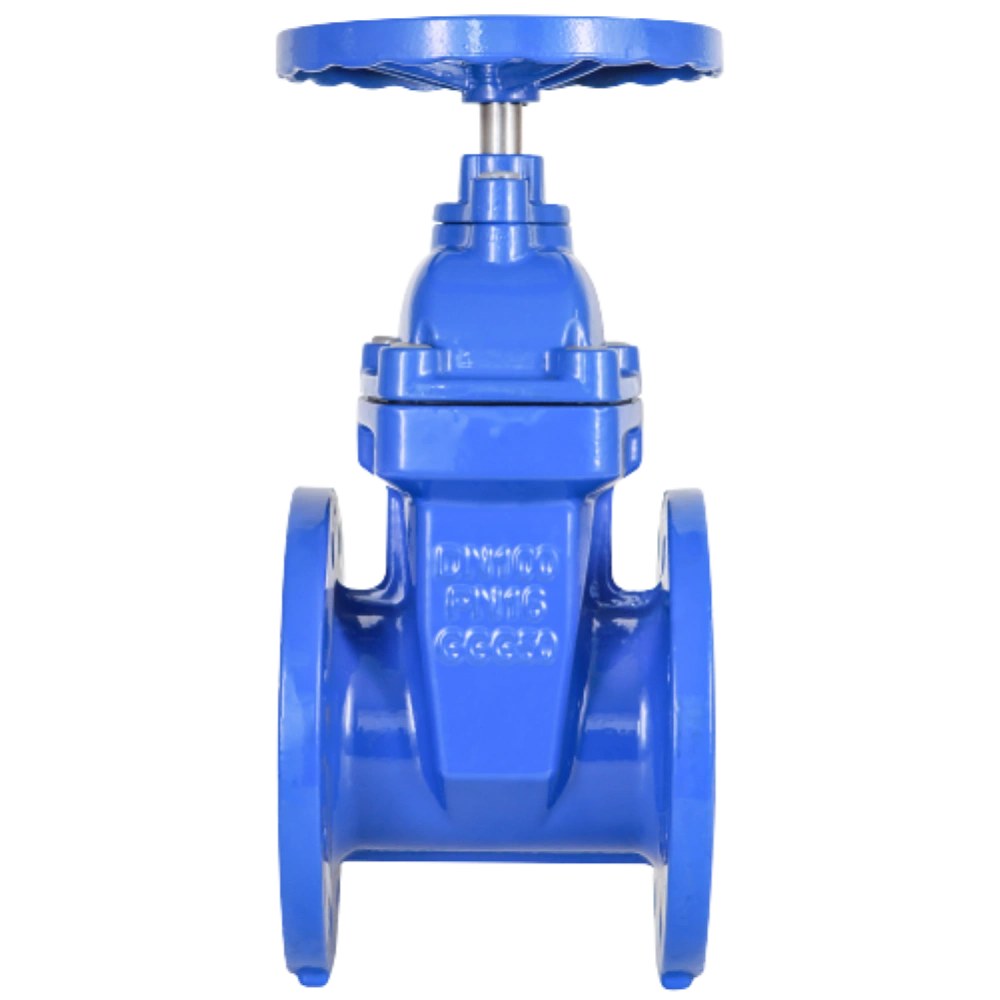
Gate valves are highly complex in their shape and design. They consist of a wedge-shaped gate that is designed to move up and down. Apart from this, gate valves also consist of threaded stems, handwheels, and seats. The gate moves between these two seats. You can turn the handwheel multiple times (more turns) to either stop the fluid flow or allow it to flow.
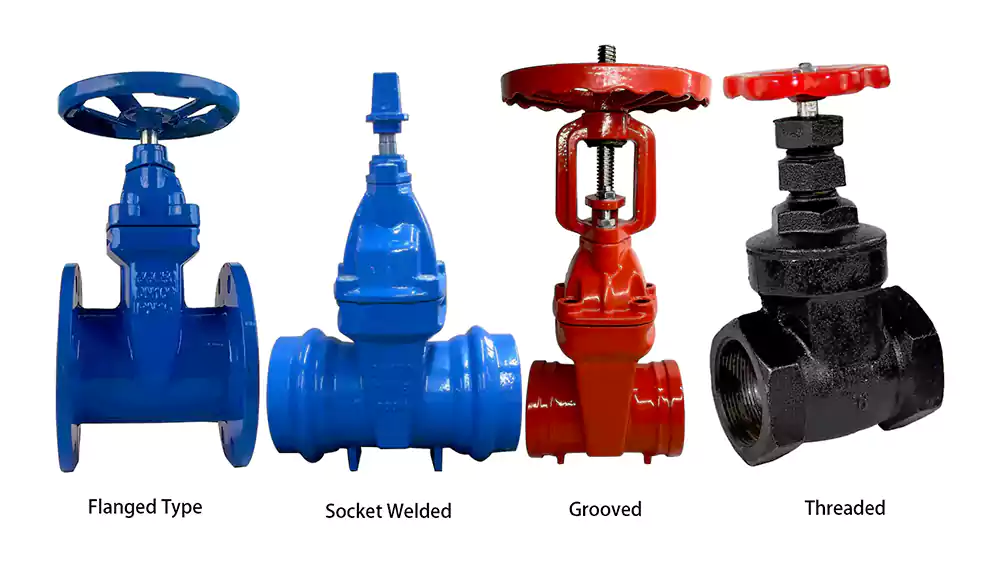
On the other hand, ball valves are more compact with fewer components. These valves consist of a circular ball. This ball has a hole in the center that is directly connected to the handle. You can move the handle to move the ball. Once the ball’s hole is aligned with the pipe, the fluid will pass through the hole. Unlike the gate valve, you don’t need to turn the handle multiple times. Instead, a quarter-turn is enough to operate the ball valves.
3- Operation Speed & Efficiency
Ball valves stand out for their operating speed and efficiency. How? That’s because these valves can be operated with a quarter-turn (90 degrees). You can move the handle to 90 degrees to operate them. This ensures smooth, quick operation, resulting in higher efficiency of the ball valves.

Remember, gate valves are very slow in terms of operating speed. That’s because these valves have handwheels that require multiple turns. This multiple-turn operation system makes these valves very slow. This becomes even more noticeable when you need to operate the valves quickly in an emergency. I recommend choosing a ball valve for faster, more efficient operation.
4- Functionality & Flexibility
As I said above, gate valves offer uni-directional functionality. They can be used to switch the water flow on or off. By turning the handle, you either keep the wedge-shaped gate up or down. When the gate is up, the fluid will flow smoothly. When the gate is down, it stops the flow of the fluid. On the other hand, ball valves offer dual functionality.
They allow switching the flow on or off and regulating the fluid flow. You can keep the handle wheel partially open to reduce flow instead of fully open. This ensures you get the flow or pressure you need. In other words, you can stop or allow the flow while maintaining precise liquid flow. The multiple functions of ball valves make them stand out for their flexibility.
5- Materials & Durability
Gate valves are typically less durable than ball valves. Various materials are used to make gate valves. These include stainless steel, brass, cast iron, and so on. The seat of these valves experiences constant friction due to valve operation. This friction causes wear on the seat.
As a result, the gate valve requires regular maintenance. On the other hand, ball valves are also made of similar materials: stainless steel, cast iron, and so on. However, their seat does not face aggressive friction. Their seats smoothly go around the rotating ball. Even the rotation of the balls does not cause aggressive friction for the seat. This results in minimal wear and better durability of the ball valves.
6- Pressure Drop & Sealing Performance
You won’t face any pressure-drop issues with the gate valve, which is a significant advantage. The reason is that these valves allow fluid or gas to pass through in a straight path. So the pressure of the fluid does not get affected during flow. However, the sealing of these gate valves is not very strong. The chances of leakage are relatively higher in these gate valves.
In ball valves, there is some pressure drop issue. Why? That’s because a ball is present inside the valve. This ball’s presence restricts the fluid, resulting in a drop in its pressure. The path of the fluid is not straight in ball valves. However, the sealing in these valves is excellent. The ball sits perfectly on the seats to prevent fluid or gas leakage.
7- Size & Ease of Installation
Gate valves are known for their bigger size, tall stem, and handwheel. They also have more components, which require more space for their work. So their size is big and feels bulkier. Due to their higher weight, installing these valves can be tedious. This becomes even more difficult if you want to install the gate valve in a tight space.
Conversely, ball valves are very compact, which sets them apart. They have fewer components, which makes them lightweight as well. Because they are lightweight, installing these valves is much easier. Above all, you can handle these valves with just a quarter turn. This makes the overall operation of the ball valves very smooth, easier, and quicker.
8- Cost & Applications
One of the standout advantages of gate valves is their low prices. In fact, this is the main reason behind the popularity of these gate valves. Even if you buy gate valves in larger sizes, they will be low-priced. However, the ongoing cost of these gate valves is higher, which is a significant drawback. You’ll face leakage issues that require regular maintenance.
Additionally, gate valves are not very durable, so they may need to be replaced over time. In contrast, ball valves come with a high initial cost, which might seem like a deal-breaker. However, these valves are very durable and don’t experience leakage. Their regular maintenance is minimal, which reduces their ongoing cost.
If you want a strong valve with premium performance, choosing ball valves makes sense. Gate valves are used in applications where shutting the flow on and off is required. On the other hand, ball valves are used when fluid regulation is also needed with shut-off and on functionality. Below is the table showing the applications of gate valves and ball valves:
| Gate Valve Applications | Ball Valve Applications |
|---|---|
| Water supply systems | Gas pipelines |
| Oil & petroleum pipelines | Chemical processing |
| Irrigation systems | Residential plumbing |
| Power plants | HVAC systems |
| Large industrial pipelines | Food & beverage industry |
| Underground pipelines | Quick shut-off systems |
Frequently Asked Questions
What are the advantages of gate valves?
Here are some advantages of gate valves:
- Low initial cost
- No pressure drop issue
- Strong fluid shut-off and on capability
What are the advantages of ball valves?
Ball valves are considered a premium option for most applications. Below are some key advantages of these valves:
- Compact size and lower weight
- Low ongoing (maintenance) cost
- Fast operational speed and dual functionality
- Easy to install and strong sealing performance.
Which valve is better for high pressure?
I consider the ball valve a better option for high-pressure applications. The reason is that these valves face no leakage issues. So they work best even if the gas or fluid pressure is too high.
Concluding: Which One to Choose, Gate or Ball Valve?
Still confused about the selection between gate and ball valve?
I recommend choosing a ball valve for most applications. Despite a higher initial price, these valves offer excellent durability and sealing performance. So, they can even be used in high-pressure applications. You won’t experience any leakage issues thanks to the strong seal. Above all, these valves are compact and easy to install even in tight spaces.
However, if you have a tight budget, choosing a gate valve is not a bad option. Although these valves have shortcomings, they can be a good starting point. Remember, you should never use a gate valve for applications where liquid pressure is too high. That’s because these valves experience sealing issues, which may result in gas and liquid leakage.