
1. What is a Manual Butterfly Valve?
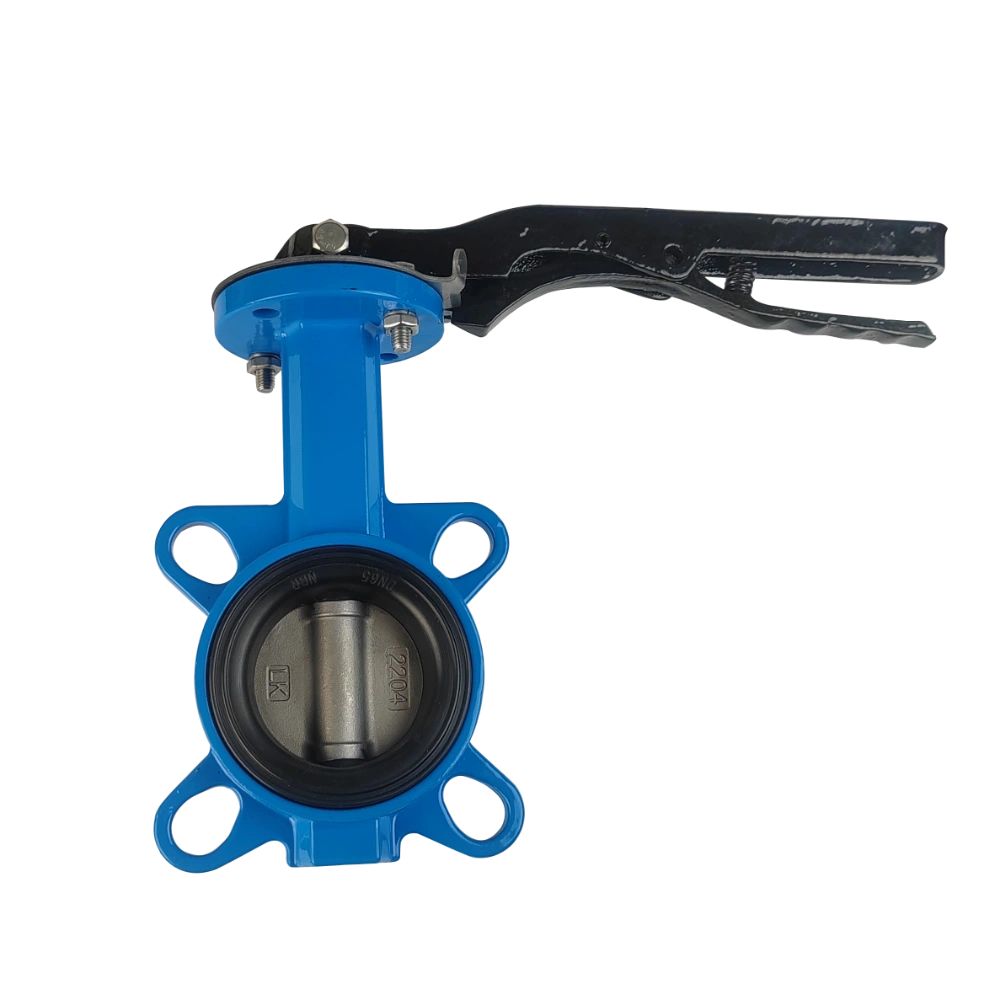
A manual butterfly valve is a control device that controls the flow of fluid in a pipeline by rotating a disc. The disc, commonly called a “butterfly disc,” is mounted on a shaft or stem connected to a handle or worm gear. An actuator applies force to the stem, rotating the disc 90 degrees. This allows the valve to be moved from fully open to fully closed, quickly and efficiently controlling flow.
2. Components of a Manual Butterfly Valve

2.1 Body:
The valve body primarily serves as a container for the internal components and, secondarily, as an outer shell that connects to the pipeline. It is typically constructed of cast iron, ductile iron, or stainless steel, depending on the application.
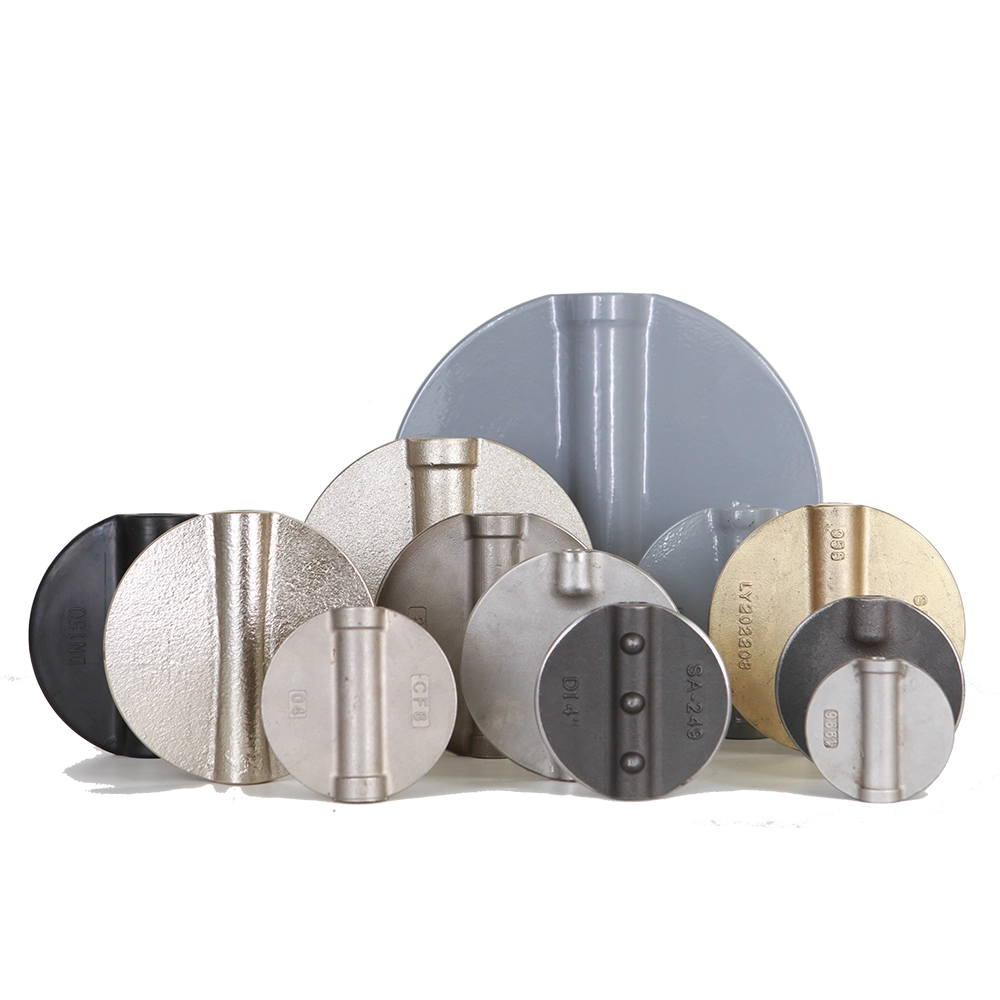
2.2 Disc:
The central component that controls flow. The position of the disc (parallel or perpendicular to the flow direction) determines whether the valve is open or closed.
2.3 Stem (shaft):
The rod that connects the disc to the actuator (handle or gear) and transmits rotational force to the disc.
2.4 Seat:
The sealing surface that the disc contacts to prevent leakage. The valve seat can be soft-sealed (e.g., EPDM, nitrile rubber) or hard-sealed (e.g., metal), depending on the application.
2.5 Handle or Gear:
A manual actuator is used to rotate the valve stem. Smaller valves typically use a lever handle, while larger valves use a worm gear to increase torque for easier operation.
2.6 Seals and O-rings:
Ensure a leak-free connection between the valve assembly and the pipeline, enhancing durability and reliability.
3. Operating Principle of a Manual Butterfly Valve
A manual butterfly valve is simple to operate. The disc is located in the center of the pipeline, and its rotation controls the flow of the medium. When the disc is rotated parallel to the flow direction, the medium passes with minimal resistance. Similarly, when the disc is perpendicular to the flow direction, it completely blocks flow. Alternatively, to regulate flow, the disc can be positioned at intermediate angles (e.g., 15° to 70°), partially allowing flow. However, prolonged throttling can cause wear on the disc and seat, so it is not recommended for precise control.
Manual operation is achieved through the following methods:
3.1 Lever handle:
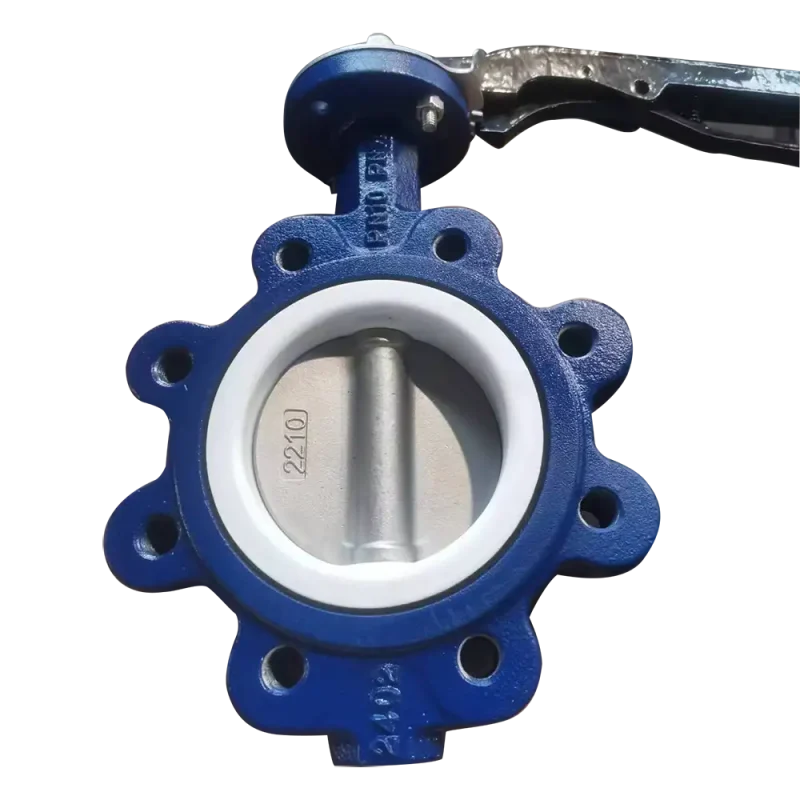
Used for smaller valves (up to DN 250 or 10 inches). The handle is manually rotated to open or close the valve. A locking quadrant secures the position.
3.2 Worm Gear (Turbine):
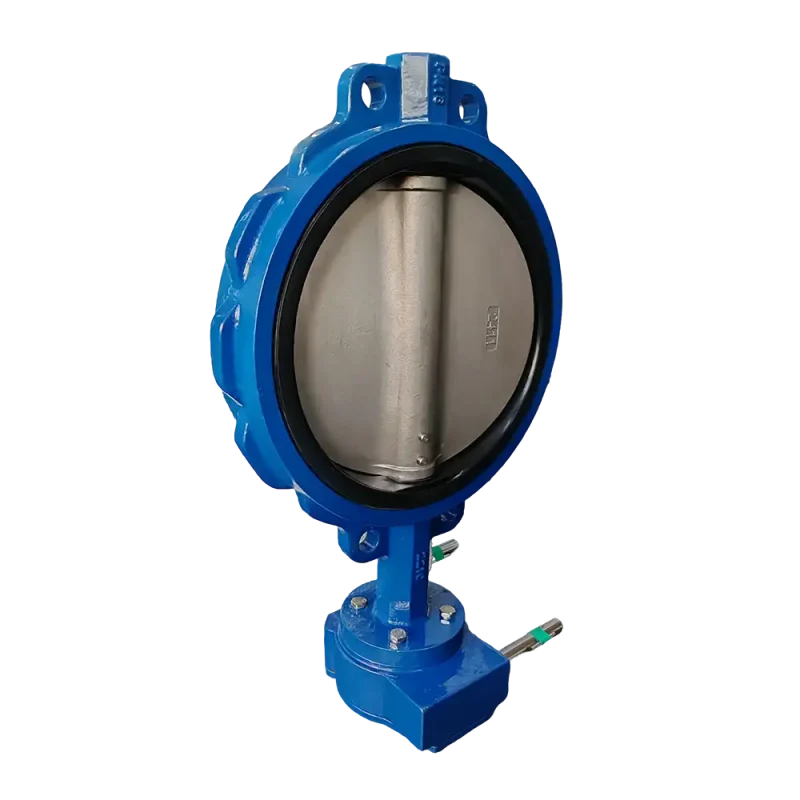
For larger valves, a gear mechanism increases torque, making operation easier. Rotating the handwheel drives the gear, moving the valve stem and disc.
4. Types of Manual Butterfly Valves
Manual butterfly valves come in a variety of designs to suit different applications. They are categorized by connection method, seal type, or disc configuration as follows:
4.1 Connection Method
4.1.1 Wafer-Type Butterfly Valves:
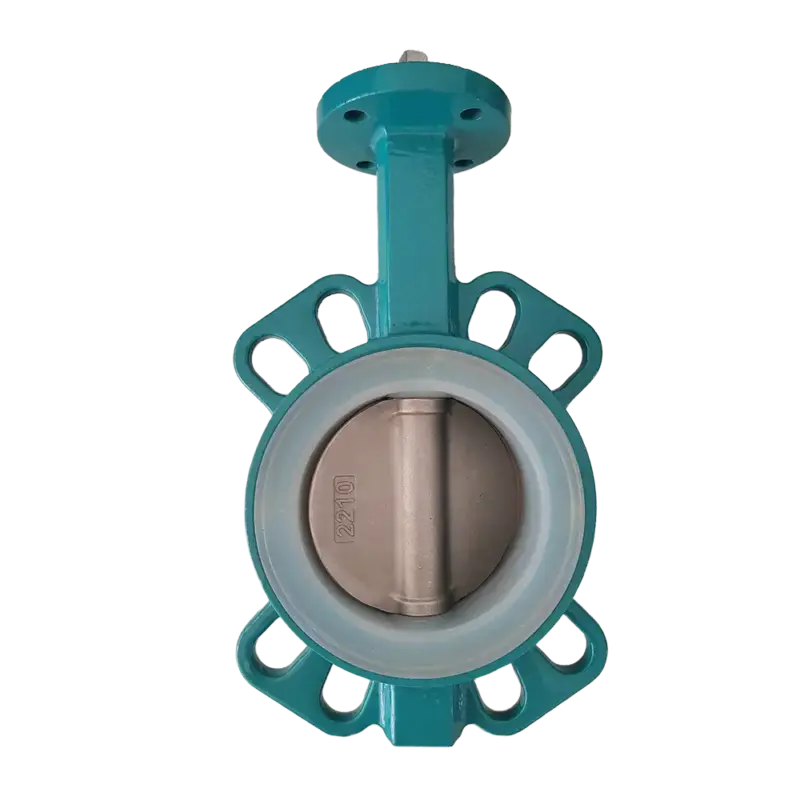
Designed to be clamped between two pipe flanges and bolted. Compact and cost-effective, but not suitable for end-of-line applications.
4.1.2 Lug-Type Butterfly Valves:
.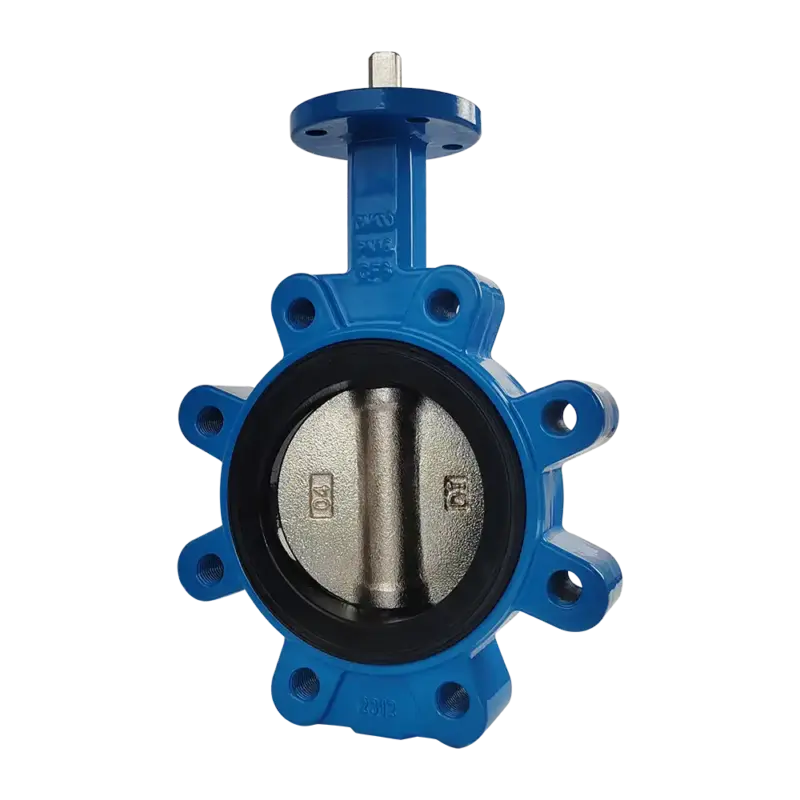
Features a threaded insert (lug) that bolts to a flange, providing an additional end-of-line application compared to wafer-type butterfly valves.
4.1.3 Flanged Butterfly Valves:
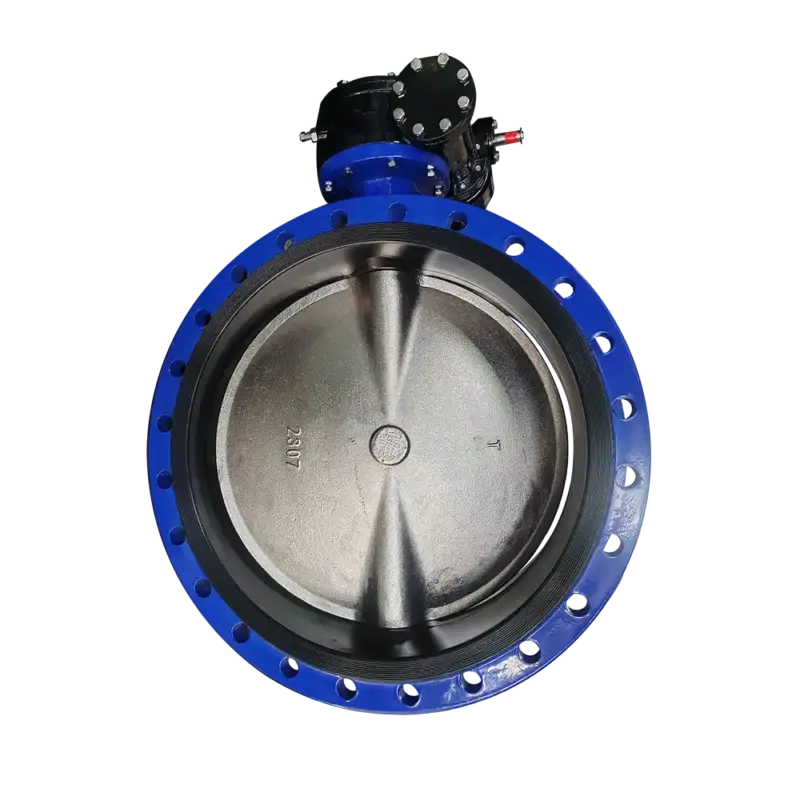
Features flanges on both ends for direct bolting to matching pipe flanges. Used for high-pressure or large-diameter applications.
4.2 Seal Types
Soft-Seal Butterfly Valves: Uses an elastomeric material such as EPDM or PTFE as the valve seat. Suitable for low-pressure applications, they provide excellent sealing performance. Suitable for water, wastewater, or non-corrosive fluids. 2. Metal-Seal (Metal-Seal) Butterfly Valve: Features a metal seat, suitable for high-temperature or corrosive environments. It offers a longer service life.
4.3 Based on Disc Configuration
4.3.1 Concentric (Centerline) Butterfly Valve:
The stem and disc are located in the center of the valve body, suitable for general-purpose, low-pressure applications.
4.3.2 Double-Eccentric (Double-Offset) Butterfly Valve:
The stem is offset from the centerline of the disc and body, reducing seat wear and improving sealing performance in high-pressure applications.
4.3.3 Triple-Offset (Triple-Offset) Butterfly Valve:
Features three offsets, suitable for critical applications such as high-pressure steam or gas systems.
5. Operating Tips
5.1 HandLever Operation:
For handle-operated butterfly valves, turn the handle counterclockwise to open and clockwise to close. Avoid excessive force to prevent damage.
5.2 Gear Operation:
For worm gear butterfly valves, smoothly rotate the handwheel to open or close the valve. Gear-operated valves have a self-locking feature to prevent backdrive.
5.3 Monitor system parameters:
Ensure that flow, pressure, and temperature are within the valve’s rated range to avoid damage. Avoid prolonged throttling: Limit throttling to angles of 15° to 70° to reduce wear, and avoid using manual butterfly valves for precise flow control.
6. Manual Butterfly Valve Material Selection
Choosing the correct material is crucial to ensuring compatibility with the media and operating conditions. Common materials include:
Valve body: Cast iron, ductile iron, stainless steel, or carbon steel for corrosion resistance and durability.
Disc: Stainless steel, ductile iron, or WCB for strength and corrosion resistance, particularly suitable for water treatment.
Seat: EPDM, nitrile rubber, PTFE, or metal to meet different temperature and chemical compatibility requirements.
Stem: Stainless steel 410/420 or precipitation-hardened stainless steel (such as 17-4PH) for corrosion and creep resistance.
7. Selecting the Right Manual Butterfly Valve
When selecting a manual butterfly valve, consider the following factors:
Application: Determine whether the valve will be used for isolation, throttling, or both.
Media: Ensure the material is compatible with the fluid (such as corrosive chemicals, water, or gas). · Pressure and Temperature: Select a valve with appropriate pressure and temperature ratings.
Size: Match the valve size to the pipe diameter (e.g., DN50 to DN2000).
Actuation: Select lever or gear operation based on valve size and torque requirements.
Connection Type: Choose wafer, lug, or flange based on installation requirements.
8. Conclusion
Manual butterfly valves have become an indispensable component in modern industrial applications due to their simplicity, versatility, and cost-effectiveness. Their quick closing, compact design, and low maintenance make them a top choice in industries ranging from water treatment to oil and gas. By understanding their components, types, applications, and more, users can select the right valve for their specific needs.