
I. Definition and Characteristics

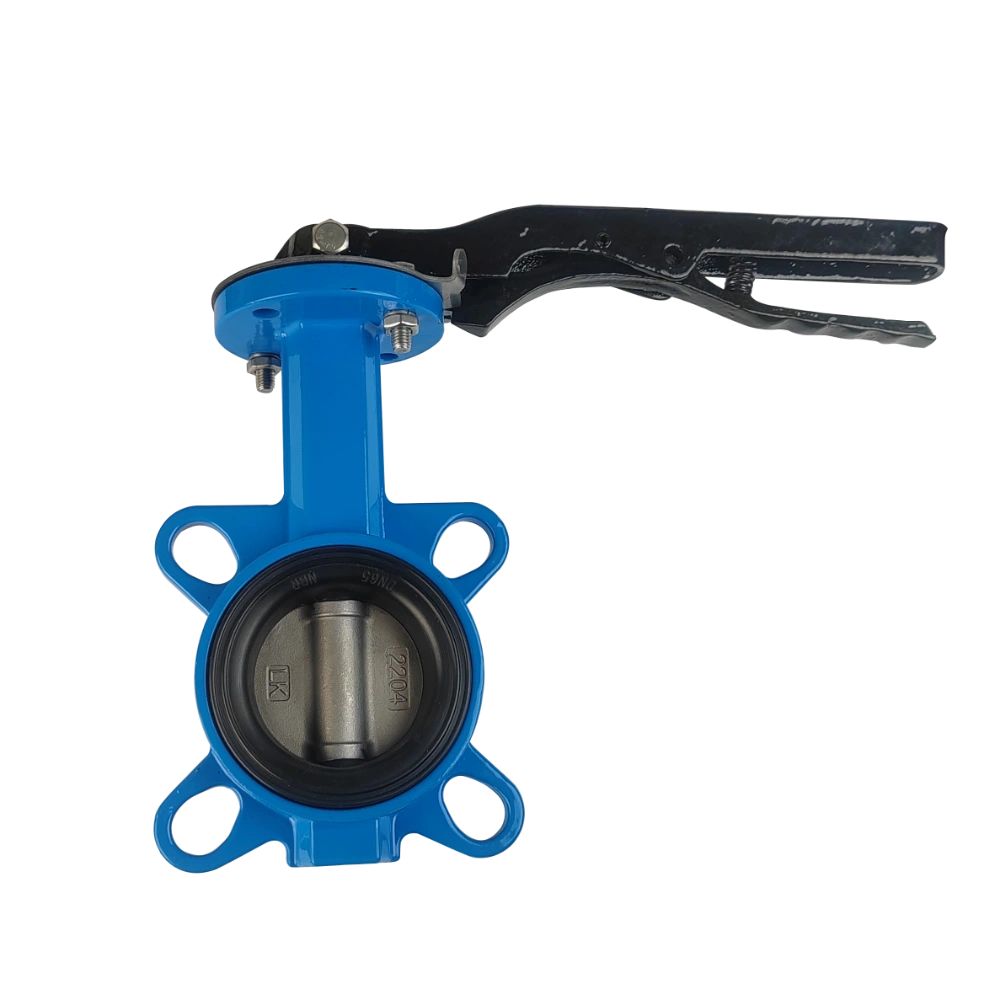
A semi-lugged butterfly valve features lugs on both sides of the valve body. However, unlike a full-lugged butterfly valve, these lugs are located only along a portion of the valve body’s perimeter, rather than along the entire circumference. This design addresses sealing requirements in low- and medium-pressure environments while also improving installation convenience, allowing the valve to be removed or replaced without disrupting the entire piping system.
- Semi-lugged Design:
Lugs are located along the valve body’s perimeter, serving as support points for easy pipe connection. However, the lugs’ coverage is limited, unlike a full-lugged butterfly valve.
- Easy Disassembly and Maintenance:
Bolted or screwed connections allow for maintenance or replacement without disassembling the pipe.
- Suitable for Low- to Medium-Pressure Applications:
Suitable for conveying and regulating low- to medium-pressure fluids, but not for high-pressure pipelines.
- Lower Cost:
Due to its simplified design, manufacturing and installation costs are lower than those of a full-lugged butterfly valve.
- Widely Applicable:
Widely used in water treatment, ventilation, petrochemical, heating, and other fields.
2. Structure
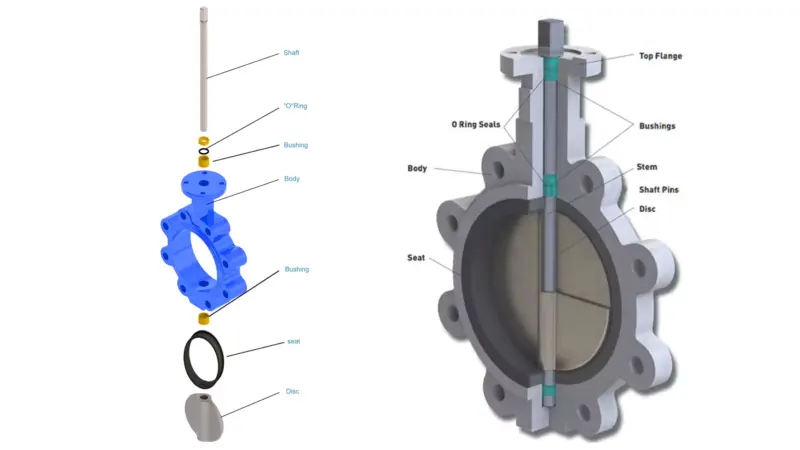
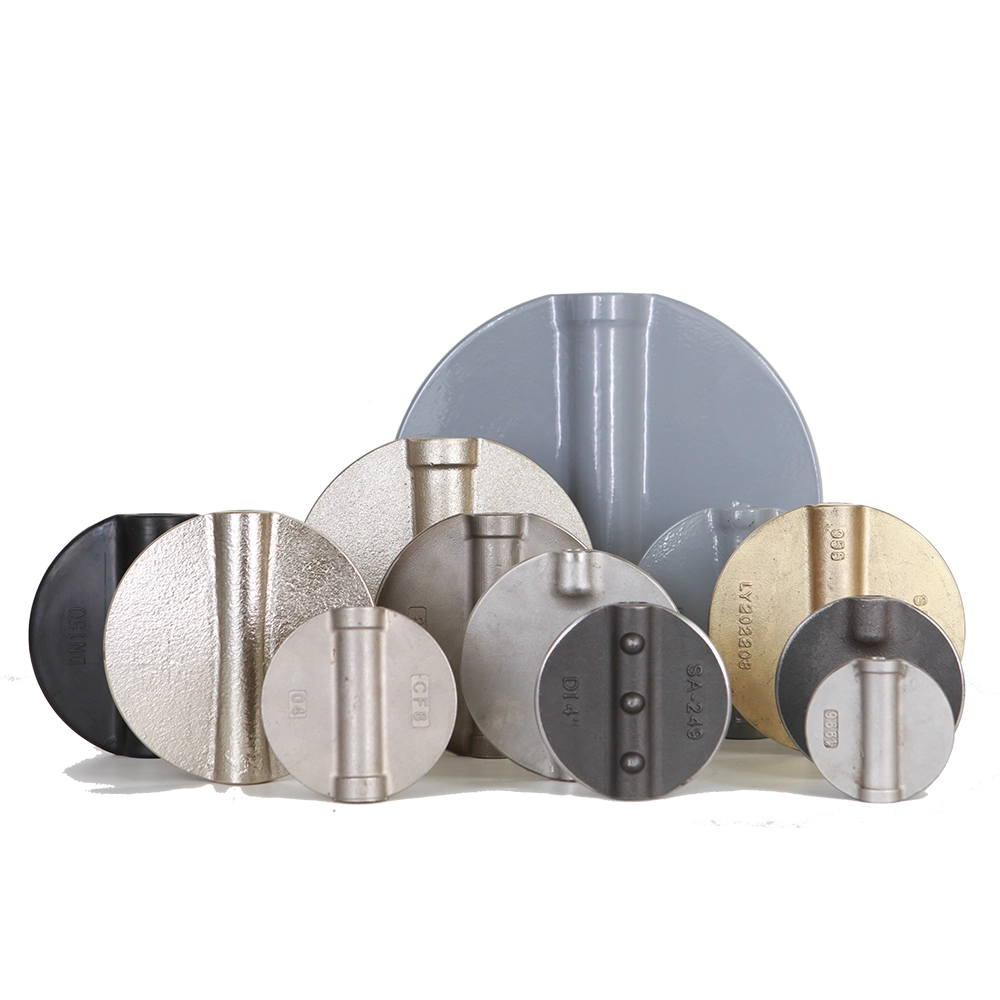
A semi-lug butterfly valve primarily consists of a valve body, valve disc, valve stem, sealing ring, and actuator. The valve body utilizes a semi-lug design. The valve disc adjusts flow through stem rotation, while the sealing ring ensures a tight seal when closed. The actuator provides manual or automatic operation.
3. Working Principle
- Opening and Closing Operation:
An electric or pneumatic actuator rotates the valve stem, causing the valve disc to move at different angles within the pipeline to adjust fluid flow.
- Sealing:
The sealing ring is positioned between the disc and the valve body. When the disc is closed, it contacts the valve body, forming a reliable seal and preventing leakage.
- Advantages of the Semi-lug Design:
Connected by bolts and flanges, the semi-lug structure allows for disassembly, maintenance, and replacement without removing the pipeline.
4. Key Advantages
- Convenient Installation and Maintenance:
The semi-lug design allows for maintenance or replacement without removing the pipeline, reducing repair costs.
- Pressure Resistance and Durability:
Suitable for medium and low-pressure pipelines, providing stable flow control.
Economical: The simplified structure reduces manufacturing and installation costs, resulting in a high cost-effectiveness.
- Widely applicable:
Covers a variety of fields, including water treatment, petrochemicals, heating, and ventilation.
- Easy to operate:
Supports manual or automatic actuators, offering flexible operation to meet diverse needs.
5. Semi-lugged Butterfly Valve vs. Full-lugged Butterfly Valve
| Aspects | Semi-Lugged Butterfly Valve | Full-Lugged Butterfly Valve |
| Design/Installation | Lugs or tabs are only located on the top and bottom of the valve body, typically four in number. | Lugs are located all around the valve body, allowing for direct bolting to flanges on both sides, providing greater stability and leak-proofing. |
| Installation | Installation is simpler and faster, requiring only four bolts to connect to the pipe. | More secure installation requires bolting on both sides; suitable for maintenance without disrupting the entire system, but installation is more complex. |
| Application | Suitable for low- to medium-pressure systems such as water distribution, HVAC, and light industrial processes; suitable for end-of-line services. | Suitable for low- to medium-pressure systems such as water distribution, HVAC, and light industrial processes; suitable for end-of-line services. |
| Advantages | Cost-effective, lightweight, reduces maintenance downtime, and provides a reliable seal in less demanding settings. | Offers excellent pressure handling, operational safety, durability, and the ability to isolate pipe sections without disrupting the entire system. |
| Disadvantages | Limited to lower pressures; may not handle vibration or high-stress conditions well. | Higher cost, weight, and installation costs. |
6. Selection Recommendations
- Valve Size and Pressure:
Select the appropriate nominal diameter and pressure rating (PN10 or PN16 is recommended) based on the pipe size and operating pressure.
- Seal Material Selection:
Choose an appropriate sealing material, such as rubber or EPDM, based on the media characteristics and temperature.
- Actuator Selection:
Choose an electric, pneumatic, or manual actuator based on the application to ensure efficient operation.
- Mounting Method:
Select the appropriate connection method based on environmental conditions to ensure a secure connection to the pipe.
7. Summary
The semi-lug butterfly valve, with its unique design, is suitable for fluid control needs in medium and low-pressure pipelines. The semi-lug structure facilitates disassembly, maintenance, and replacement, making it particularly suitable for scenarios requiring quick response and low-cost maintenance. Its reliable sealing performance makes it an excellent choice for cost-effective valves in industries such as water treatment, petrochemicals, and ventilation.