
1.What is a Dovetail Seat Butterfly Valve?

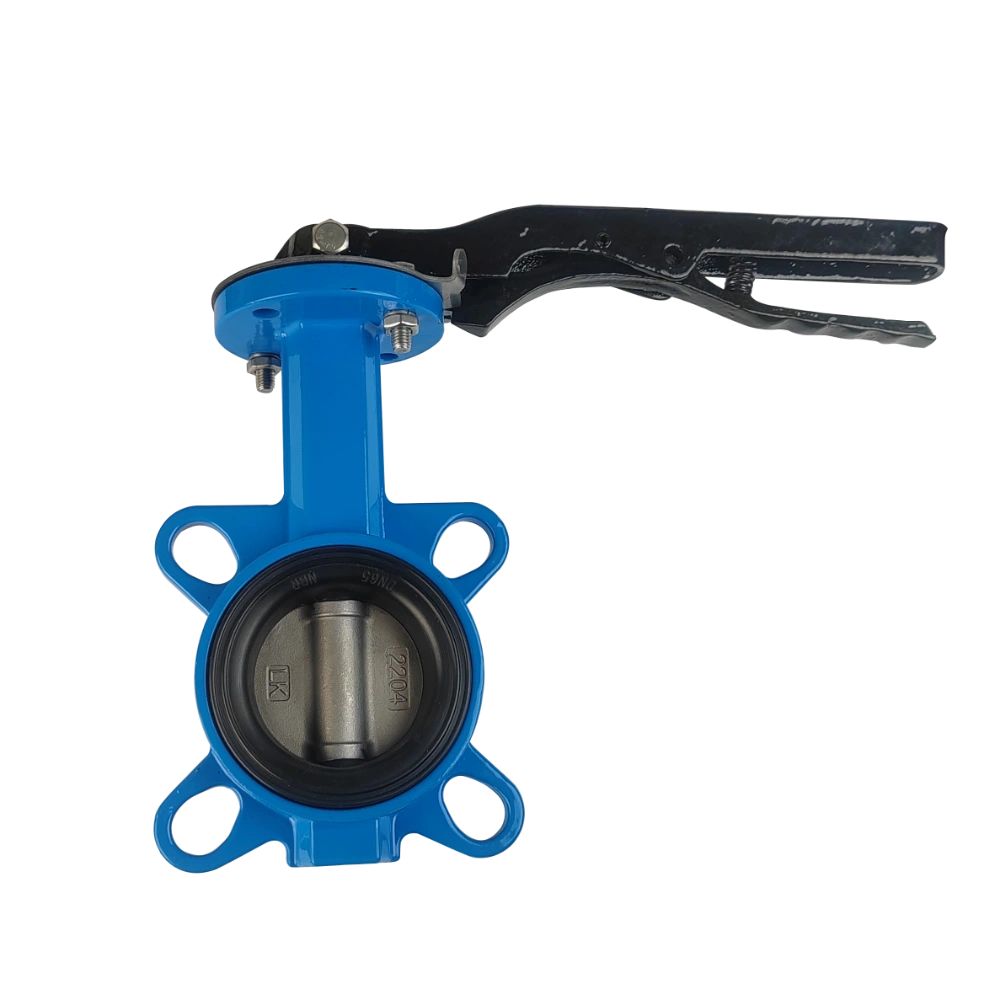
A dovetail seat butterfly valve, also called a dovetail groove seat butterfly valve, refers to a specific type of resilient seated butterfly valve with a particular seat ring fixing method. It is an optimized model of the centerline butterfly valve seat.
The material is usually rubber, such as EPDM, NBR, Viton or Silicon Rubber etc. This depends on its installation method, as detailed in section 4.2 Seat Ring Assembly. During installation, the valve seat needs to be folded or flipped, so the Dovetail valve seat must be flexible. It must not deform or affect the sealing performance during folding and flipping.
The name “dovetail” comes from the connection structure between the valve seat and the valve body. The cross-section of the connection resembles a dovetail joint in woodworking, precisely interlocking with the dovetail groove on the valve body, forming a trapezoidal interlocking structure that provides excellent mechanical locking, preventing the seat from falling off or shifting. It also ensures a tight fit between the sealing surface and the butterfly valve, preventing leakage.
2. Structural Features (Dovetail Seat Design)

– The valve body flange surface is machined/cast with a male dovetail groove.
– The outer side (back) of the seat ring (elastomer seat) is molded with a corresponding female dovetail groove that fits perfectly into the male groove.
– During installation, the butterfly valve is clamped between two pipe flanges. The clamping force of the flanges firmly “locks” the seat ring into the dovetail groove of the valve body, providing fixation and preventing detachment or displacement.
– The seat ring itself is not bonded/vulcanized to the valve body, making it a replaceable seat for easy replacement after wear.
3. Other Names (Common Industry Terms)
– Booted seat butterfly valve – the most common synonym, because the seat ring fits onto the valve body like a “boot.”
– Dovetail joint seat or dovetail retained seat
– Mortise and tenon type valve seat butterfly valve – This name emphasizes the structural principle, as the connection method between the valve seat and the valve body is similar to the traditional Chinese Lu Ban woodworking “mortise and tenon structure,” relying on mechanical interlocking for fixation.
4. Assembly Steps of Dovetail Seat Butterfly Valves
4.1. Lubricating the Valve Body
Apply a thin, even layer of silicone grease (or compatible lubricant) to the inside of the valve body. Precautions: Do not apply too much lubricant to avoid accumulation that could cause the seat ring to slip or contaminate the medium.
4.2 Seat Ring Assembly
– For small diameter (<12″) seat rings, slightly compress/fold the seat ring into a heart shape ♥ (for large diameter (>12″) seat rings, half of the valve seat needs to be flipped over; see above video for details). Align the valve stem hole on the valve body and valve seat, and insert the seat ring into the valve body.
– Use your hand or a plastic/wooden tool (avoid metal tools to prevent scratching) to assist in pressing it in, ensuring the seat ring is fully engaged with the valve body.
– For larger valves, a pry bar can be used to gently assist (use a cloth pad to prevent scratching), or two people can work together: one person compresses the seat ring, and the other pushes it in from the opposite side.
– Once the seat ring is in place, you should hear/feel a “click” or a smooth engagement, with no obvious lifting/twisting.
– The seat ring lip should protrude evenly from both sides of the valve body flange surface (approximately 1–2mm, for flange sealing).
4.3. Inspection and Adjustment
– Insert the valve stem to confirm that the valve seat is installed correctly without misalignment.
– Manually rotate the valve stem several times (fully open – fully closed) to check if the valve disc moves smoothly without jamming.
– Check if the seat ring is evenly fitted without displacement/wrinkling.
– If there is any local lifting, gently press it flat with your hand or a tool.
5. Comparison with Other Soft Seat Ring Types

| Seating Ring Type | Fixing Method | Advantages | Disadvantages / Limitations | Typical Application Scenarios |
|---|---|---|---|---|
| Dovetail / Booted | Dovetail interlocking + flange compression | Easy to remove and replace; Lower cost; Convenient maintenance |
Not suitable for vacuum (may be sucked out) | Water treatment, general industrial, low-pressure systems |
| Cartridge (hard back seat) |
Hard back ring (phenolic, etc.) + rubber overmolding into an integrated cartridge | Good rigidity, low and stable torque; Not easily deformed during installation; Durable |
Slightly higher cost; replacement requires the entire cartridge | Systems requiring low torque and frequent operation |
| Molded / Bonded (vulcanized) |
Directly molded/vulcanized and bonded to the valve body | Reliable sealing; No risk of displacement |
Cannot replace the valve seat; high cost | High-demand applications, larger diameters |
6. Common Problems & Tips
– The seating ring is difficult to push in → Apply lubricant in small amounts repeatedly. If the workshop temperature is too low, try slightly heating the seating ring (warm water/heat gun <60°C) to soften the rubber and make it easier to deform.
– High valve torque after seating ring installation → The seating ring may be twisted/misaligned; it needs to be removed and reinstalled.