
Stainless steel gives butterfly valves good corrosion resistance, high temperature resistance, and strong mechanical strength.
Because of this, stainless steel butterfly valve is widely used in water treatment, chemical processing, food, pharmaceutical, and seawater desalination industries.
However, different stainless steel grades vary in chemical composition, corrosion resistance, strength, and cost.
These differences directly affect valve performance and suitable applications.
This article focuses on an analysis of commonly used stainless steel materials.
1. Overview of Common Stainless Steel Materials
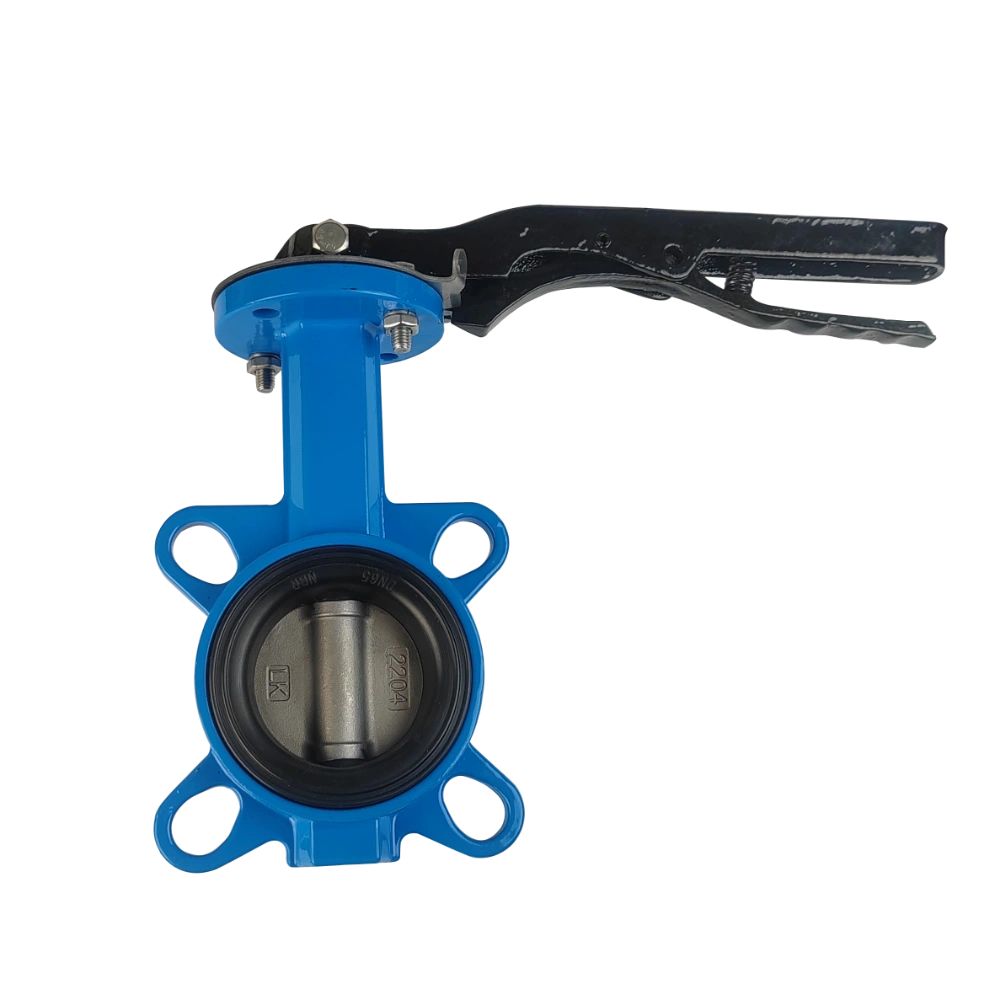
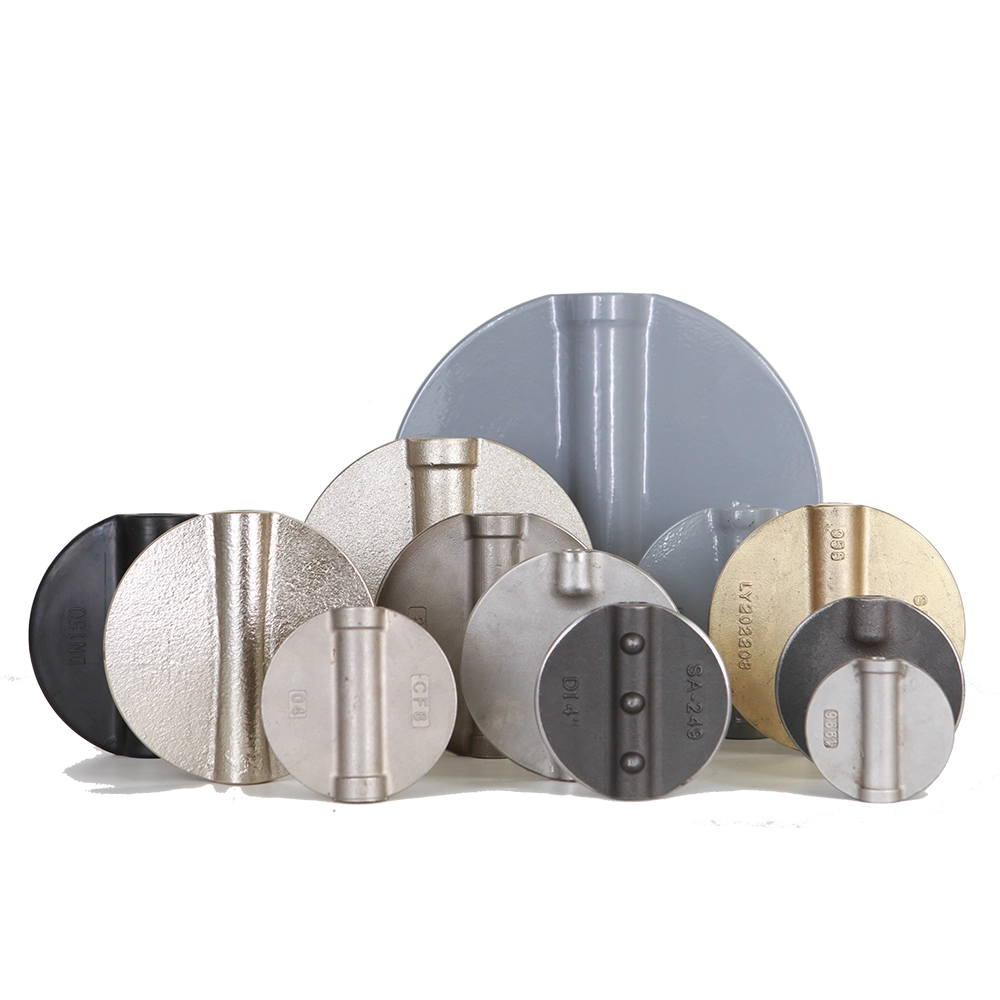
A stainless steel butterfly valve mainly consists of three parts: body, disc, and stem.
These parts are usually made by casting or forging austenitic stainless steel or duplex stainless steel.
Common casting grades follow ASTM A351, such as CF8 (equivalent to 304), CF8M (equivalent to 316), and CF3M (equivalent to 316L).
Duplex stainless steels such as 2205 (1.4462) and 2507 are also used.
17-4PH is normally used only for valve stems.
2. Common Materials Used in Stainless Steel Butterfly Valve
2.1 304 Stainless Steel (AISI 304 / 1.4301 / CF8)
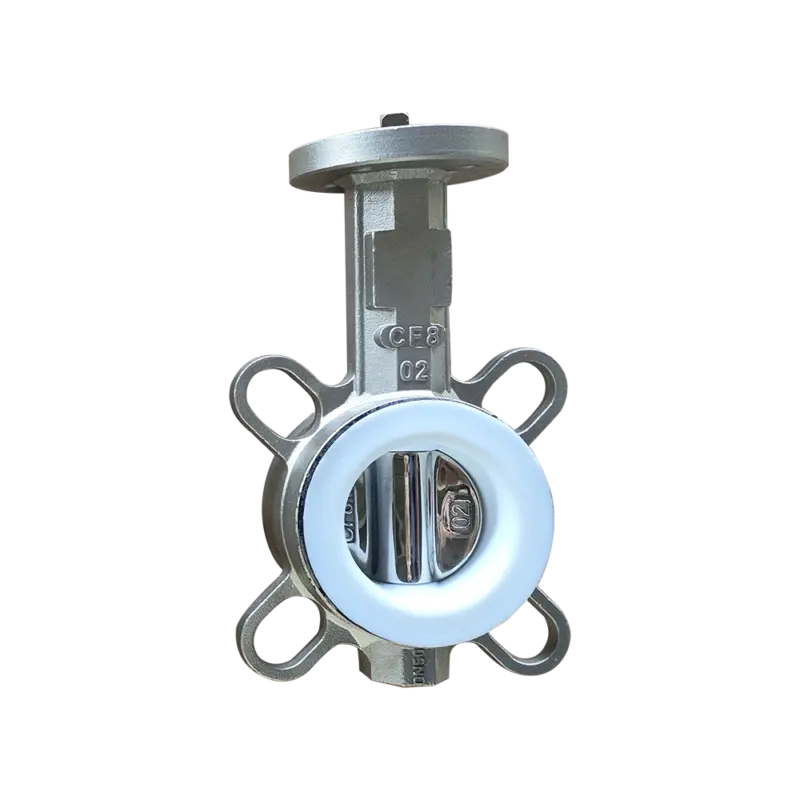
(304 / cf8 butterfly valve)
Composition: Contains about 18% chromium and 8% nickel. No molybdenum.
Advantages: The standard choice for many ss butterfly valves. Good resistance to atmospheric corrosion and moderate acids or alkalis. Decent strength, easy to machine, and relatively low cost.
Suitable applications: Clean water, steam, general industrial water, and non-aggressive gas pipelines. Commonly used in water supply, HVAC, and food processing without chloride exposure.
Limitations: Poor resistance to chloride ions. Pitting and stress corrosion cracking may occur in seawater or salt environments.
Typical uses: Municipal water supply, air conditioning systems, and general chemical pipelines.
2.2 SS316 (AISI 316 / 1.4401 / CF8M)
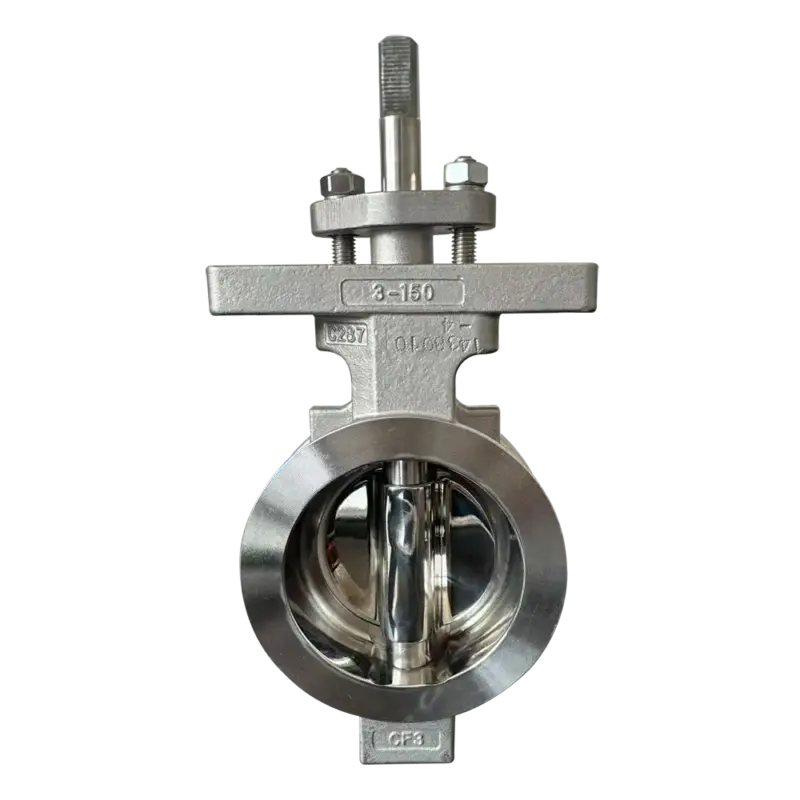
(316 / cf3 butterfly valve)
Composition: Adds 2–3% molybdenum to 304. This improves pitting resistance.
Advantages: Much better resistance to chlorides, acids, and seawater. Also handles higher temperatures well.
Suitable applications: Seawater, chloride-containing fluids, acidic conditions, pharmaceuticals, food, and marine applications.
Limitations: Cost is about 20–40% higher than 304.
Typical uses: Seawater desalination, chemical plants, coastal facilities, and food and beverage production lines.
2.3 SS316L (AISI 316L / 1.4404 / CF3M)
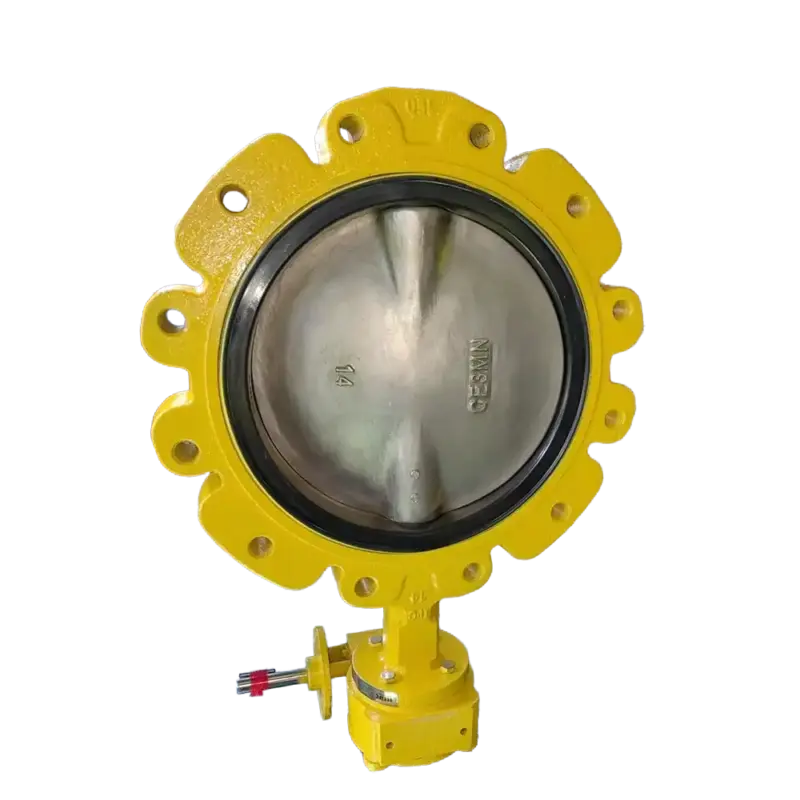
(316L / cf3M disc butterfly valve)
Composition: Low-carbon version of SS316. Carbon content is ≤ 0.03%.
Advantages: Similar corrosion resistance to 316, but much better resistance to intergranular corrosion. Very suitable after welding.
Suitable applications: Large piping systems with extensive welding and sterile pharmaceutical environments.
Typical uses: Pharmaceutical equipment and piping for chemical reactors.
2.4 Duplex Stainless Steel 2205 (UNS S32205 / S31803 / 1.4462)

(DDS 2205 disc butterfly valve)
Composition: Duplex structure with about 50% austenite and 50% ferrite. Contains about 22% chromium, 3% molybdenum, and added nitrogen.
Advantages: Much better resistance to pitting, crevice corrosion, and stress corrosion cracking than 316/316L. Yield strength is about twice that of austenitic stainless steel. Wall thickness can be reduced at the same pressure rating.
Suitable applications: Chloride-containing media, high-pressure service, or systems requiring high structural strength. Suitable where corrosion resistance and strength are both important.
Typical uses: Seawater pipelines, flue gas desulfurization systems, chemical process piping, and butterfly valve bodies and discs for oil and gas service.
2.5 Super Duplex Stainless Steel 2507 (UNS S32750 / 1.4410)
Composition: Super duplex stainless steel with high chromium (about 25%), high molybdenum (about 4%), and high nitrogen. PREN value is usually above 40.
Advantages: Excellent resistance to pitting, crevice corrosion, and stress corrosion cracking. Chloride resistance is much better than 2205 and 316 series. Maintains very high yield strength.
Suitable applications: High chloride, high salinity, high pressure, and highly corrosive environments. Used in critical service where safety and long service life are required.
Typical uses: Seawater desalination systems, high-salinity chemical plants, offshore platform piping, and high-end butterfly valves for severe conditions.
3. Comparison Between 304 and 316 Stainless Steel Butterfly Valve
| Item | 304 SS Butterfly Valve | 316 SS Butterfly Valve |
| General corrosion resistance | Good | Excellent |
| Chloride pitting resistance | Fair (poor in seawater) | Excellent (molybdenum added) |
| Maximum temperature | Up to about 800°C | Up to about 850°C |
| Mechanical strength | Medium | Slightly higher |
| Weldability | Good (risk of intergranular corrosion) | Excellent (316L recommended) |
| Cost | Lower (baseline) | 20–40% higher |
| Typical service life | 10–15 years in normal service | 15–20 years in harsh service |
4. Material Selection Recommendations
Limited budget and mild media: 304 stainless steel butterfly valves offer the best cost performance.
Chloride or marine environments: Choose 316 or 316L to prevent pitting and leakage.
Food and pharmaceutical service: 316L is recommended for cleanliness and resistance to cleaning agents.
Severe conditions: Consider duplex stainless steel. Consult a professional manufacturer.
Other factors: Operating temperature (use 316 above 150°C), pressure rating, sealing type (soft or metal seat), and actuation method (manual, pneumatic, or electric).
5. Conclusion
Correct material selection can extend valve service life and reduce maintenance cost and safety risks.
During final selection, media composition, temperature, and pressure should always be considered.
Material compatibility data provided by the valve manufacturer should also be referenced.