

In any industrial system, controlling the flow of fluids or gases is a very critical task. To do this safely, industries rely on various types of valves. Among those, the most advanced option is the triple eccentric butterfly valve. This type of valve is known for its high performance and tight sealing. Yet many seem to be unfamiliar with it and ask, “What is a triple eccentric butterfly valve and why is it so popular?”
The answer lies in the smart and innovative design of these valves. Unlike regular butterfly valves, the triple eccentric butterfly valve moves with precision. Curious about how triple eccentric butterfly valves work and why they are so popular? Worry not! In this article, I will discuss everything about the eccentric butterfly valves. So, let’s get started!
What is a Triple Eccentric Butterfly Valve
A triple eccentric butterfly valve is also known as a triple offset butterfly valve. Let’s first understand the basics of the triple eccentric butterfly valves.
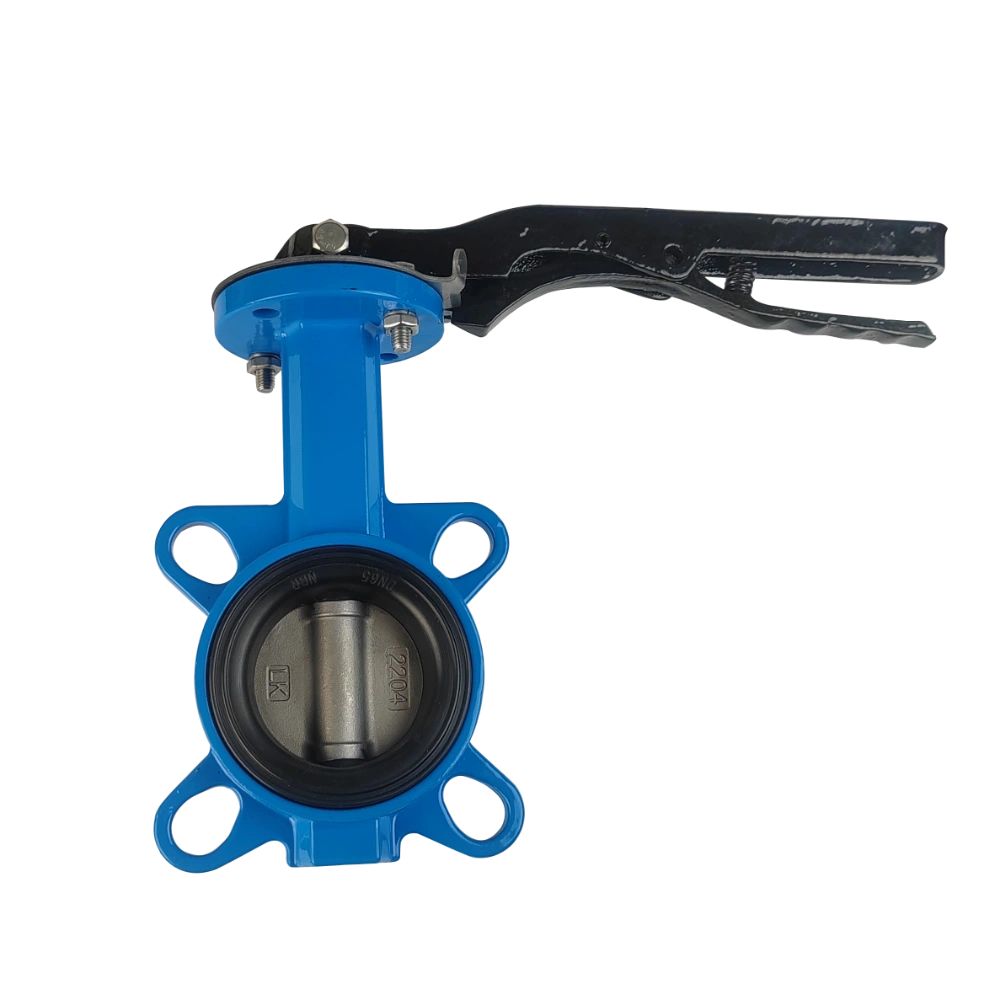
A butterfly valve is a type of valve that regulates or shuts off flow in any system. It has a round disc inside that rotates to control the amount of flow that passes through. When you open the valve, this disc becomes parallel to the flow, allowing fluid to pass freely. However, when closed, the disc turns perpendicular to the flow and stops the fluid. A triple eccentric butterfly valve is also known as a triple offset butterfly valve.
Here, the term “eccentric” seems confusing for many people. Let me explain it. Actually, eccentric means off-center(not in the middle of the valve). In standard butterfly valves, the parts, such as the disc or shaft, are positioned at the center of the valve (centered valves). When you turn the handle to open or close the valve, the edge of the disc rubs against the seat.
This rubbing can cause friction and wear and tear quickly. Right? In triple eccentric butterfly valves, engineers addressed this issue by slightly offsetting certain parts. This slight movement is referred to as offset or eccentricity. So when we call “triple eccentric”, it means the valve has three small shifts (offsets) from the center when you operate it. These three off-center points help the valve open and close smoothly without friction.
Mechanism of Eccentricities
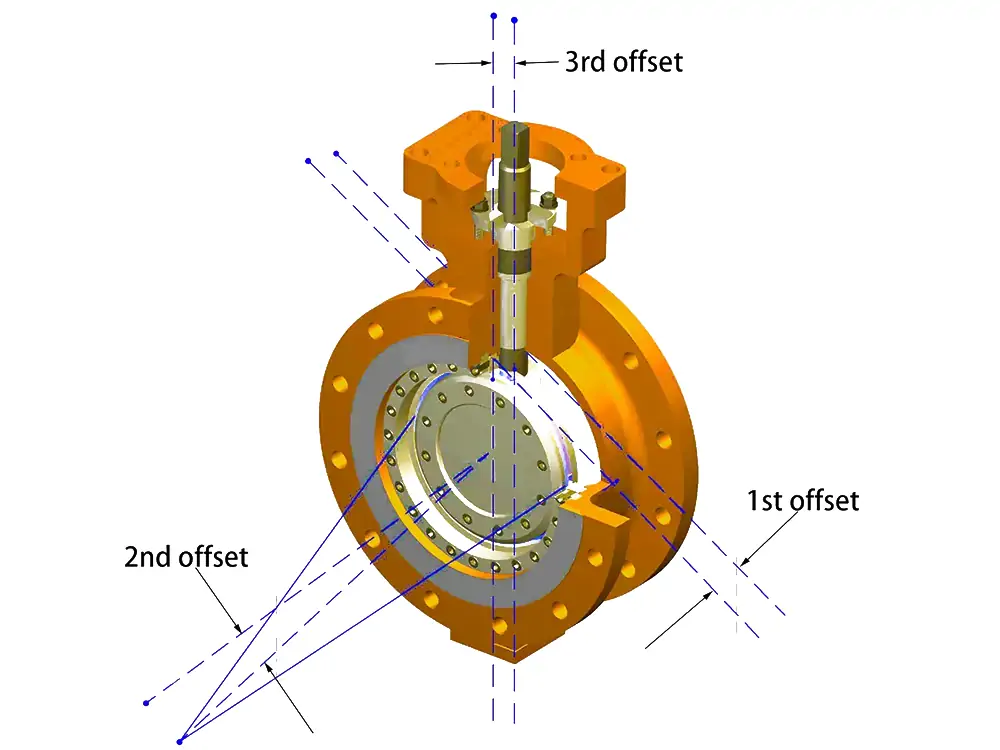
The three off-center points help the valve open and close smoothly without friction. Now, let me explain how each eccentricity (offset) works and what each one means.
- First Eccentricity: Here, the rod (shaft) that turns the disc is a little behind the center of the disc. It helps the disc open and close more easily.
- Second Eccentricity: The shaft is slightly offset to the side of the pipe’s center. This means when the disc turns, it doesn’t rub against the metal seat during the opening or closing of the valve.
- Third Eccentricity: In this offset, the shape of the seat and disc changes in the valve. Unlike regular valves, the disc and seat in triple eccentric butterfly valves are conical in shape. Due to this shape, the disc and seat only touch tightly at the very end when the valve is fully closed, not while turning.
In simple terms, the first and second offsets cause the disc to move away from the seat as it turns. This reduces the rubbing of the disc and seat that happens when opening or closing the valve. On the other hand, the third offset alters the shape of the seat and disc into a cone. As a result, they only touch at the very end when fully closed. This makes a tight and leak-free seal.
Construction and Components
Now the basics of the triple eccentric butterfly valve are well understood. Right? Now let’s explain which components it is made of!
- Casing: The casing is the outer shell of the triple eccentric butterfly valve. It holds all the other parts together and connects to the pipe. Due to handling pressure and outdoor conditions, this part must be robust.
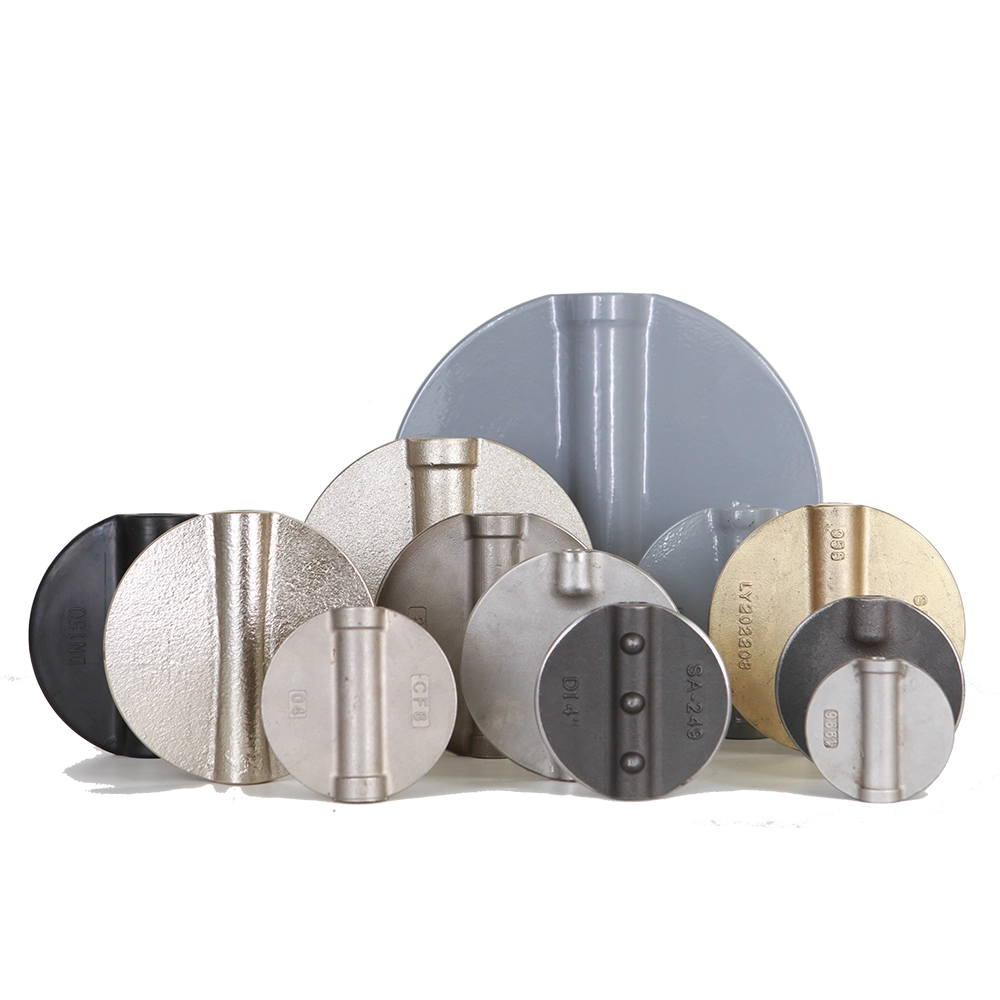
- Disc: The disc is the round plate inside the valve that opens or closes to control the flow. When the disc turns sideways, the fluid passes through. However, when it turns flat against the seat, it blocks the flow. In simple words, it is the door of the eccentric butterfly valves.
- Shaft: The shaft is a metal rod that connects to the disc. When you turn the valve handle or actuator, the shaft moves the disc. As a result, the disc moves, allowing or preventing the fluid from flowing.
- Seat: The seat is the part inside the valve where the disc rests or touches when the valve is closed. It helps create a tight seal to stop any leaks.
- Sealing ring/sealing surfaces: A sealing surface is a soft or metallic ring that creates a tighter seal. It prevents any fluid or gas from leaking out when the disc is closed.
Working Principle of Triple Eccentric Butterfly Valves: Step-By-Step
Each of the triple eccentric butterfly valve parts has a specific job. When they all work together, they control fluid flow with high precision. So, let’s discuss the complete working mechanism of the triple eccentric butterfly valves.
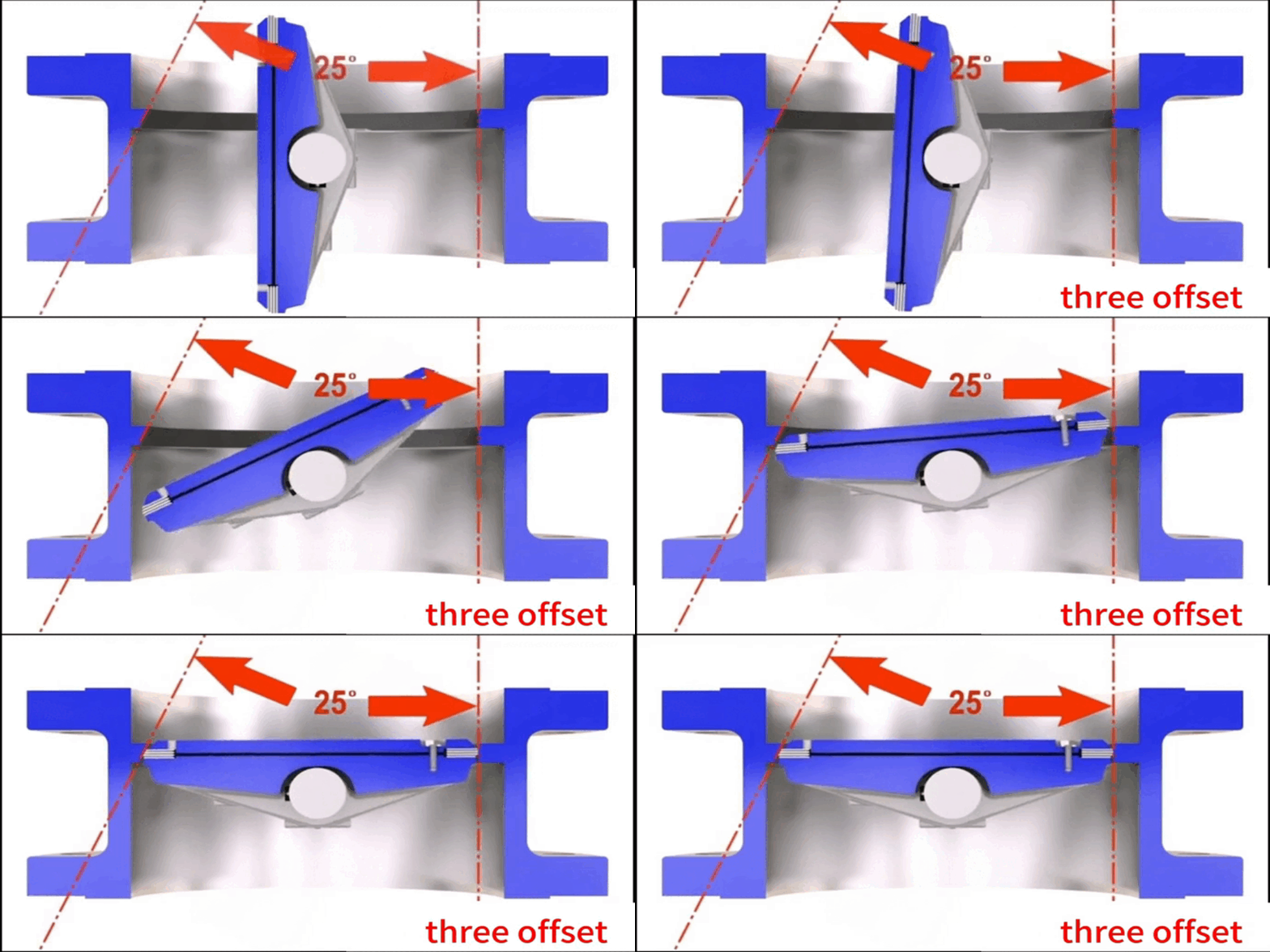
Step 1: Closed State
When the triple eccentric butterfly valve is closed, fluid cannot pass through it. This fluid blockage is due to the disc’s position within the valve. HOW? Actually, in a closed position, the disc remains at 90 degrees to the flow and stands straight to block it. At this point, the disc creates a tight seal.
This tight sealing is possible due to the cone shape of the seat(third eccentricity). It means the disc and seat touch each other only at a specific angle, not flatly. Moreover, this contact can be metal-to-metal (when both seat and disc are made of metals). However, sometimes soft sealing materials, such as rubber rings, are also used for extra tightness.
Step 2: Opening Begins
As the valve starts to open, the disc slowly begins to turn away from the seat. However, this movement of the disc differs from that of ordinary butterfly valves. Instead, because of the second and third offsets in its design, the disc first moves slightly away from the seat before it begins to rotate.
This immediate departure prevents the two surfaces from rubbing together. As the disc continues to rotate, it creates a small gap. This gap allows a controlled amount of fluid to pass through. At this stage, the valve is partially open. You can adjust the fluid flow or speed by turning the disc.
Step 3: Fully Open State
In the fully open state, the fluid can pass through the triple eccentric butterfly valve. There is no hindrance to fluid flow. But how does this happen? At this stage, the disc changes its position from a perpendicular to a parallel orientation. It becomes parallel to the direction of fluid flow, allowing it to pass without hindrance.
Now, due to the triple eccentric design, the disc remains away from the seat during the entire movement. There is no contact between the seat and the disc, reducing friction and allowing full fluid flow. Moreover, due to the fluid’s smooth flow, energy losses are minimal, making these valves more efficient.
Step 4: Closing
To turn off the triple eccentric butterfly valve, turn the handle (actuator). As the handle moves, the disc rotates slowly from its open position. It goes back to the seat to stop the fluid. When you completely shut the valve, the disc returns to its perpendicular position.
This final position creates a strong seal, completely stopping the flow. However, during the back movement of the disc to the seat, there is no contact between them until they reach the end (the closing moment). This is again due to the third eccentricity (cone shape). As a result, the disc and seat don’t rub against each other while still creating a tight seal.
Applications of Triple Eccentric Butterfly Valves
Due to their tight sealing and high performance, triple eccentric butterfly valves are very popular. Let’s take a bird’s eye view at the table below and see where the triple eccentric butterfly valves truly stand out!
| Industry | Application |
|---|---|
| Oil & Gas | Controls high-pressure flow in pipelines and refineries. |
| Power Plants | Regulates steam and cooling water systems. |
| Water Treatment | Manages clean and wastewater flow efficiently. |
| Chemical | Handles corrosive and hazardous fluids safely. |
| Marine | Used in ship cooling, ballast, and fuel systems. |
Advantages of Triple Eccentric Butterfly Valves
Triple eccentric butterfly valves are known for their strong and leak-proof design. Their unique design helps them perform better in harsh conditions, such as high temperatures and pressure. Let’s discuss some common perks a triple eccentric valve offers!
1- Zero Leakage
One of the primary advantages of triple eccentric butterfly valves is that they offer zero leakage. It means these valves do not allow any fluid or gas to escape when closed. This is due to their eccentric design. HOW? Actually, as I said above, the metal disc sits properly on the metal seat. This metal-to-metal seal prevents fluid leakage, even at high pressure. These butterfly valves have zero leakage, making them ideal for critical industries such as oil refineries.
2- Long Life and Less Wear
Compared to regular butterfly valves, triple eccentric butterfly valves have a longer lifespan. WHY? The reason lies in their three eccentric setup. As you can see during the opening and closing of the valve, the disc and seat do not rub against each other. The disc first moves away from the seat before it rotates. Due to this non-friction, there are fewer chances of wear. As a result, the valve lasts longer, which saves you the cost of replacement and repair.
3- Easy Operation
No doubt, the design of triple eccentric butterfly valves is slightly more complex than that of regular valves. However, these valves still offer easier operation than manual butterfly valves. Their opening and closing mechanisms are easy. The reason lies in the smooth movement of the disc, which doesn’t stick to the seat. Because of this, you don’t need to use much force or power to operate it.
4- Compact and Lightweight
A triple eccentric butterfly valve is typically small in size and lightweight. As a result, they occupy less space, allowing you to install these valves in confined areas, such as pipelines. Moreover, the lightweight of triple eccentric butterfly valves makes them easy to lift. You can easily move and install them with minimal effort. This saves your time, cost, and energy during installation.
5- Low Maintenance
A triple eccentric butterfly valve requires minimal care and repair after installation. This is because of the offset design of these valves. During the closing and opening, the discs do not rub against each other. So there is almost zero friction. This friction is what causes wear and tear on the body parts of the valve. Due to minimal friction, the triple eccentric valve remains in good condition for an extended period. You won’t need to replace or repair them frequently, which reduces the time and cost.
Frequently Asked Questions
What materials are triple eccentric butterfly valves made of?
Triple eccentric butterfly valves are built using strong and durable materials. This is because they can handle high pressure, temperature, and corrosion. The primary materials primarily used in these valves include: carbon steel, stainless steel, nickel alloy, and cast iron.
Can triple eccentric butterfly valves control flow speed?
Yes, triple eccentric butterfly valves can control the flow speed of liquids or gases. It is done by partially opening or closing the valve disc. When the disc is slightly open, only a small amount of fluid passes through. It means the flow speed is slower. In this way, by adjusting the disc, you can control the speed of the flow.
Are triple eccentric butterfly valves cost-effective?
The initial cost of triple eccentric butterfly valves is higher. However, they are still considered cost-effective in the long run. They require very little maintenance, last for many years, and are rarely prone to leaks or damage. Moreover, their strong design also reduces the need for frequent replacements. All this makes triple eccentric butterfly valves cost-friendly.
Conclusion
In summary, triple eccentric butterfly valves are the ideal solution for controlling the flow of fluids or gases. These valves have become essential in numerous critical industries, including the oil and gas sector. What makes the triple eccentric valve special is its triple offset design. This design creates a leak-free, tight seal to stop fluid flow when the valve is closed.
However, when the valve is open, the disc and seat don’t touch each other. As a result, fluid can pass more smoothly, reducing wear and tear. Overall, triple eccentric butterfly valves have longer life spans. Due to this strong design, these valves also require less maintenance. So, you don’t have to spend more on their replacements or repairs.