
1. What is a Wafer Butterfly Valve?
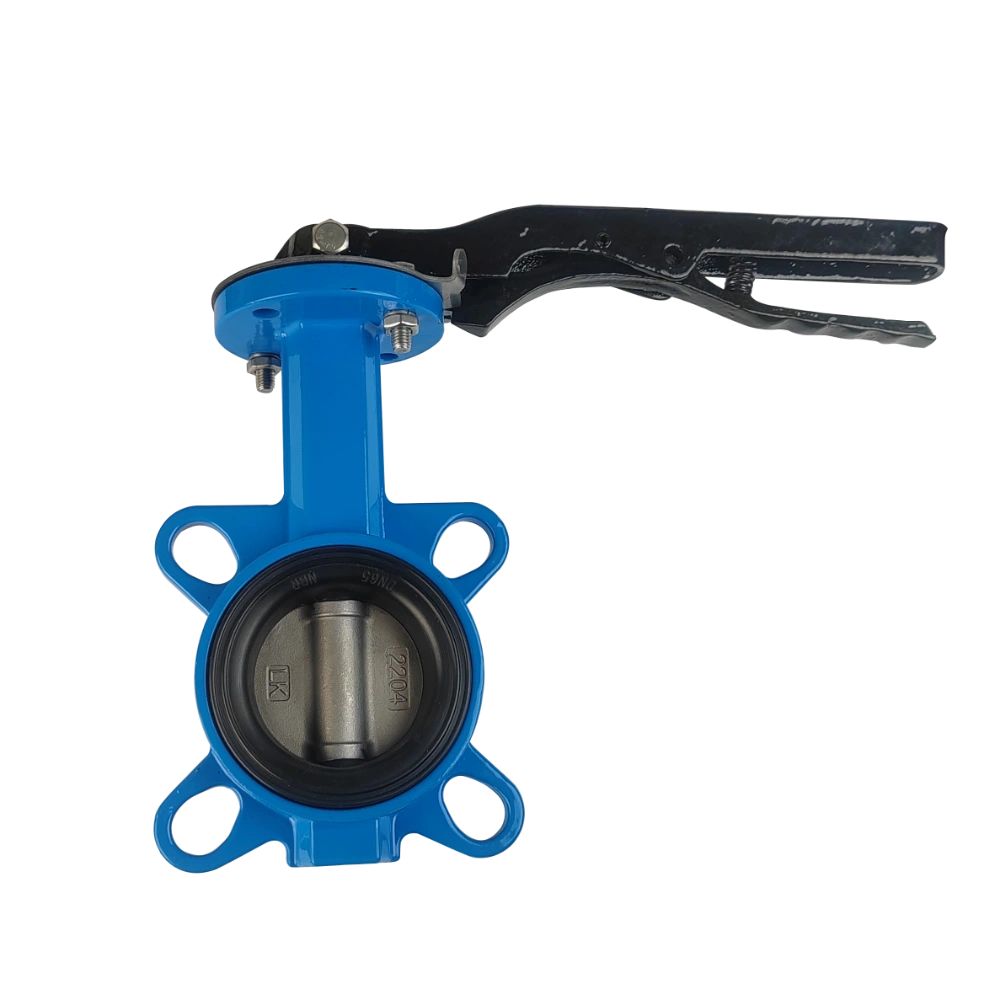
A wafer-type butterfly valve is similar to a quarter-turn valve with two or four non-threaded holes (some have 0 ears). These holes help hold the valve between two pipe flanges. A long bolt or rod goes through the flanges and the valve. When you tighten the bolt, the valve stays in place.
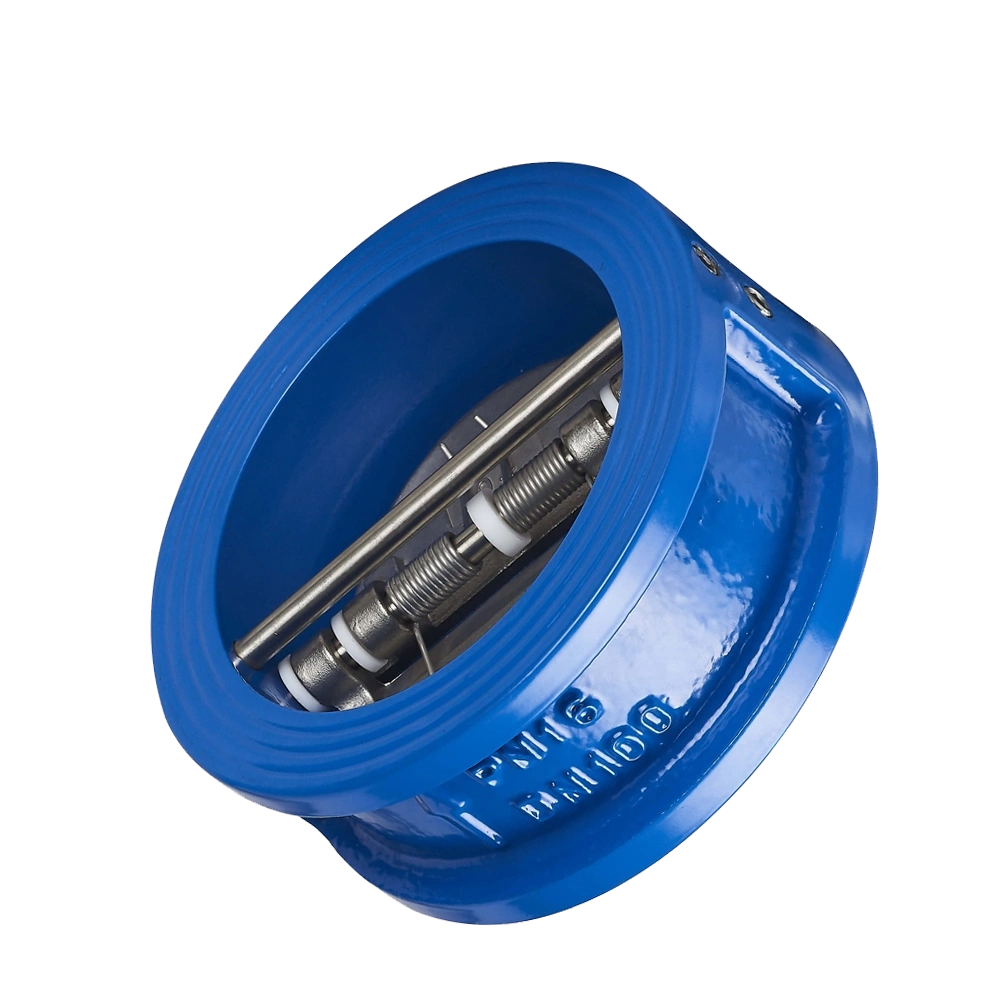
The wafer-style butterfly valves prevent the fluid from flowing backwards. It maintains the unidirectional flow of pressurised fluids. Widely used in water systems, factories, and many industries for reliable flow control. The four holes fit most pipelines and can work with many types of flange standards.
Wafer butterfly valves are not used at the end of a pipe. If you need to fix one side, you must shut down the whole line. This makes them different from wafer vs lug butterfly valves, which allow you to work on one side without closing the whole system. So, when choosing the butterfly valve, focus on the application and flow media requirements. Then you can select the disc, material, and size of the valve correctly.
The article discusses the design, parts, working, uses, etc. of the Wafer-type butterfly valve, so you are up to date with the basics.
2. Wafer Butterfly Valve Design
The wafer-type butterfly valve possesses a compact design from which it gets its name. The “wafer” refers to a thin, round disc inside the valve. It turns to open or close the passage. It sits between the two pipe flanges, making a sandwiched design, and functions to control the fluid.
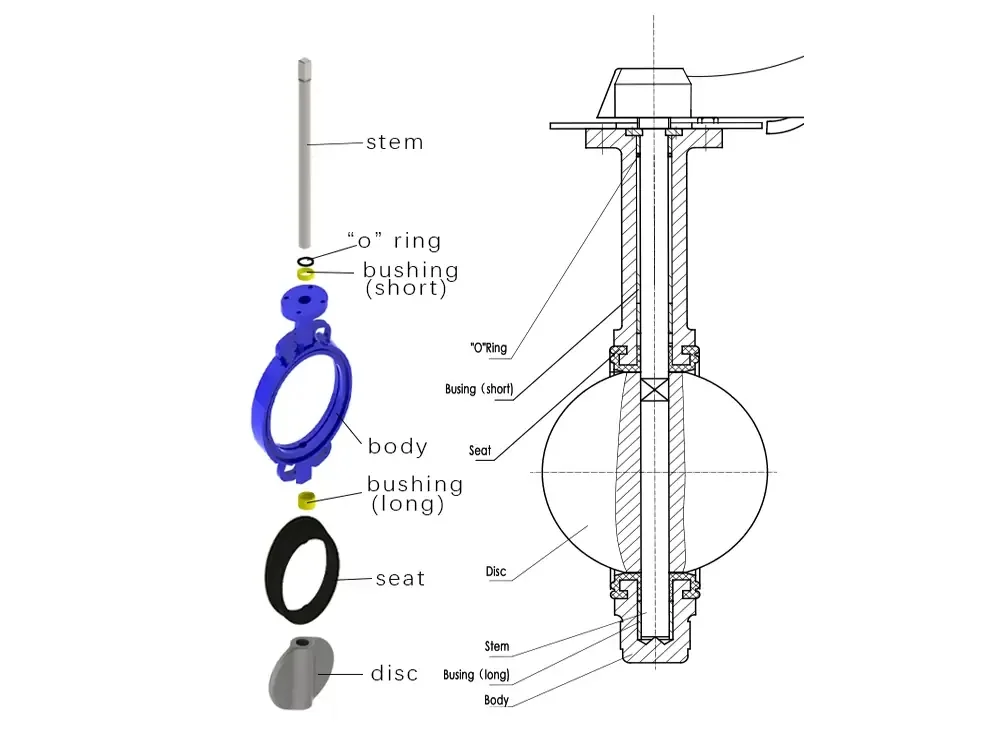
Bolts tighten the valve and pipe flanges, holding them securely in place. Furthermore, it also uses a gasket or an O-ring seal. Made up of a rubber or EPDM valve seat, it prevents leakage and keeps the system secure. The disc connects to a shaft. You turn the shaft to open or close the valve. The unique design of this valve makes it lightweight, which makes installation easy compared to its other valves.
3. Parts of a Wafer Butterfly Valve
Wafer butterfly valves are compact and straightforward, with a few parts. But each part plays an important role in its working when installed in heavy applications. Let’s look at each one:
3.1 Valve Body
The body of the wafer valve fits snugly between the two pipe flanges, forming a compact sandwich. But it doesn’t have luges, which makes it a cost-effective option. The flanges and the valve body press together using bolts that go around the valve body.
3.2 Stem
The stem is a long rod. It connects the handle or gear to the disc. When you turn the stem, the disc moves. The stem must be strong. It needs to handle the high-pressure fluid that exerts a strong force when you open or close the valve.
There are wetted and non-wetted types of stems. The selection depends on the protection level. Wetted stems come into direct contact with the fluid flowing through the valve. On the other hand, non-wetted stems protect direct contact with the fluid. So, manufacturers use rust-resistant material to prevent leakage or damage.
The choice between wetted and non-wetted stems depends on the application and the type of fluid in the system.
3.3 Disc
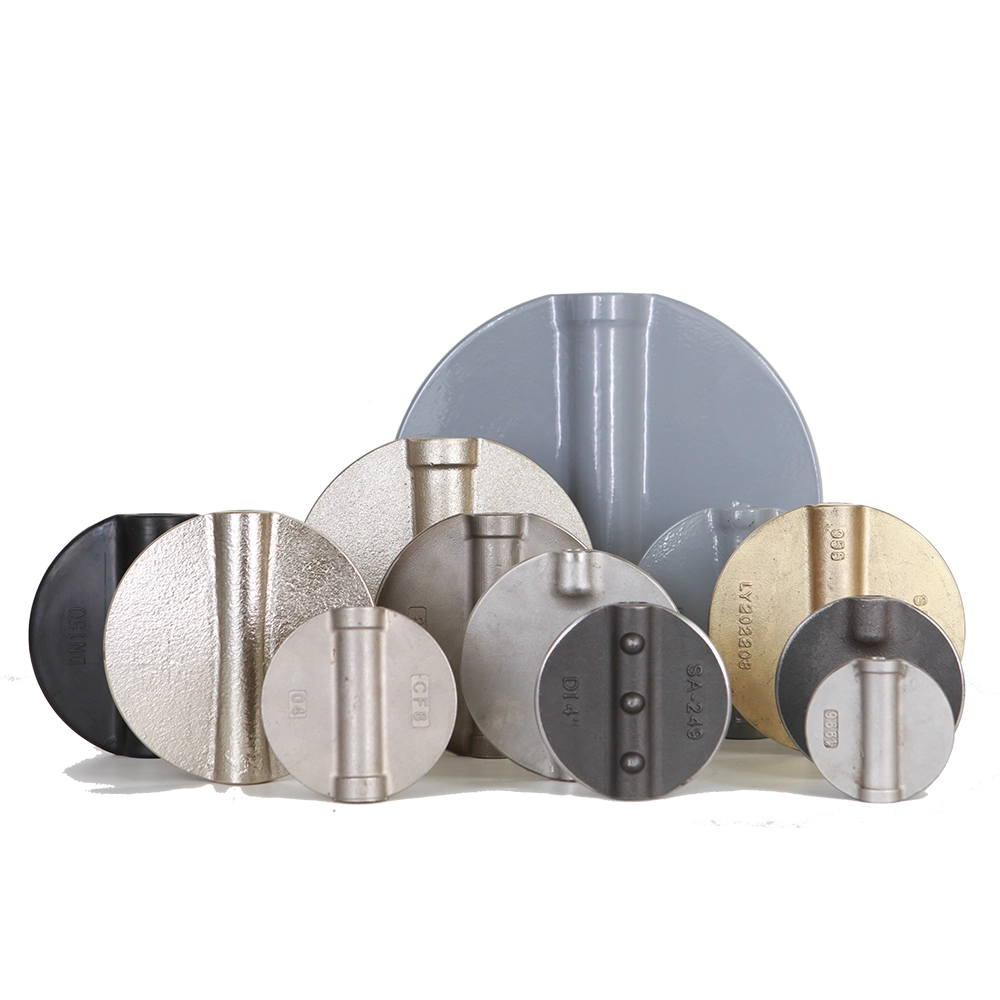
The body of the wafer valve consists of a round, thin plate or disc. Mounted on the rod that holds the disc. The disk is the central part that regulates the flow of media. Manufacturers choose different materials for the disk based on their needs.
There are types of discs used: eccentric or concentric. Concentric discs handle low to medium pressure applications. Eccentric discs are offset from the centre of the valve body. They deal well in high-pressure systems.
3.4 Seat
The seat is a soft ring located on the inner side of the valve. It touches the edge of the disk. The seat creates a tight seal when the valve is closed. Most seats use rubber or EPDM. The seat stops leaks and keeps the flow under control.
3.5 Hand Lever
The hand lever is a simple handle. Made up of metal, but ungoes various chemical procedures to ensure dimensional accuracy. The hand lever consists of a locking lever and a handle. It lets you open or close the valve by hand. The lever is easy to use and works well for small valves.
for manual butterfly valve, it also can equipped with a worm gear. The gear is a turning mechanism. It helps you open or close larger valves. The gear makes it easier to move the disk, especially when there is high pressure. You turn the gear slowly to control the valve. Due to this gear system, the torque boosts while slowing down the opening and closing mechanism.
4. How Does a Wafer Butterfly Valve Work?
A wafer butterfly valve controls the flow of liquid or gas in a pipeline. It uses a simple turning action. The disc mounted to the rod inside the valve body serves as the main component. You turn a handle or actuator, which rotates the disc on its stem. When you turn the disc parallel to the flow of the media, it flows through easily. This is an open position for the valve. If you turn the disc perpendicular to the flow of the media, it blocks the flow. Now the valve is in its closed position.
You can also stop the disc halfway to control how much fluid passes through. This is called throttling. The valve only needs a quarter turn, or 90 degrees, to go from fully open to fully closed. A tight seal, made from rubber or another soft material, sits between the disc and the valve body. This seal prevents leaks in the closed valve position.
Wafer butterfly valves are compact and fit between two pipe flanges. They are easy to install and cost less than many other valve types. You can use them in water systems, factories, and many other places where you need to start, stop, or control flow quickly and simply.
5. Type of Wafer Butterfly Valve
5.1. Structural Types
Concentric Wafer Butterfly Valves:The stem and disc are centered in the valve body.
Triple Eccentric Wafer Butterfly Valves: Two offsets in the geometry of the valve stem and valve disc, combined with a third offset on the conical sealing surface.
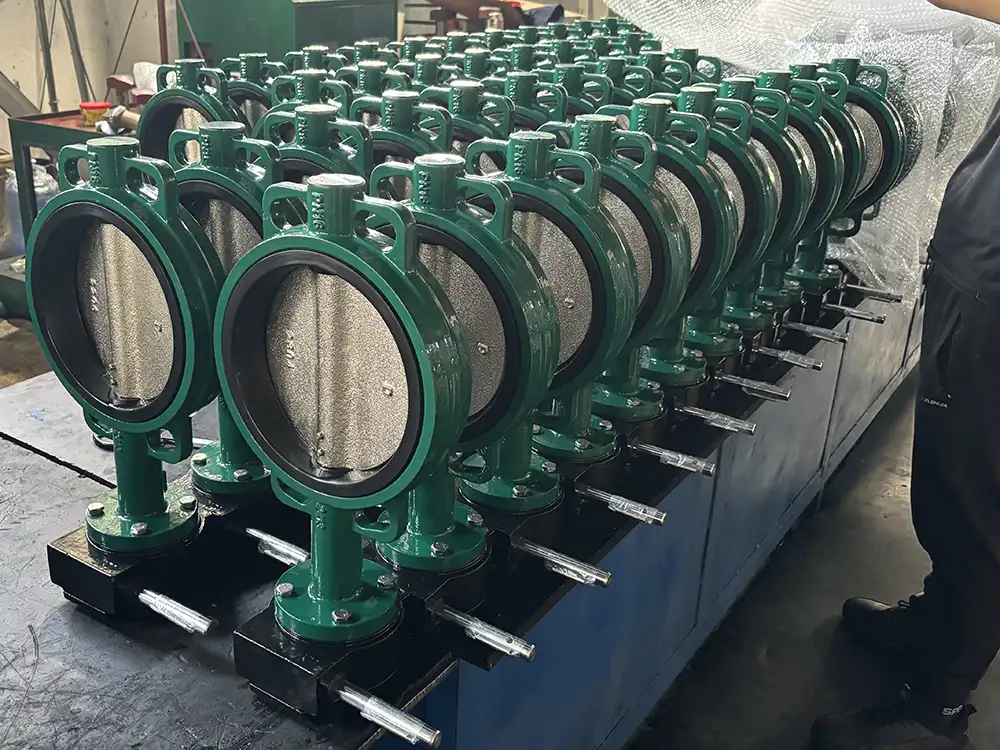
Concentric Butterfly Valve
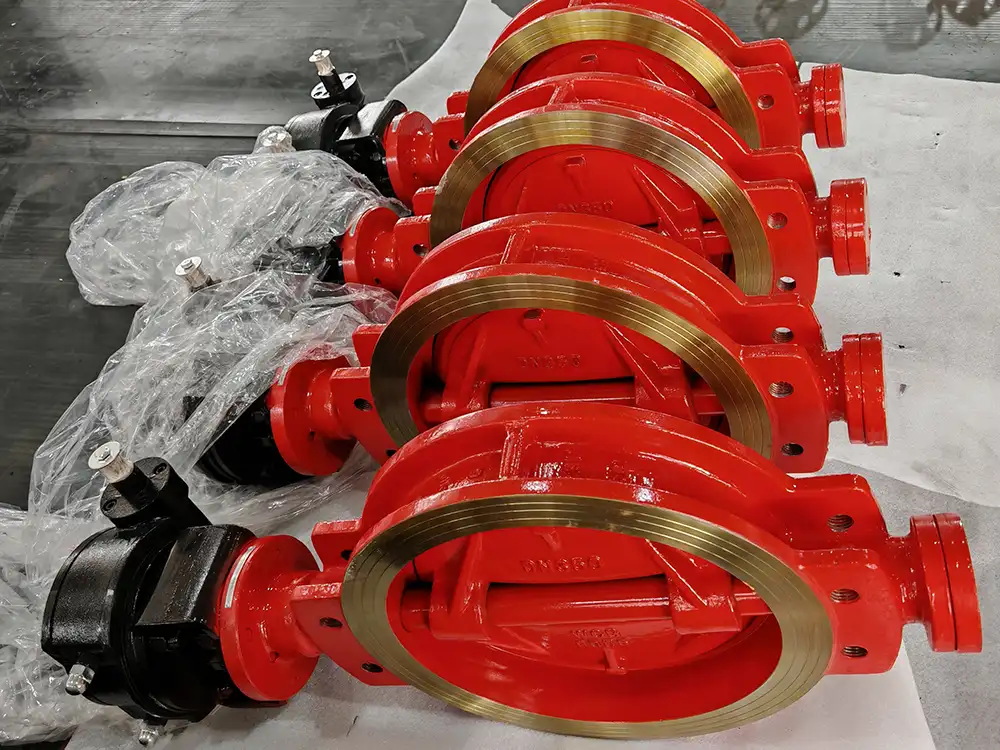
Triple Eccentric Butterfly Valve
5.2. Connection Method Between Seat and Body
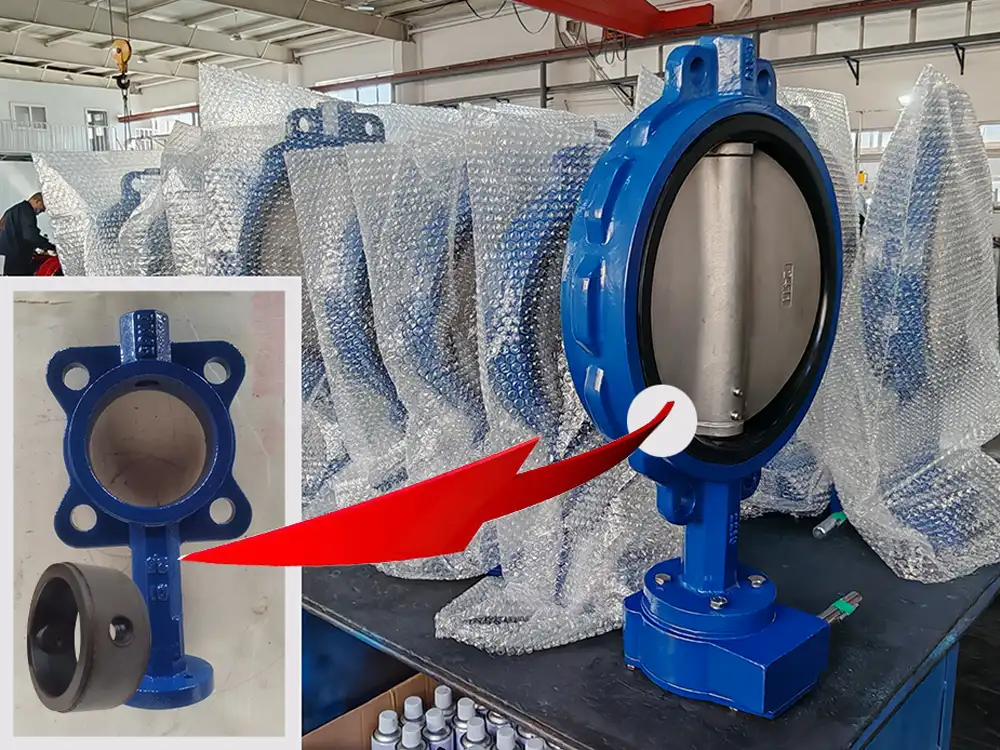
Replaceable-seat butterfly valve: The seat can be independently removed and replaced.
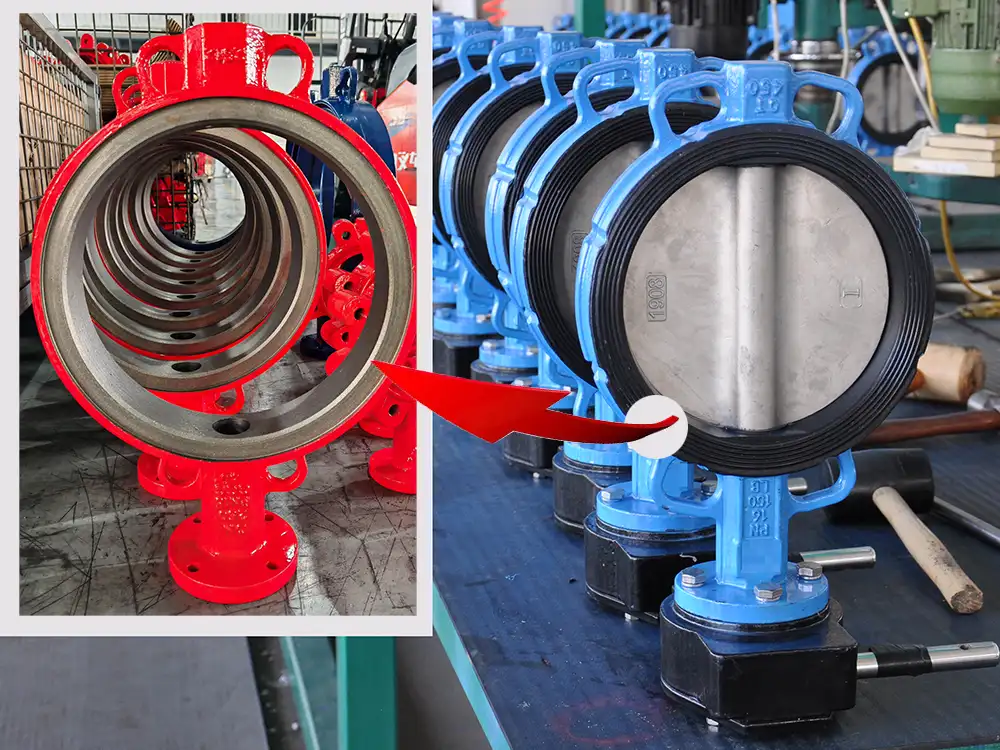
Hard-backed seat butterfly valve: The seat features a rigid or reinforced backing structure and is mechanically pressed into the inner circumference of the valve body.
Vulcanized-seat butterfly valve: The rubber seat is permanently vulcanized to the valve body, forming a continuous sealing layer; this type is non-replaceable.
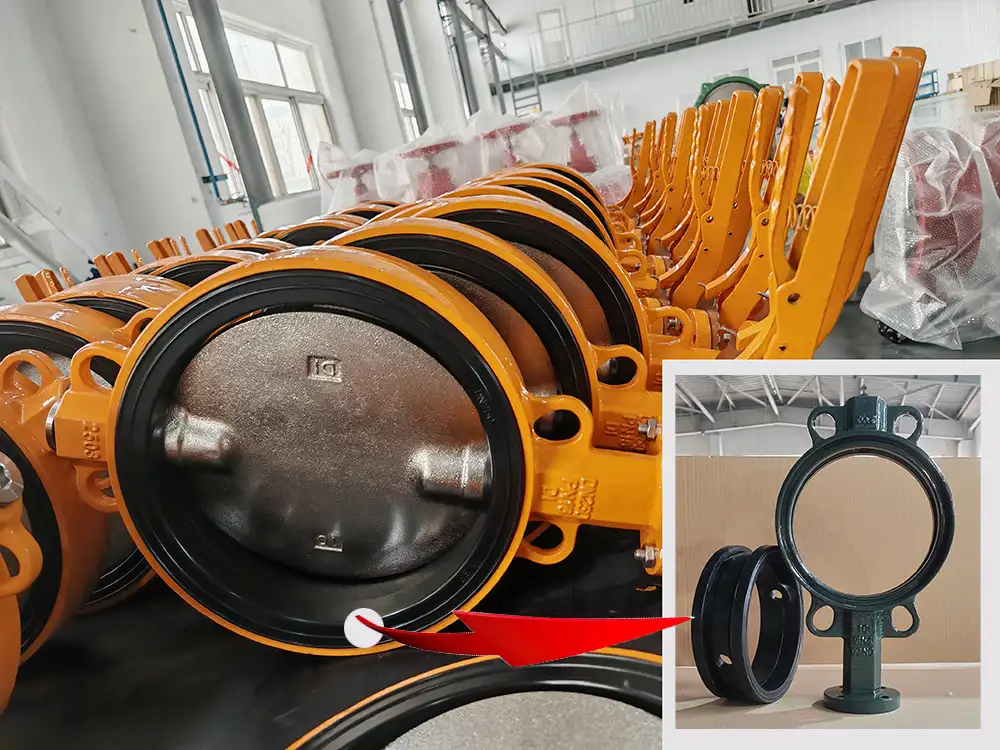
Soft Repalceable Seat Butterfly Valve
Hard Back Seat Butterfly Valve
Vulcanized Seat Butterfly Valve
6. Advantages and Disadvantages of Wafer Butterfly Valve
6.1 Advantages
Wafer butterfly valves offer several important benefits for piping systems:
- Minimal Flow Restriction: The disc within the valve is slender and designed to allow minimal flow resistance to liquids or gases. It implies that the flow remains constant and does not lose a lot of pressure as it passes through the valve.
- Speed of action: The valve can be rotated through 90 degrees to fully open or close. This enables it to be controlled easily and quickly, even in the case of an emergency.
- Good to Control Flow: The design is smooth to adjust. When you partially open or close the valve, it continues to control flow effectively and does not cause a lot of turbulence and noise within the system.
- Lightweight and compact: Wafer butterfly valves are lightweight and occupy less space compared to most other types of valves. This helps to make them easier to put in place and suited to large pipelines or spaces with limited space.
- Universal Applicability: The versatile nature of wafer butterfly valves provides you with the flexibility to use them in a wide range of industries, be it the water supply, food processing, chemical processing, or other similar processes.

6.2 Disadvantages
There are also some drawbacks to consider:
- Some Pressure Drop: Even when fully open, the disc stays in the flow path. This causes a small drop in pressure, which can affect system performance in some cases.
- Not Easy to Repair On-Site: If the valve needs fixing or replacement, you usually have to remove it from the pipeline and take it to a workshop. On-site repairs are rare for this type of valve.
- No Pigging: You cannot use cleaning tools called “pigs” inside pipelines with wafer butterfly valves. The disc blocks the pipe, so these tools cannot pass through for cleaning or inspection.
- Limited for High Pressure: Wafer butterfly valves are not the best choice for very high-pressure systems, as their sealing and strength are lower than some other valve types.
- Sensitive to Debris: If the fluid has a lot of solid particles, these can get stuck around the disc and seat, leading to leaks or extra wear over time.
7. What is a wafer butterfly valve used for?
Wafer butterfly valves are handy, compact, lightweight, and cost-effective, making them a perfect choice for a wide variety of areas. This includes home pipelines to other general applications with larger fluid capacity. They find various uses in industrial sectors involving fluids, slurries, and gases. Some of the major highlighted areas are as follows:
- Water supply and wastewater treatment: Used to manage water flow and isolate sections for maintenance. It is also widely applied in modern water production line systems for stable flow control.
- HVAC systems: Control air, hot water, and chilled water in heating and cooling systems.
- Chemical and petrochemical plants: Handle corrosive fluids and gases due to their resistance to chemicals and easy cleaning.
- Oil and gas pipelines: Used for low-pressure applications to control oil, gas, or steam flow.
- Food and beverage processing: Sanitary designs allow use with food products and easy cleaning.
- Fire protection systems: Provide fast shut-off for emergency water or foam lines.
- Power plants: Regulate steam, cooling water, and other fluids in turbines and boilers.
- Marine and shipbuilding: Used in seawater lines and other ship systems for their durability.
- Mining and slurry systems: Handle abrasive fluids and slurries due to their strong seals and material options.
8. Conclusion
A wafer butterfly valve is a simple component for controlling the flow of liquids and gases in many piping systems. Due to its compact yet straightforward design, its installation is relatively easy. It works similarly to the quarter-turn valve, and with just a turn of a handle, the valve can quickly start, stop, or regulate flow. Furthermore, they make an efficient solution for compact spaces.
These valves are easy to use, which makes them versatile for use in various applications. From water supply, HVAC, chemical processing, and more, Wafer butterfly valves are used in residential, commercial, and industrial settings. While they handle low to medium pressure systems, their adaptability and cost-effectiveness ensure they remain a key component in modern flow control solutions.