
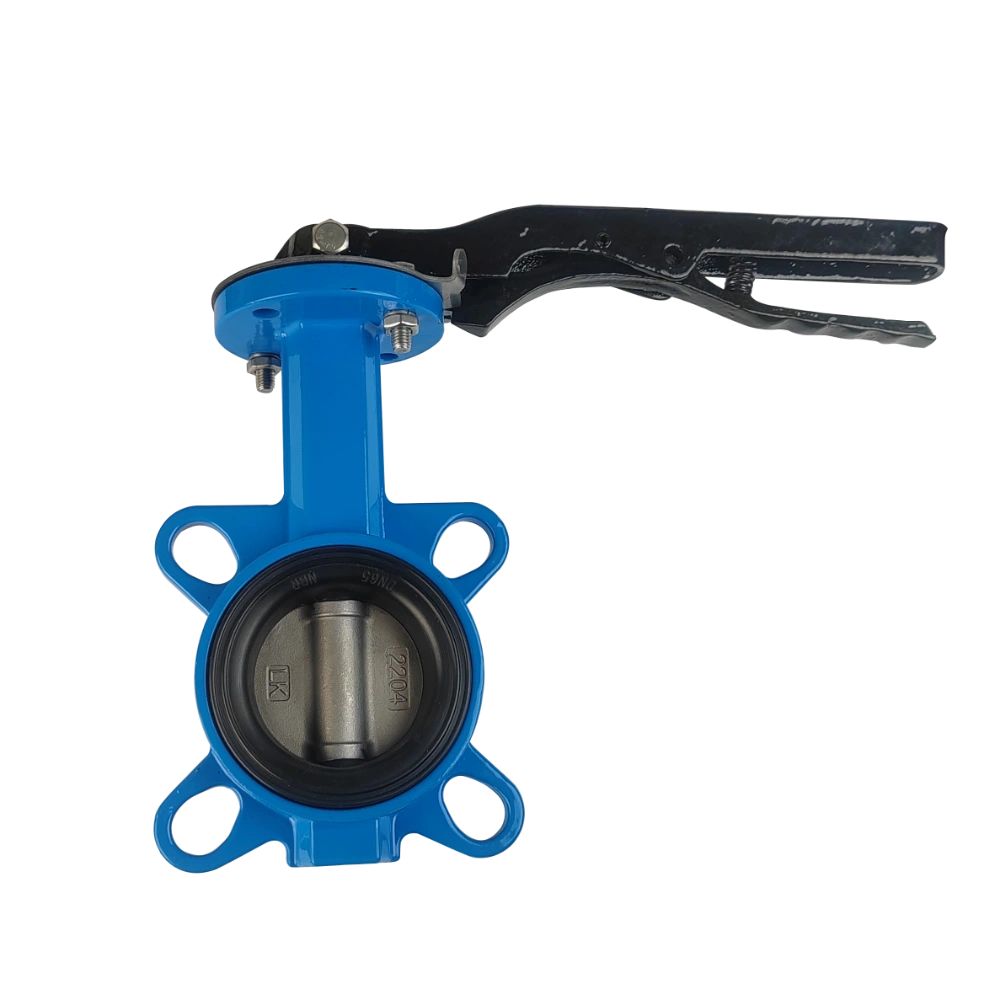
What is a butterfly valve stem? The stem is one of the core components of the butterfly valve, responsible for transmitting torque to drive the disc to rotate and realize the opening or closing function.
Therefore, the choice of stem material directly affects the performance, life, and applicability of the butterfly valve.
1. Common stem materials

1.1 Stainless Steel Valve Stem
304 stainless steel (ASTM A276 304)
contains 18% chromium and 8% nickel, suitable for general corrosive environments.
* Advantages: good corrosion resistance, excellent processing performance, and moderate cost.
* Disadvantages: medium strength, not suitable for high pressure or extreme environments.
* Applications: water treatment, food processing, general industrial pipelines.
316 stainless steel (ASTM A276 316)
contains 2-3% molybdenum, has stronger corrosion resistance, and is suitable for seawater or acidic media.
* Advantages: excellent corrosion resistance, suitable for a variety of chemical media.
* Disadvantages: higher cost than 304, limited strength.
* Applications: marine engineering, chemical industry, pharmaceuticals.
420 stainless steel (ASTM A276 420)
Martensitic stainless steel, containing 13% chromium, heat-hardenable.
* Advantages: high hardness and wear resistance, suitable for moderate corrosion and high strength requirements.
* Disadvantages: corrosion resistance is lower than 304/316, surface treatment is required.
* Application: fresh water system, low acid medium.
431 stainless steel (ASTM A276 431)
Martensitic stainless steel, containing 15-17% chromium and 1.5-2.5% nickel.
* Advantages: excellent strength and toughness, better corrosion resistance than 420, suitable for high pressure system.
* Disadvantages: corrosion resistance is lower than 316, and processing is more difficult.
* Application: high pressure butterfly valve, oil and gas pipeline, steam system.
Duplex steel 1.4462 (2205, UNS S32205)
duplex stainless steel, containing 22% chromium, 5-6% nickel and 3% molybdenum, with austenite and ferrite duplex structure.
* Advantages: extremely high strength, excellent corrosion resistance (especially resistance to pitting and stress corrosion cracking), suitable for harsh environments.
* Disadvantages: high cost, difficult processing.
* Applications: marine engineering, oil and gas, petrochemical and high chloride environments.
17-4 PH stainless steel
precipitation hardened stainless steel, with high strength and corrosion resistance.
* Advantages: high strength, good corrosion resistance, suitable for harsh environments.
* Disadvantages: high cost, complex processing.
* Applications: high pressure, highly corrosive environment.
1.2 Monel Alloy Valve Stem
- Common type: Monel 400 (nickel-copper alloy).
- Advantages: excellent corrosion resistance, suitable for seawater and acid-base environment.
- Disadvantages: high cost, difficult processing.
- Applications: marine engineering, desalination, chemical treatment.
1.3 Hastelloy Alloy Valve Stem
- Common type: Hastelloy C-276 (nickel-molybdenum-chromium alloy).
- Advantages: High temperature and strong corrosion resistance, stress corrosion cracking resistance.
- Disadvantages: Extremely high cost, complex processing.
- Applications: Petrochemical, nuclear industry, strong acid and alkali environment.
1.4 Titanium Alloy Valve Stem
- Common type: Ti-6Al-4V (Grade 5).
- Advantages: Extremely high corrosion resistance and strength-to-weight ratio, suitable for a wide temperature range.
- Disadvantages: Extremely high cost, difficult processing.
- Applications: Aerospace, marine engineering, chemical process.
2. Material Performance Comparison
| Material | Corrosion Resistance | Strength | Cost | Machining Difficulty | Applications |
|---|---|---|---|---|---|
| 304 Stainless | Good | Moderate | Moderate | Low | General water, oil, gas |
| 316 Stainless | Excellent | Moderate | High | Low | Seawater, acidic media |
| 420 Stainless | Moderate | High | Moderate | Moderate | Freshwater, low-acidity media |
| 431 Stainless | Good | High | High | Moderate | High-pressure, steam, oil/gas |
| Duplex 1.4462 | Outstanding | Very High | High | Moderate | Marine, oil/gas, high-chloride |
| 17-4 PH Stainless | Excellent | High | High | Moderate | High-pressure, corrosive settings |
| Monel Alloy | Outstanding | Moderate | Very High | High | Seawater, strong acids/alkalis |
| Hastelloy | Outstanding | High | Extremely High | High | Extreme chemical environments |
| Titanium Alloy | Outstanding | High | Extremely High | High | Marine, aerospace, chemical |
3. Selection Basis of Valve Stem Material
3.1 Medium characteristics
- Corrosive: Duplex steel 1.4462, 316 stainless steel or Monel are preferred for seawater, high chloride or acidic media; 420 and 431 are suitable for low to medium corrosive environments.
- Non-corrosive: Carbon steel or 420 stainless steel is low cost and has sufficient performance.
- Temperature range: High temperature (such as steam) requires high temperature resistant materials such as 431 or Hastelloy; low temperature can consider duplex steel 1.4462 or titanium alloy.
3.2 Pressure and torque
- High-pressure butterfly valves (such as Class 600) require high-strength materials such as duplex steel 1.4462, 431 or 17-4 PH.
- Large-diameter butterfly valves (DN>300) require materials with high torsional strength, and duplex steel 1.4462 and 431 perform well.
3.3 Cost and budget
- Choose 304, 316 or 420 stainless steel for low-cost projects.
- For mid- to high-end applications, choose 431 or duplex steel 1.4462 to balance performance and cost.
- For high-end applications (such as offshore engineering), choose Monel or titanium alloy.
4. Practical application cases
- Water treatment: 304 or 420 stainless steel stem, corrosion resistance and moderate cost.
- Petrochemical industry: duplex steel 1.4462 or Hastelloy, to cope with high pressure and corrosive gas.
- Offshore engineering: duplex steel 1.4462 or monel, to resist seawater and high chloride corrosion.
- Steam system: 431 stainless steel, taking into account strength and high temperature resistance.
- HVAC system: carbon steel or 420 stainless steel, with anti-corrosion coating.
5. Conclusion
The selection of butterfly valve stem material needs to be comprehensive of medium characteristics, pressure, temperature and cost. 304 and 316 stainless steel are suitable for general and corrosive environments, 420 and 431 stainless steel provide high strength and medium corrosion resistance, duplex steel 1.4462 has both extremely high strength and excellent corrosion resistance, suitable for marine and petrochemical applications; Monel, Hastelloy and titanium alloys are for extreme environments. By properly selecting materials, butterfly valve stems that meet specific needs can be produced to enhance product capabilities.