
Sometimes, when you are replacing a valve in a pipe system, you check the old valve and see “DN50” written on it. Then you look at a new valve, but its size is listed as NPS 2. These two different terms might confuse you at first. So, you now wonder: Are these two valves the same size? Will the new valve fit my pipe? That’s where a DN to NPS pipe size chart comes into play.
Basically, DN and NPS are two different ways of naming pipe and valve sizes. The confusing part is that these numbers do not always show the valve’s exact physical diameter. Getting this difference right is crucial. A small mistake in choosing the valve size will lead to leakage, delays, and the need for an extra adapter. But you need not worry! This guide will discuss what DN and NPS are, their conversion chart, and other details to check before choosing a valve. So let’s get started.
What Do DN and NPS Mean?
DN and NPS are standard names that describe the nominal size of pipes, valves, and fittings. DN means Diameter Nominal, while NPS means Nominal Pipe Size. These sizes help you understand which pipe or valve size you need. However, note that these numbers are just size names, not exact pipe measurements.
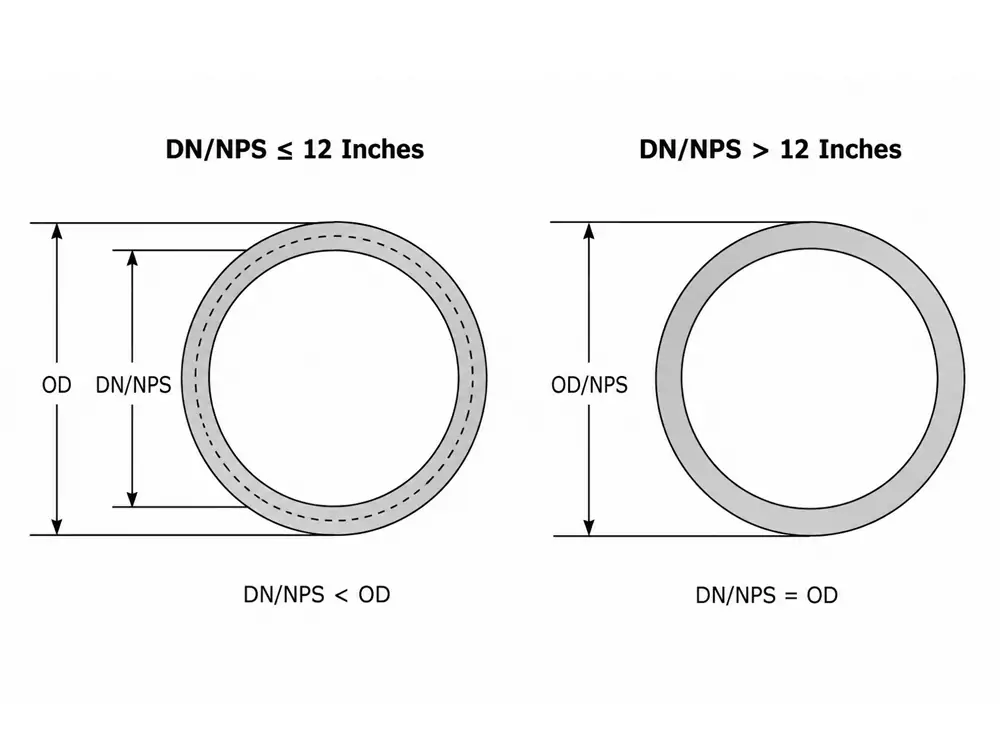
Basically, DN is mainly used in metric and international piping systems. In this system, you will see sizes such as DN15, DN25, DN50, or DN100 on pipes and valves. Here, the numbers such as 15, 25, or 100 give a general idea of the pipe size. However, it does not mean that the pipe is exactly that many millimeters wide. For example, DN50 matches NPS 2.
This might seem strange at first because 2 inches equals 50.8 mm, not exactly 50 mm. This confusion comes from the fact that DN sizes are based on standard nominal sizes, not simple measurements. On the flip side, NPS is an inch-based system. It is used in the United States and in some piping specifications worldwide.
In this size system, you will see sizes such as NPS ½, NPS 5, NPS 2, NPS 8, or NPS 6. Like DN, the NPS number doesn’t tell you the exact inside or outside diameter; it just provides a standard name for the pipe size.
DN to NPS Conversion Chart
A DN-to-NPS conversion chart is what helps you find the matching nominal size when your pipe or valve is labeled in a different sizing system. Using this chart, you don’t have to calculate every size yourself. Instead, you need to find the DN size in the first column and check the corresponding NPS size in the second column. But these are nominal equivalents, so they do not mean that these two numbers are exact physical measurements of the valve.
| DN Size | Approx. NPS Size | Common Description/Nominal Size |
|---|---|---|
| DN10 | NPS ⅜ | ⅜ inch |
| DN15 | NPS ½ | ½ inch |
| DN20 | NPS ¾ | ¾ inch |
| DN25 | NPS 1 | 1 inch |
| DN32 | NPS 1¼ | 1¼ inch |
| DN40 | NPS 1½ | 1½ inch |
| DN50 | NPS 2 | 2 inch |
| DN65 | NPS 2½ | 2½ inch |
| DN80 | NPS 3 | 3 inch |
| DN90 | NPS 3½ | 3½ inch |
| DN100 | NPS 4 | 4 inch |
| DN125 | NPS 5 | 5 inch |
| DN150 | NPS 6 | 6 inch |
| DN200 | NPS 8 | 8 inch |
| DN250 | NPS 10 | 10 inch |
| DN300 | NPS 12 | 12 inch |
| DN350 | NPS 14 | 14 inch |
| DN400 | NPS 16 | 16 inch |
| DN450 | NPS 18 | 18 inch |
| DN500 | NPS 20 | 20 inch |
| DN600 | NPS 24 | 24 inch |
Is DN50 the Same as NPS 2?
Yes, DN50 and NPS 2 usually mean the same nominal pipe size. These are two different names for the same size. DN50 is the name commonly used in metric and international systems. On the other hand, NPS 2 is the name used in the inch-based system. So, if your old valve has DN50 and a new valve says NPS 2, you can treat them as the same nominal size.
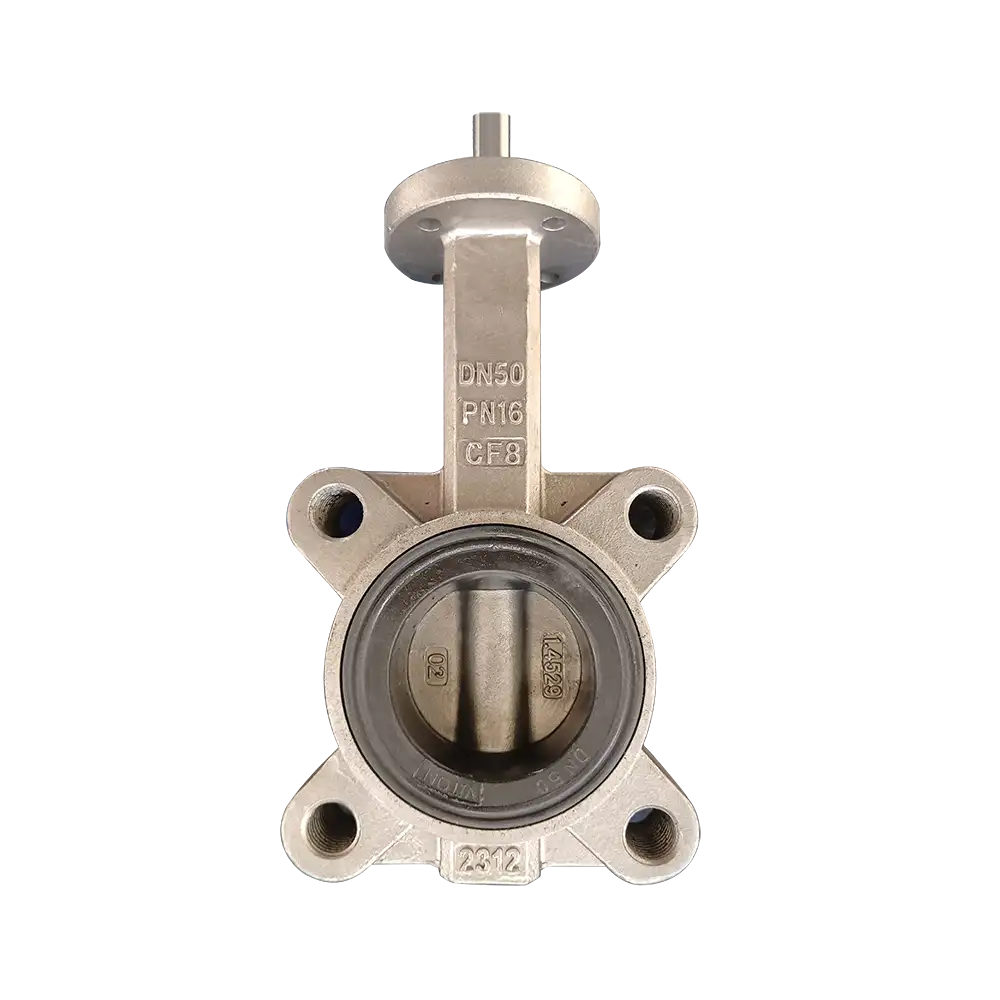
But there is one important thing you must take into account. DN50 does not mean that the pipe or the valve is 50 mm wide. Similarly, NPS 2 does not mean that the pipe is exactly 2 inches wide. These two numbers are just standard size names. The actual size of the pipe varies depending on its wall thickness, schedule, and connection type.
How Can You Convert DN to NPS?
Now you have a basic understanding of the nominal size names. Right? It’s now quite simple to convert DN to NPS for any type of pipe or valve. So here is how, step by step, you can do this conversion.
Step 1: Find the DN Size
First, look at the pipe, valve, and fitting drawing and find the DN size. You will see something like DN25, DN50, DN100, or DN150. Now suppose your valve is marked DN50. Write down this size before looking for its NPS equivalent. At this stage, do not think that DN50 means the pipe has a 50 mm diameter; it is the standard name given to that nominal size.
Step 2: Find the Corresponding NPS
Now you have the DN size of your valve or pipe; it’s time to use a DN-to-NPS conversion chart to find the matching NPS size. Look up your DN number in the chart and then check the NPS value next to it. For example, you might see that DN50 → NPS 2. Now, if you have a DN50 valve and need its inch-based size, NPS 2 is the right equivalent. You can use this same method for other sizes, such as DN100 → NPS 4, DN150 → NPS 6, and so on, as shown in the chart.
Step 3: Verify the Connection Details
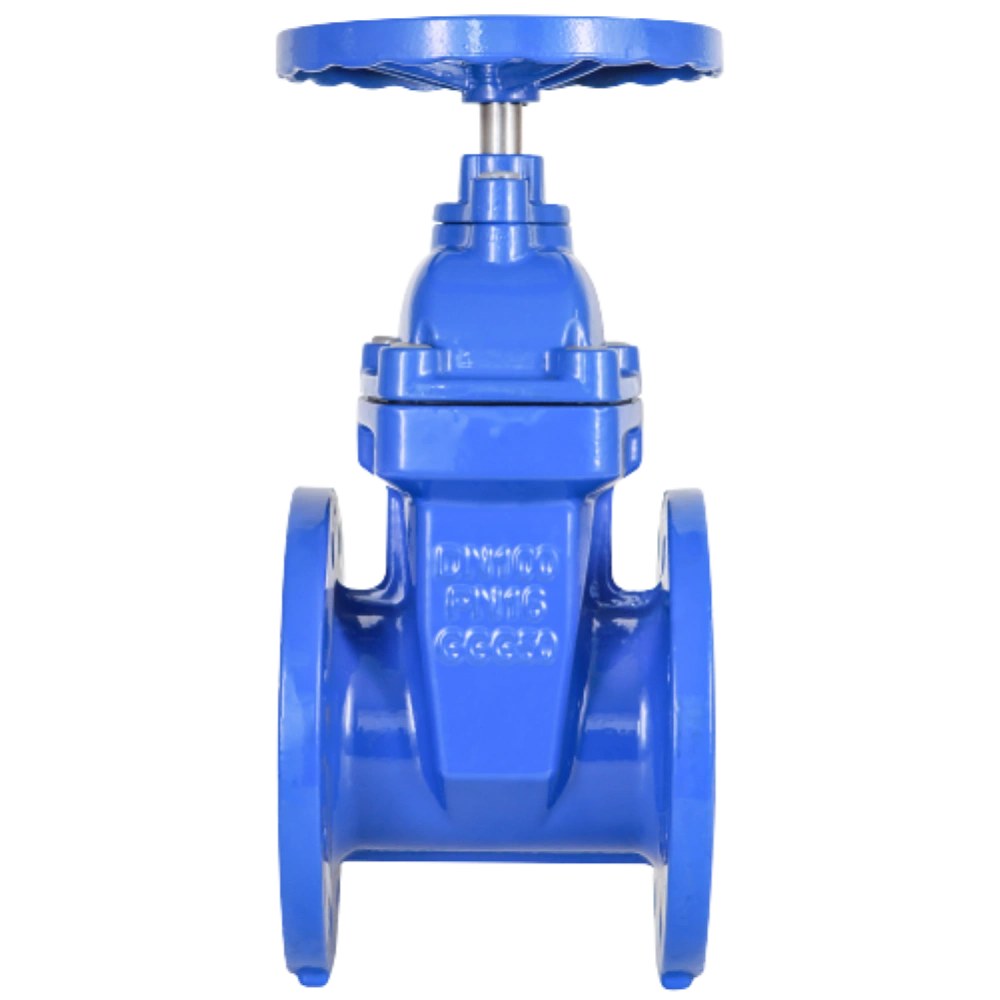
After that, you have found the corresponding NPS size; it does not mean the two parts will fit together. As I said above, these are just standard names for sizes. With that, you also have to check how the valve or pipe connects to the system. You have to look at details such as the connection type, flange standard, pressure rating, pipe schedule, and material. For example, there are two DN50 gate valves. But what if one has a flanged connection while the other has a threaded connection? In that case, their nominal sizes are the same, but they will not be connected in the same way.
Why Can’t You Simply Convert DN Using 25.4?
Logically, using 25.4 seems like the right way to convert DN to NPS. After all, 1 inch equals 25.4 mm. So, you must think that you can simply divide a DN number by 25.4 and get the NPS size, right? For example, 50 ÷ 25.4 = 1.97 inches. No doubt, it looks very close to NPS 2. However, the problem here is that DN and NPS are not exact diameter measurements.
They are created as standard names to identify pipe sizes. So, you cannot think of them as two different units of the same measurement. In other words, you can say that DN and NPS are labels for a group of pipes. A DN50 pipe belongs to the standard DN50 size group, and NPS 2 belongs to the standard NPS 2 group.
Also, as I said above, these are nominal matches, not exact mathematical conversions. Also, the actual size of a pipe often varies due to its wall thickness or schedule. This means that two pipes with the same nominal size might have different inside diameters. Therefore, instead of using 25.4 as a direct conversion factor, use a standard DN-to-NPS chart to find the equivalent size.
Why is Valve Size Conversion Important?
When you replace or select a valve, the first thing you should know is what size valve you need. But the issue is that pipe sizes can be written in different ways. One system might use DN, while another uses NPS. So what if you don’t know this conversion? It will raise the following problems.
-
Installation Problems
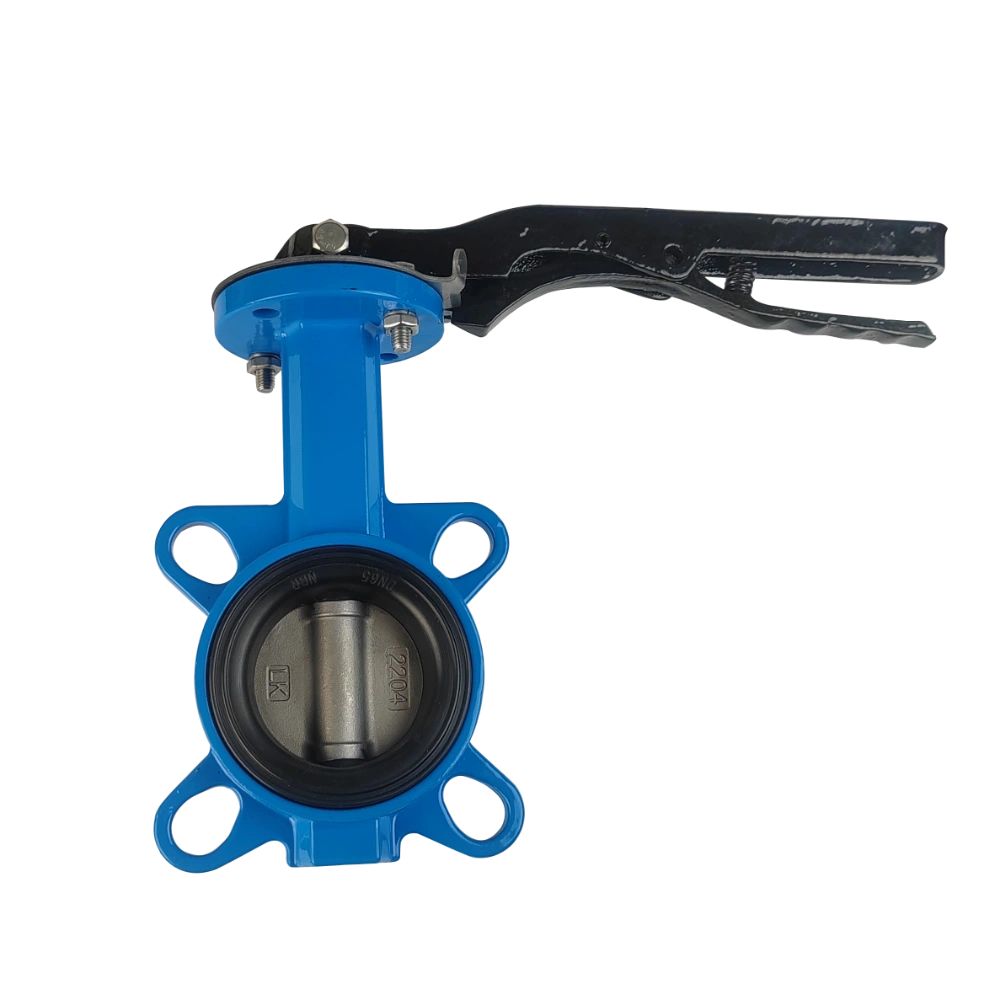
First of all, knowing valve size conversions is important for proper installation. The wrong valve size makes installation difficult. For example, if your pipe needs a DN50 (NPS 2) butterfly valve but you choose a different nominal size, the valve will not connect properly. Now you will need extra adapters, or the valve may not fit the existing pipe at all. All this wastes time and increases installation costs.
-
Flow Issue
Secondly, the size of a valve also affects fluid movement through the pipe. If you don’t know the size conversion and select a valve that’s too small, it will have a smaller opening. This small opening definitely restricts the flow, making it harder for water to pass through. As a result, the pressure loss in a system increases. Similarly, if you choose a valve that is too large, it will not provide the desired flow control, which causes problems in many applications.
-
Compatibility Problems
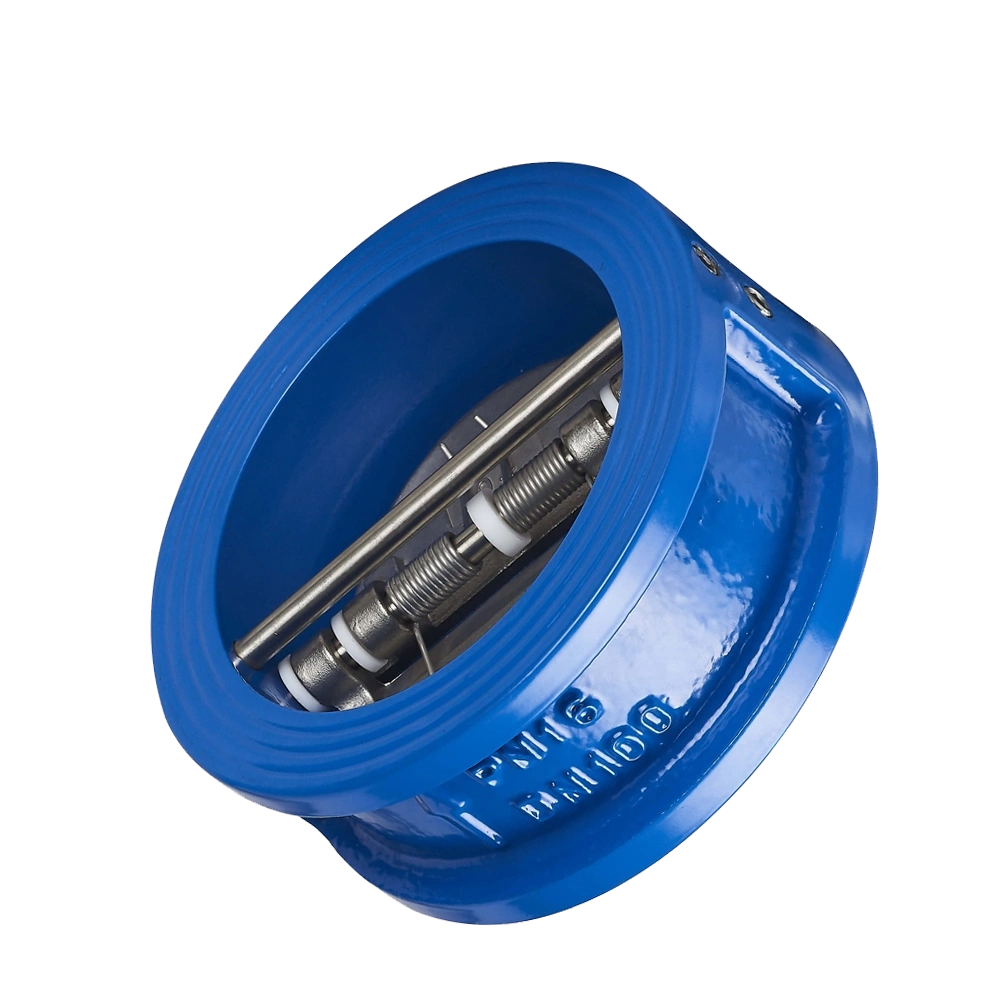
Lastly, valve size conversion is also crucial for compatibility. Compatibility refers to the fact that the valve and pipe must work together and connect properly. When a valve and pipe use different size systems, you first need to convert the size. For example, an existing check valve is DN50, while a supplier lists the replacement valve as NPS 2. Without conversion, you will think they are different sizes. The conversion tells you that DN50 and NPS 2 are corresponding nominal sizes. However, this is only the first compatibility check. After you know that DN50 matches NPS 2, you still need to check whether the valve’s actual connection matches the pipe.
Frequently Asked Questions
Is NPS-to-DN conversion also possible?
Yes. NPS can also be converted to DN. For this, you also have to use a standard conversion chart. For example, NPS 2 commonly corresponds to DN50, while NPS 4 corresponds to DN100.
Does DN tell me the pipe’s inside diameter?
No. DN is a nominal size, not an inside diameter. The actual inside diameter varies with the pipe’s wall thickness, schedule, and standards.
Can I select a valve based only on DN or NPS?
No, you cannot select a valve using only DN and NPS! DN or NPS are useful for determining the nominal valve size, but they are not enough on their own. You must also check the connection type, pressure rating, flange standard, and temperature.
How can you choose the right valve size?
To choose the right valve size, first match the valve’s DN or NPS size with the pipe’s nominal size. Then check the required flow, pressure, temperature, connection type, and fluid. A valve is suitable only when its size and other specifications match the piping system.
Conclusion
DN and NPS valve sizes might seem confusing at first when you start looking for a replacement or new valve. However, these are very simple terms that describe two different ways to name pipe and valve sizes. A DN-to-NPS chart helps you see which sizes commonly match. To make things easier for you, I have discussed the conversion chart and its importance in this guide. However, an important point is that DN and NPS are nominal sizes. They are not exact measurements of the pipe. That’s why you should never divide a DN number by 25.4 and call it the NPS size. A standard conversion chart is a better and safer way to choose the right size.