
1. Basic Definition (Brief Explanation)
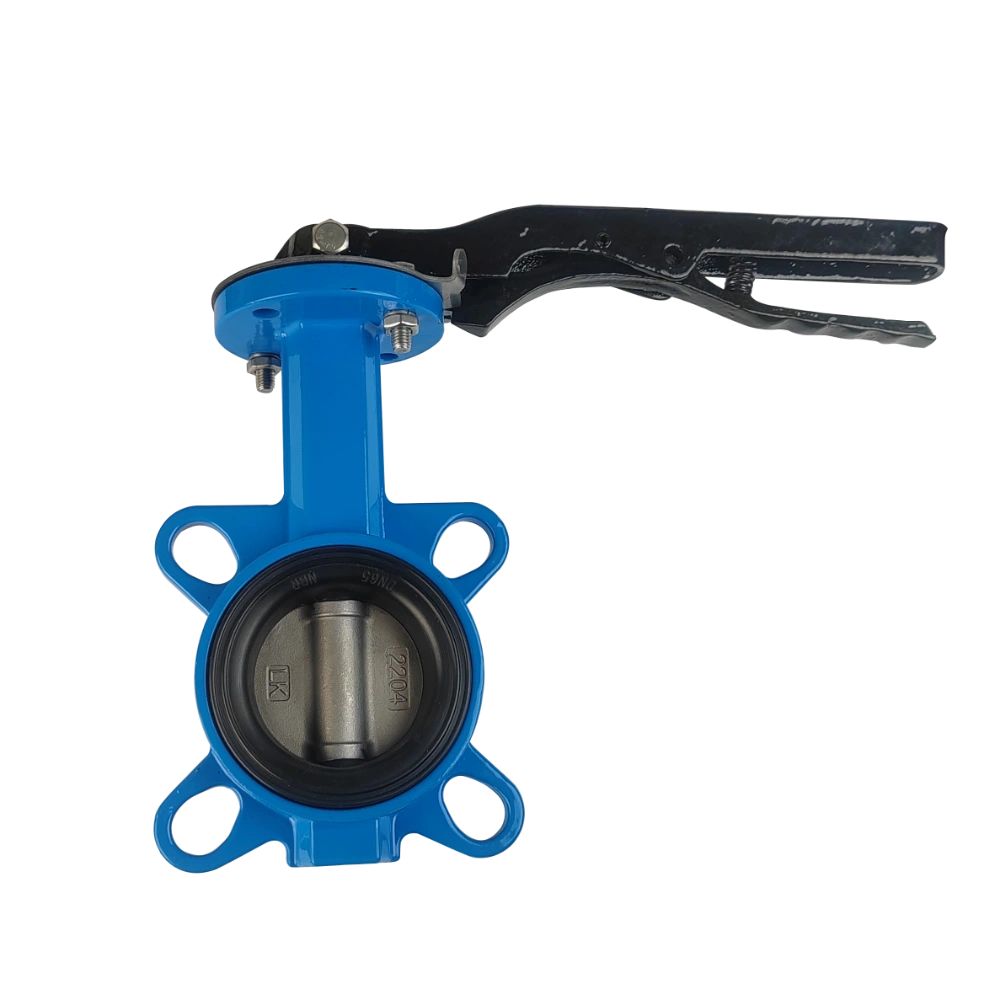
A double flanged short pattern butterfly valve is a type of butterfly valve with flanges at both ends and a structural length (face-to-face dimension) shorter than that of a long-pattern butterfly valve.
Unlike wafer or lug-type butterfly valves, double-flange butterfly valves have complete structural strength and can independently withstand pipe loads without relying on the pipe or bolts to maintain valve alignment and stability.
Double-flange butterfly valves come in three structural lengths: long pattern, short pattern, and the shortest pattern (U-type).
1.1 Long pattern FTF Standard
(It’s not used very often.)
Long pattern butterfly valve conforms to:
ISO 5752 Series 14
EN 558 Series 14
| DN | 10 | 15 | 20 | 25 | 32 | 40 | 50 | 65 | 80 | 100 | 125 | 150 | 200 | 250 | 300 |
|---|---|---|---|---|---|---|---|---|---|---|---|---|---|---|---|
| FTF | 115 | 115 | 120 | 125 | 130 | 140 | 150 | 170 | 180 | 190 | 200 | 210 | 230 | 250 | 270 |
| DN | 350 | 400 | 450 | 500 | 550 | 600 | 700 | 800 | 900 | 1000 | 1200 | 1400 | 1600 | 1800 | 2000 |
| FTF | 290 | 310 | 330 | 350 | 370 | 390 | 430 | 470 | 510 | 550 | 630 | 710 | 790 | 870 | 950 |
1.2 Short pattern FTF Standard
Short pattern butterfly valve conforms to:
ISO 5752 Series 13
EN 558 Series 13

| SIZE | L | øD1 | f | H1 | H2 | ø2 | ø3 | n-ød1 | T*T | H | øF | K | KEY |
|---|---|---|---|---|---|---|---|---|---|---|---|---|---|
| DN50 | 108 | 52.6 | 3 | 139 | 80 | 70 | 90 | 4-10 | 11 | 30 | —— | —— | —— |
| DN65 | 112 | 64.3 | 3 | 146 | 89 | 70 | 90 | 4-10 | 11 | 30 | —— | —— | —— |
| DN80 | 114 | 78.8 | 3 | 150 | 95 | 70 | 90 | 4-10 | 11 | 30 | —— | —— | —— |
| DN100 | 127 | 104.0 | 3 | 177 | 114 | 70 | 90 | 4-10 | 11 | 30 | —— | —— | —— |
| DN125 | 140 | 123.3 | 3 | 179 | 125 | 70 | 90 | 4-10 | 14 | 30 | —— | —— | —— |
| DN150 | 140 | 155.7 | 3 | 201 | 139 | 70 | 90 | 4-10 | 14 | 30 | —— | —— | —— |
| DN200 | 152 | 202.4 | 3 | 230 | 170 | 102 | 125 | 4-12 | 17 | 40 | —— | —— | —— |
| DN250 | 165 | 250.4 | 3 | 267 | 198 | 102 | 125 | 4-12 | 22 | 40 | —— | —— | —— |
| DN300 | 178 | 301.5 | 4 | 298 | 223 | 102 | 125 | 4-12 | 22 | 45 | —— | —— | —— |
| DN350 | 190 | 333.3 | 4 | 310 | 254 | 125 | 150 | 4-14 | 22 | 45 | —— | —— | —— |
| DN400 | 216 | 389.6 | 4 | 340 | 278 | 140 | 175 | 4-18 | 27 | 50 | —— | —— | —— |
| DN450 | 222 | 440.5 | 4 | 375 | 315 | 140 | 175 | 4-18 | 27 | 50 | —— | —— | —— |
| DN500 | 229 | 491.6 | 4 | 430 | 348 | 140 | 175 | 4-18 | 36 | 50 | —— | —— | —— |
| DN600 | 267 | 592.5 | 5 | 500 | 410 | 165 | 210 | 4-22 | 36 | 60 | —— | —— | —— |
| DN700 | 292 | 695.0 | 5 | 560 | 480 | 254 | 300 | 8-18 | —— | 80 | 63.35 | 72.15 | 18*70 |
| DN800 | 318 | 794.7 | 5 | 620 | 530 | 254 | 300 | 8-18 | —— | 80 | 63.35 | 72.15 | 18*70 |
| DN900 | 330 | 864.7 | 5 | 685 | 605 | 254 | 300 | 8-18 | —— | 100 | 75 | 84.80 | 20﹡90 |
| DN1000 | 410 | 965.0 | 5 | 735 | 670 | 254 | 300 | 8-18 | —— | 100 | 85 | 95.80 | 22﹡90 |
| DN1200 | 470 | 1160.6 | 5 | 917 | 780 | 298 | 350 | 8-22 | —— | 100 | 105 | 117.80 | 28*90 |
1.3 U-type FTF Standard
the shortest pattern U ytpe butterfly valve conforms to:
ISO 5752 Series 20
EN 558 Series 20
BS 5155-4
API 608-1
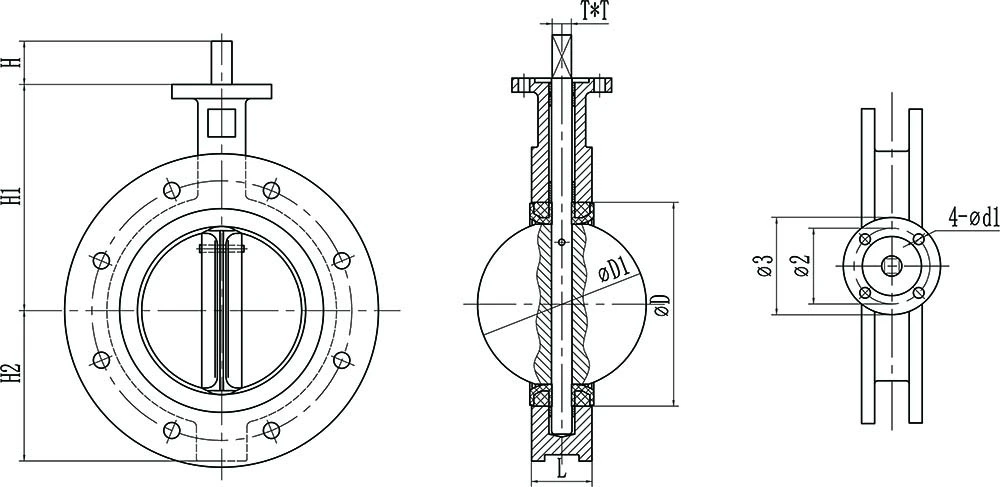
| SIZE | øD | øD1 | L | H | H1 | H2 | ∅2 | ø3 | 4-ødl | T*T |
|---|---|---|---|---|---|---|---|---|---|---|
| DN100 | 135 | 104.4 | 52.0 | 30 | 200 | 114 | 70 | 90 | 4-10 | 11*11 |
| DN125 | 159 | 123.3 | 56.0 | 30 | 213 | 127 | 70 | 90 | 4-10 | 14*14 |
| DN150 | 188.4 | 155.7 | 56.0 | 30 | 226 | 139 | 70 | 90 | 4-10 | 14*14 |
| DN200 | 238.2 | 202.5 | 60.0 | 40 | 260 | 175 | 102 | 125 | 4-12 | 17*17 |
| DN250 | 292.4 | 250.5 | 68.0 | 40 | 292 | 203 | 102 | 125 | 4-12 | 22*22 |
| DN300 | 344.2 | 301.6 | 78.0 | 45 | 337 | 242 | 102 | 125 | 4-12 | 22*22 |
| DN350 | 375.2 | 333.4 | 78.0 | 45 | 368 | 267 | 102 | 125 | 4-12 | 22*22 |
| DN400 | 439.5 | 389.6 | 102.0 | 52 | 400 | 309 | 140 | 175 | 4-18 | 27*27 |
| DN450 | 490.5 | 440.5 | 114.0 | 52 | 422 | 328 | 140 | 175 | 4-18 | 27*27 |
| DN500 | 535.4 | 491.6 | 127.0 | 65 | 480 | 360 | 140 | 175 | 4-18 | 36*36 |
| DN600 | 654.3 | 592.5 | 154 | 70 | 562 | 456 | 165 | 210 | 4-22 | 36*36 |
2. The Meaning of “Short Pattern” in Practical Engineering.
The structure is not just about saving space; although the most prominent advantage of the short pattern is saving installation space, from an engineering perspective, its core value lies in pipeline stress control.
A shorter valve body means:
Smaller bending moments generated by the pipeline
Lower risk of flange deformation
More stable in systems with pressure fluctuations or frequent start-stop cycles
3. U-type Butterfly Valve vs. Wafer Butterfly Valve vs. Lug Butterfly Valve?

From product catalogs, wafer butterfly valves are cheaper and have a simpler structure.
However, from the perspective of engineering safety and future maintenance, the double-flange U-type butterfly valve is often a more reasonable choice.
But if you want to find a balance, you can choose a lug-type butterfly valve.
Double-flange butterfly valves have an often overlooked advantage: structural independence.
They can be installed at the end of a pipeline.
They can be used as a temporary blind flange during maintenance.
They can maintain their stability when the downstream pipeline is removed.
Wafer and some lug-type butterfly valves, in most cases, do not have the above capabilities and require additional support or process measures. This is why double-flanged butterfly valves are widely used in the following applications:
Water treatment plants
Seawater desalination systems
Industrial cooling water systems
4. Impact of Short Structure on Fluid Characteristics
The flow field disturbance area created by double flanged short pattern butterfly valve is more concentrated.
The practical engineering implications of this are:
Slight increase in local turbulence
But the overall pressure loss is not necessarily greater
5. Common Selection Errors from Real Projects
Selecting wafer-type butterfly valves when DN ≥ 600 → prone to alignment problems and flange leakage
Ignoring face-to-face standards when replacing valves → leading to the need for pipe cutting and modification on site
Blindly increasing the pressure rating → increased torque, higher actuator costs, and no actual benefit
6. Final Conclusion from an Engineering Perspective
The double flanged short pattern butterfly valve is not just a “compact valve,” but an engineering solution that excels in structural independence, ease of installation, and system stability.