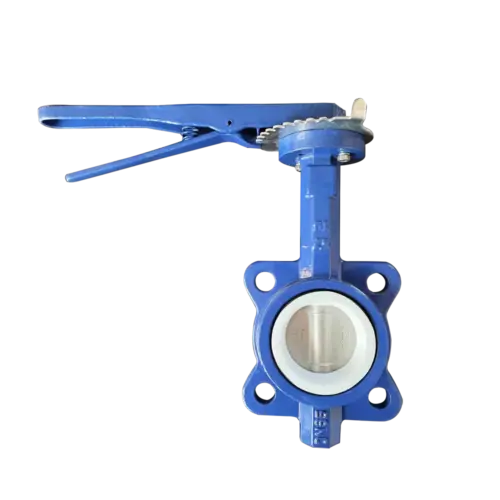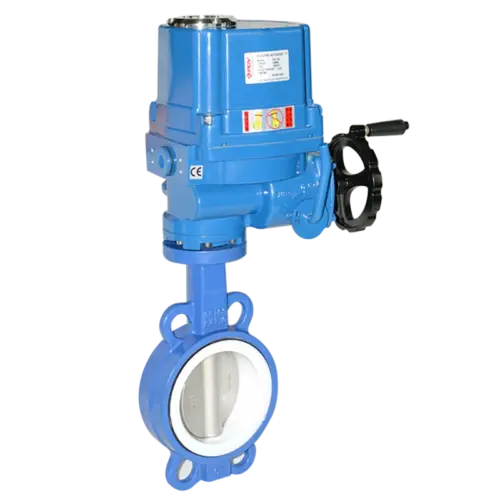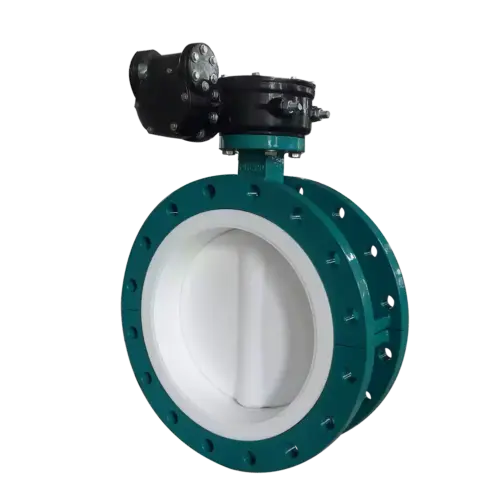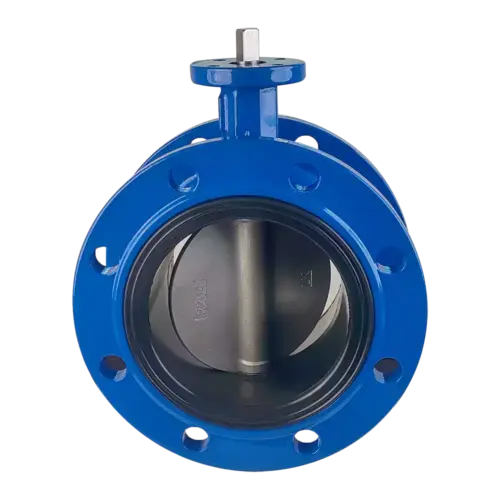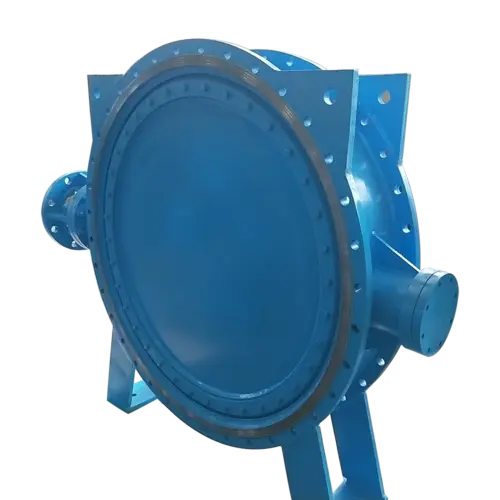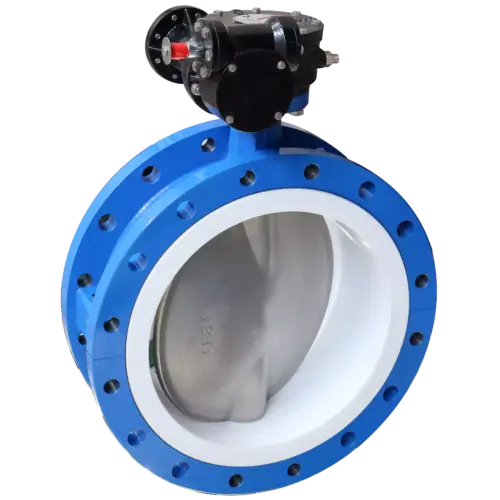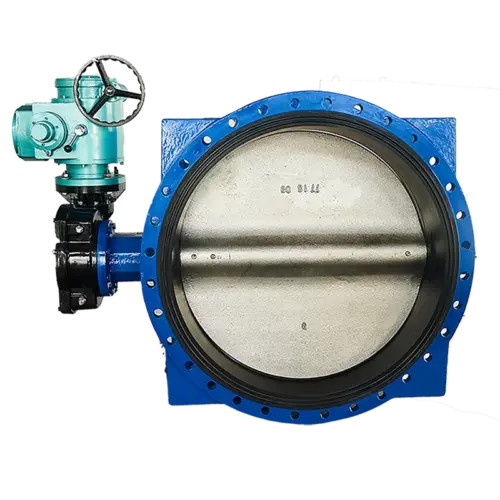
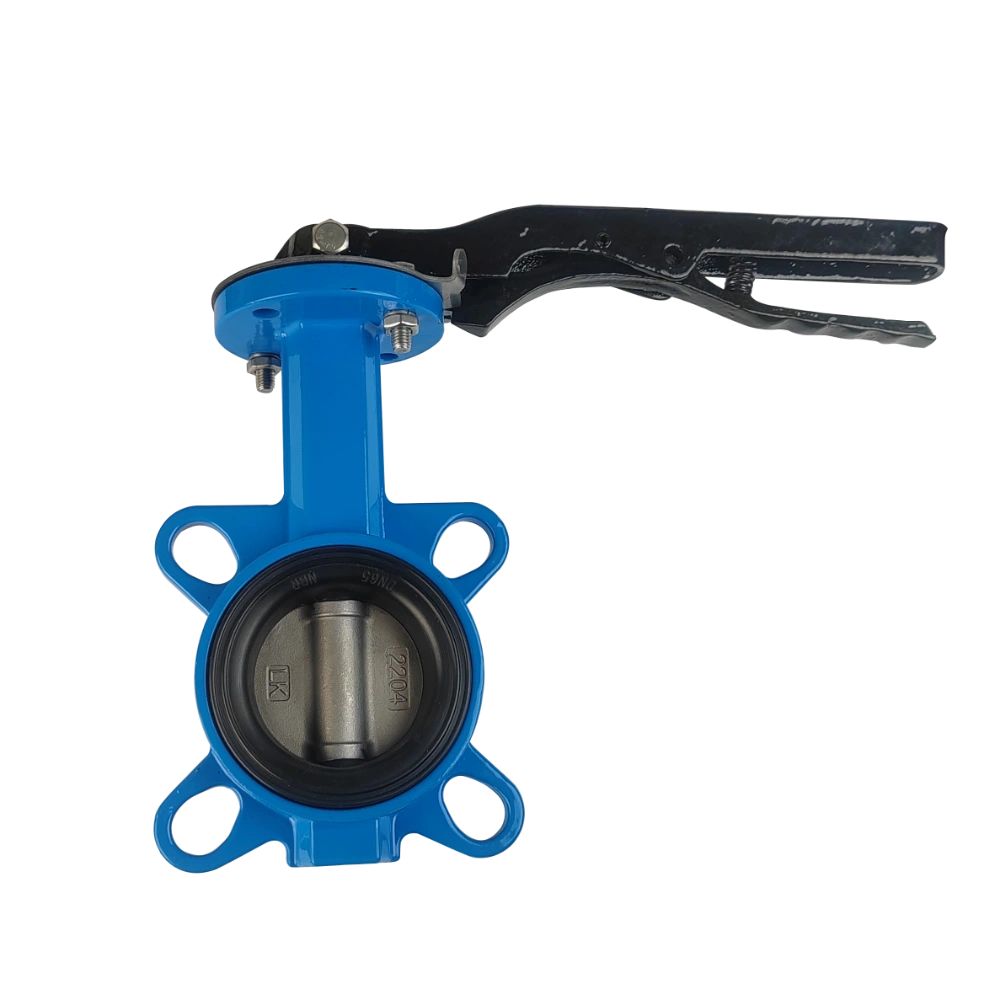
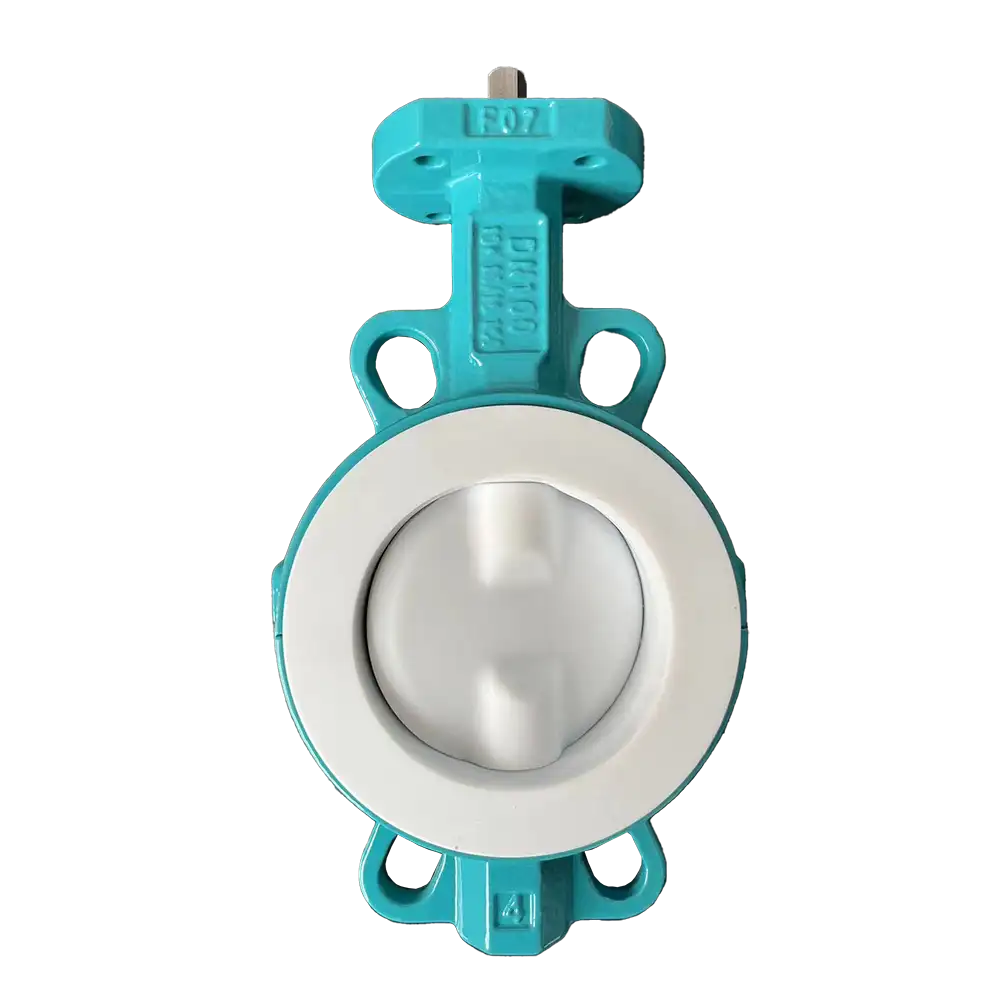
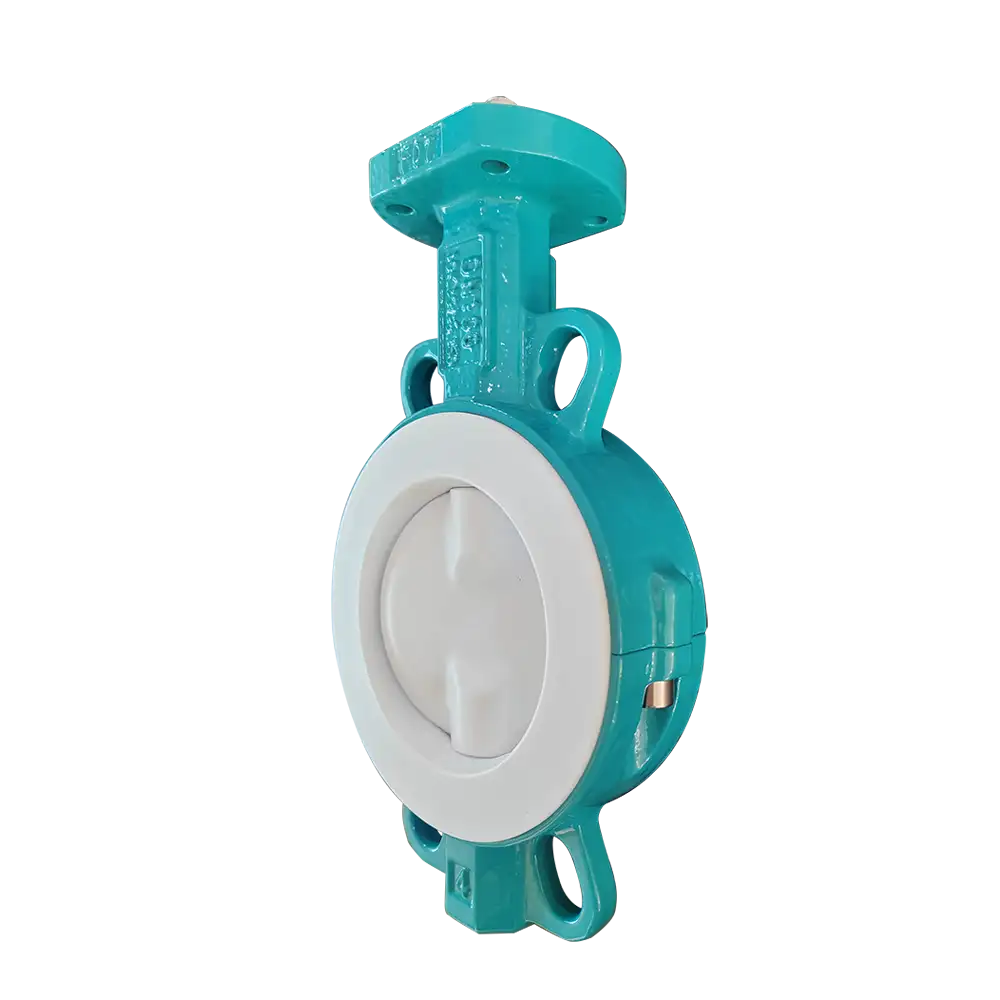
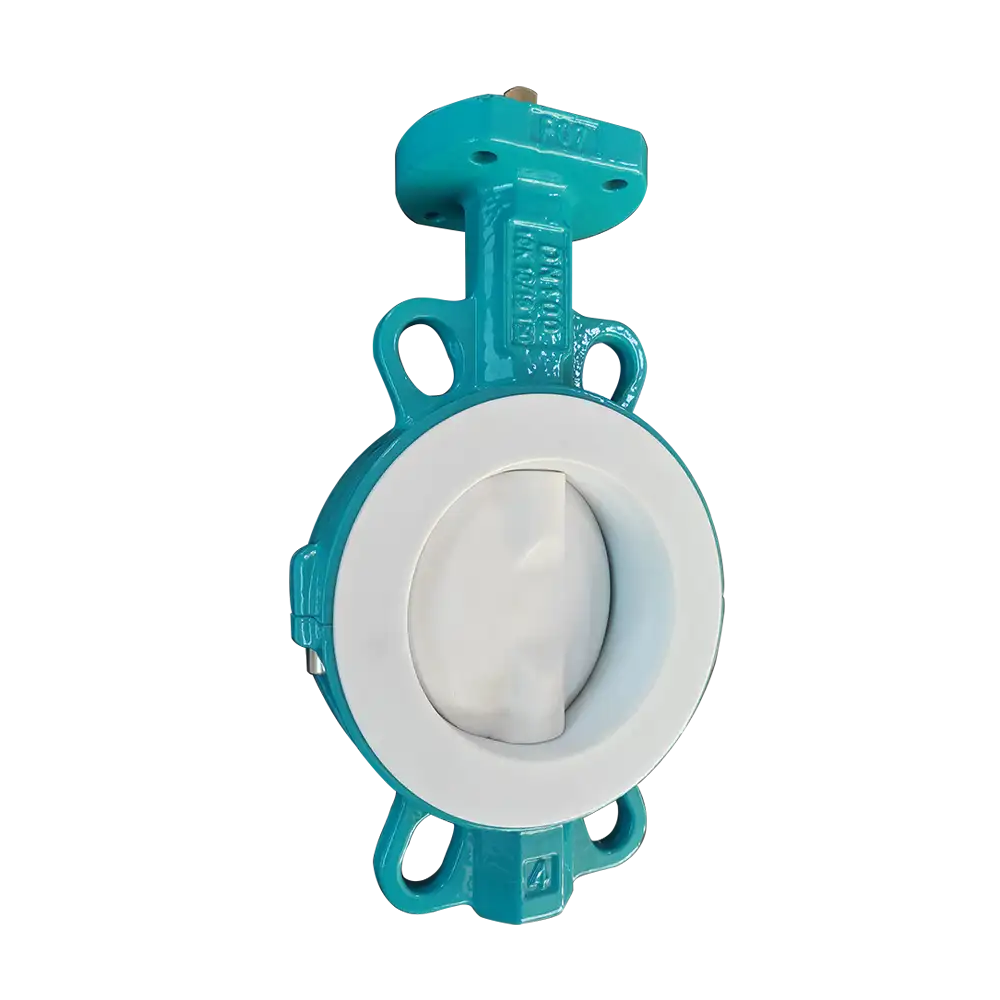
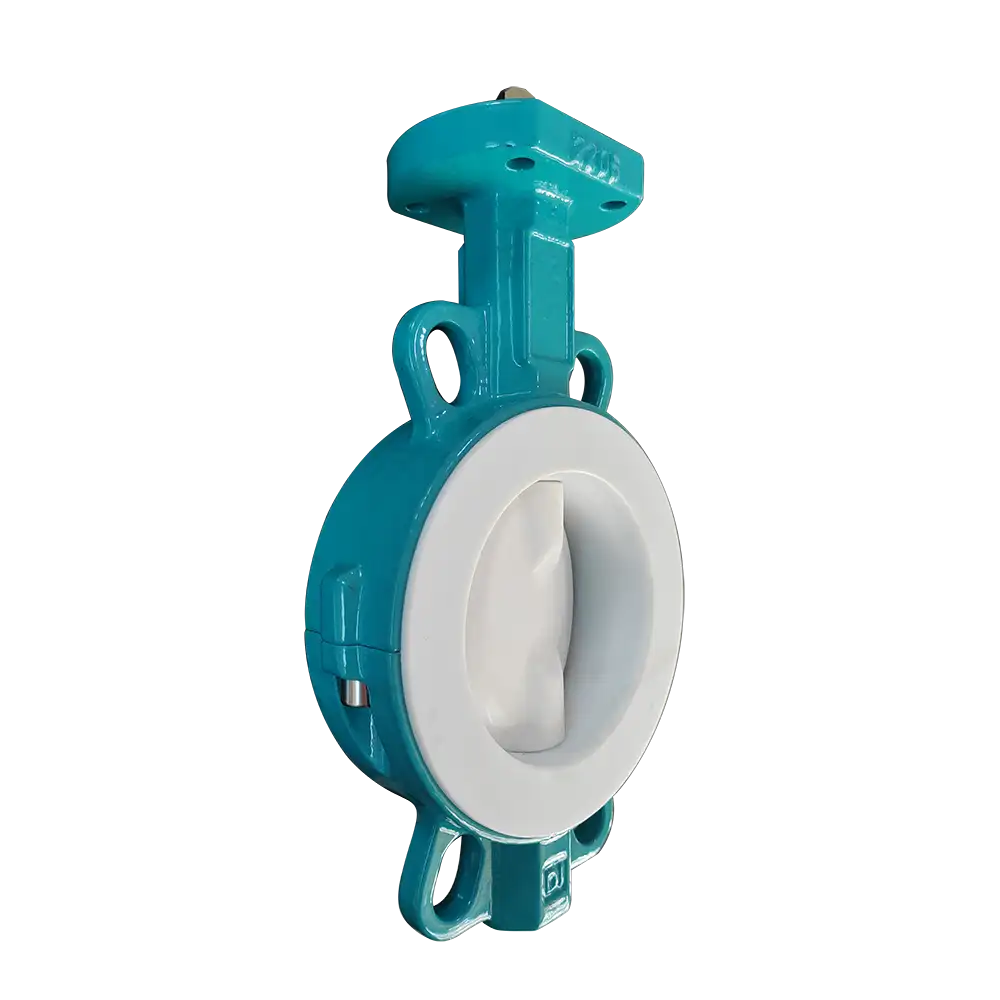
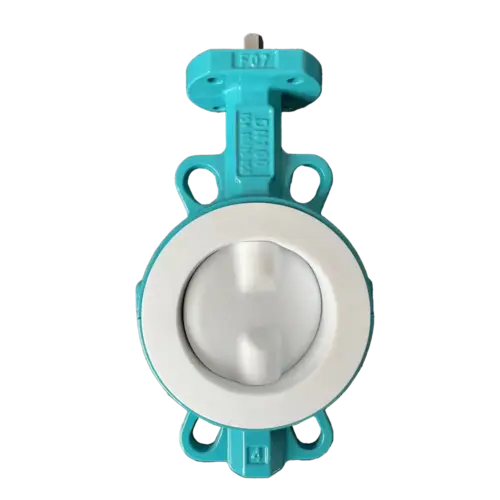
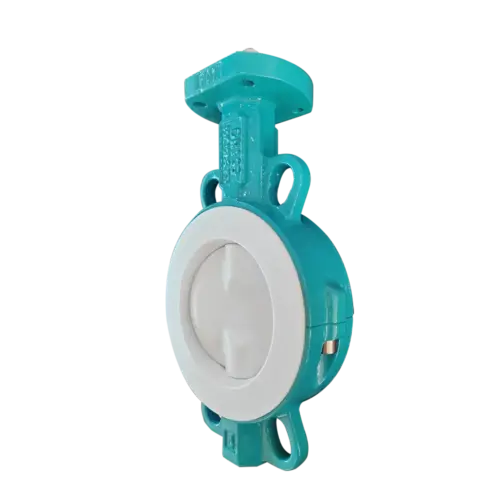
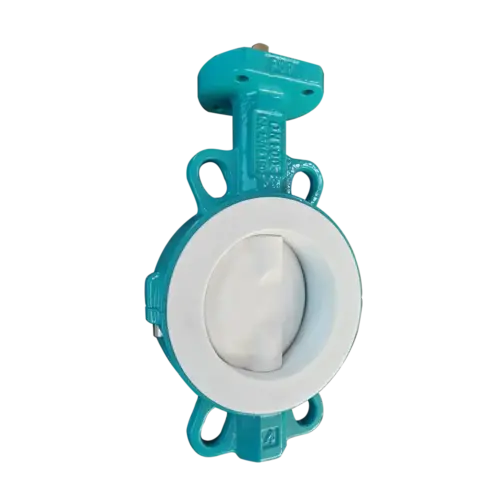
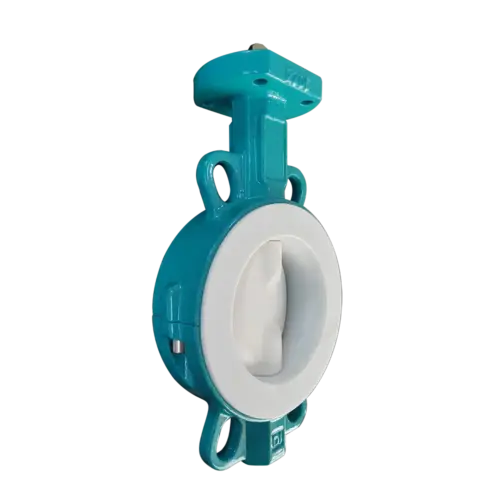
Features of PTFE Fully Lined Butterfly Valve
Compare to the EPDM Seat butterfly valve, the PTFE lined butterfly valve has some more advantages:
- Corrosion resistance: PTFE fully lined butterfly valve has excellent corrosion resistance to various corrosive liquids, including strong acids, strong alkalis, etc.
- Temperature Range: PTFE fully lined butterfly valve can withstand higher temperatures than EPDM.
- Versatility: PTFE is also called “Plastic King” in China, so it is suitable for different types of media, whether it is corrosive or non-corrosive fluid.
- Low Friction: PTFE has a low coefficient of friction, reducing wear on valve components, as a result, it can increases service life and reduces maintenance.
- Universal Sealing Material: PTFE is a universal sealing material, as it is compatible with various flanges and gaskets.
- Unlike elastomeric seats, PTFE is less flexible or elastic. This can reduce its sealing performance in surge or vibration applications because the seat may not easily return to its original shape.
- PTFE fully lined butterfly valves are generally more expensive than other seat materials (such as EPDM or NBR), which can increase the overall cost of the valve.
- PTFE seats are generally available up to PN16. Above this pressure, we do not recommend the use of PTFE seats.
- PTFE butterfly valve torque is 10% higher than that of butterfly valves with EPDM seats, so this may have an impact on the actuator.
Basic Info of PTFE Fully Lined Butterfly Valve
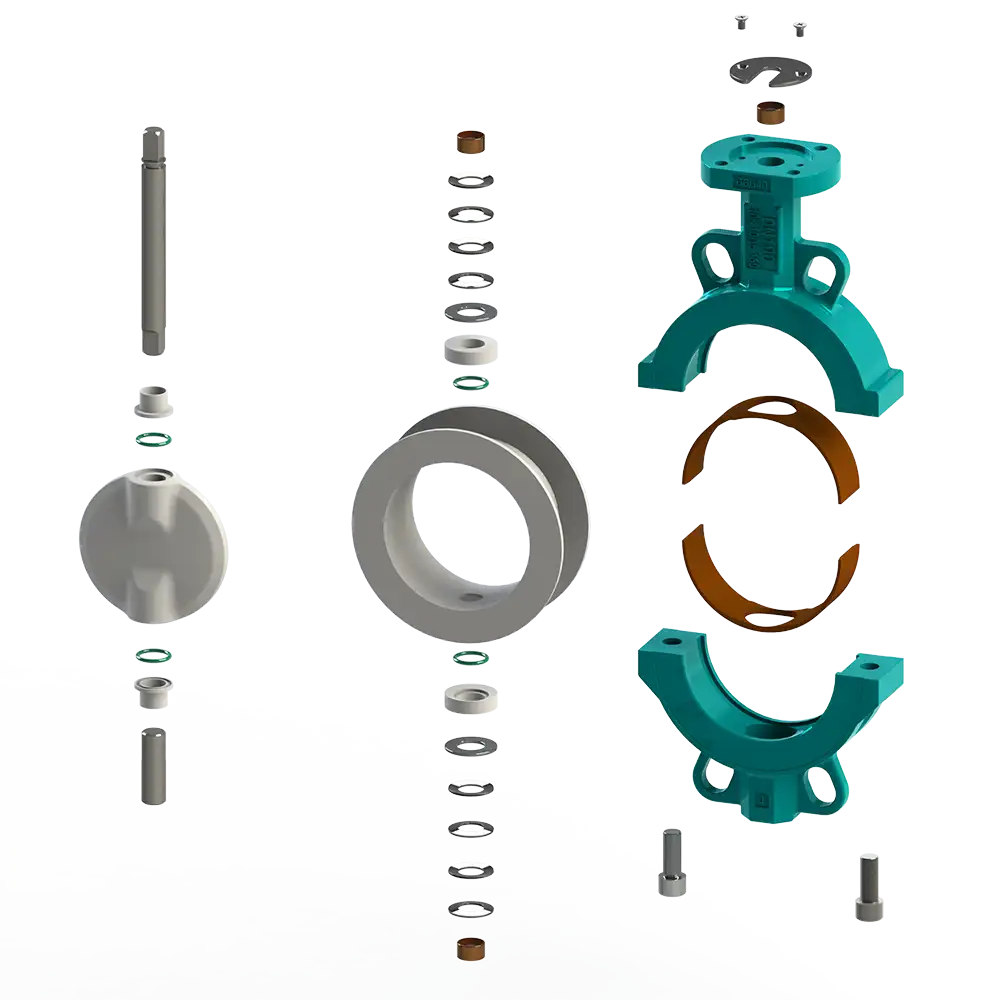
Material
| Part Name | Material/Method |
| Body | Ductile Iron, Casting Iron, WCB, LCB/LCC, Stainless Steel, Duplex Stainless Steel, Aluminium Bronze |
| Disc | PTFE Fully Lined Ductile Iron, WCB, LCB/LCC, Stainless Steel, Duplex Stainless Steel, Aluminium Bronze |
| Seat | Rubber(EPDM/NBR/VITON), Nature Rubber, Silicon Rubber, PU, HNBR, Hypalon |
| Stem | 304, 316, 420(2Cr13), 431, 1.4462, 17-4PH, Monel |
| Actuator | Handlever, Worm Gear, Electric, Pneumatic |
Technical Parameters
| ITEM | Standard |
| Design | EN593 | API609 |
| Face to Face | EN558 | ISO5752 | API608 | BS5155-4 |
| Top Flange | ISO5211 |
| Flange Drilling | PN6 | PN10 | PN16 | ASME B16.5 CL150 | JIS 10K |
| Pressure Rating | PN6 | PN10 | PN16 |
| Tightness Test | ISO5208 | API598 | EN12266-1 |
Paraments of PTFE Fully Lined Butterfly Valve
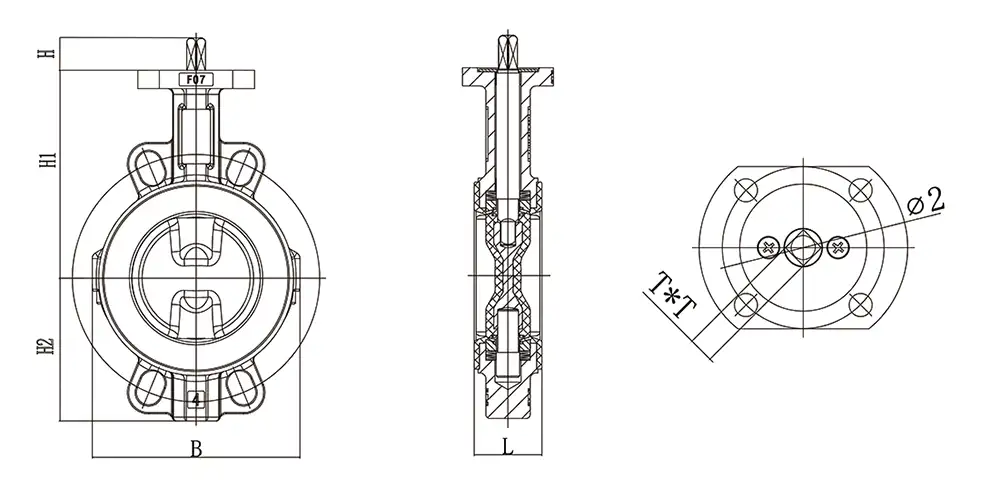
| SIZE | L | H1 | H2 | B | ø2 | T*T | H |
| DN50 | 43 | 134 | 68 | 100 | F05 | 9*9 | 25 |
| DN65 | 46 | 145 | 78 | 120 | F05 | 9*9 | 25 |
| DN80 | 46 | 150 | 80 | 140 | F05 | 9*9 | 25 |
| DN100 | 52 | 160 | 110 | 160 | F07 | 11*11 | 25 |
| DN125 | 56 | 178 | 130 | 190 | F07 | 14*14 | 25 |
| DN150 | 56 | 197 | 140 | 220 | F07 | 14*14 | 25 |
| DN200 | 60 | 239 | 175 | 277 | F10 | 17*17 | 30 |
| DN250 | 68 | 278 | 215 | 330 | F10 | 22*22 | 30 |
| DN300 | 78 | 315 | 250 | 380 | F12 | 22*22 | 30 |
| DN350 | 78 | 355 | 255 | 440 | F12 | 22*22 | 30 |
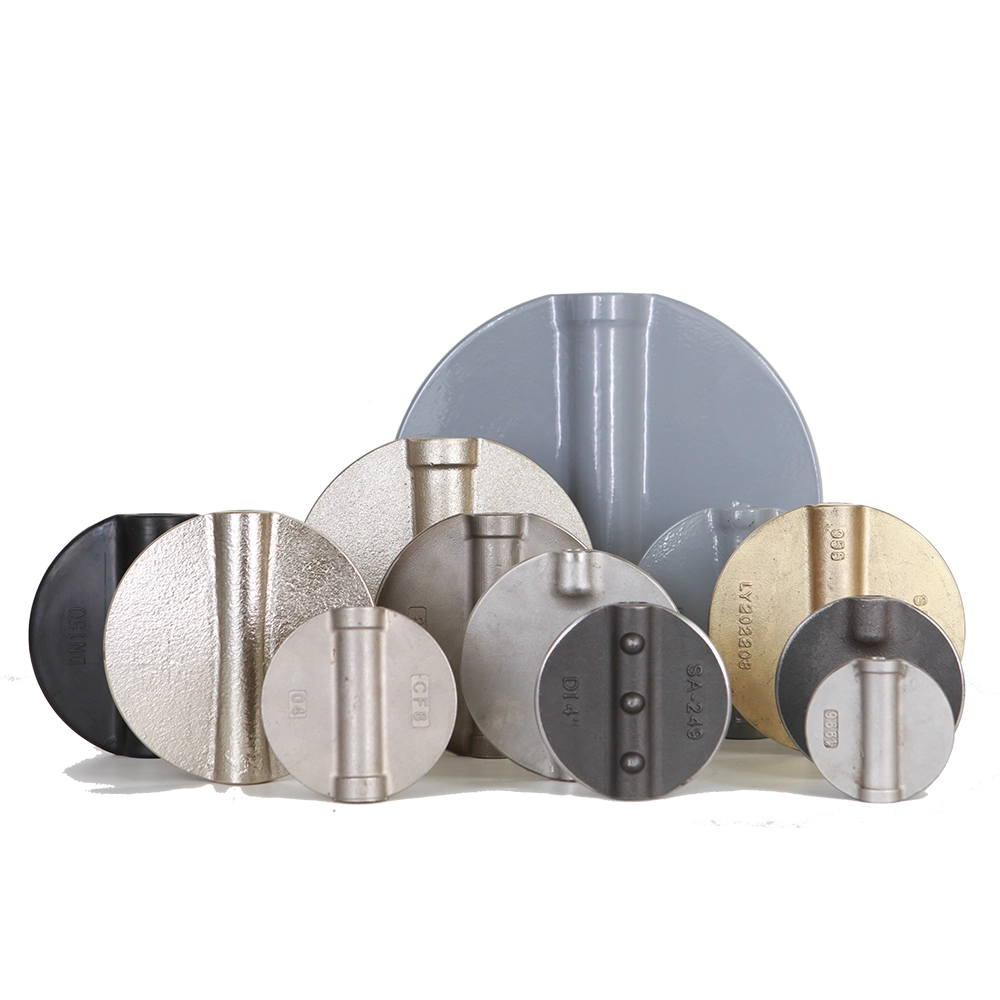
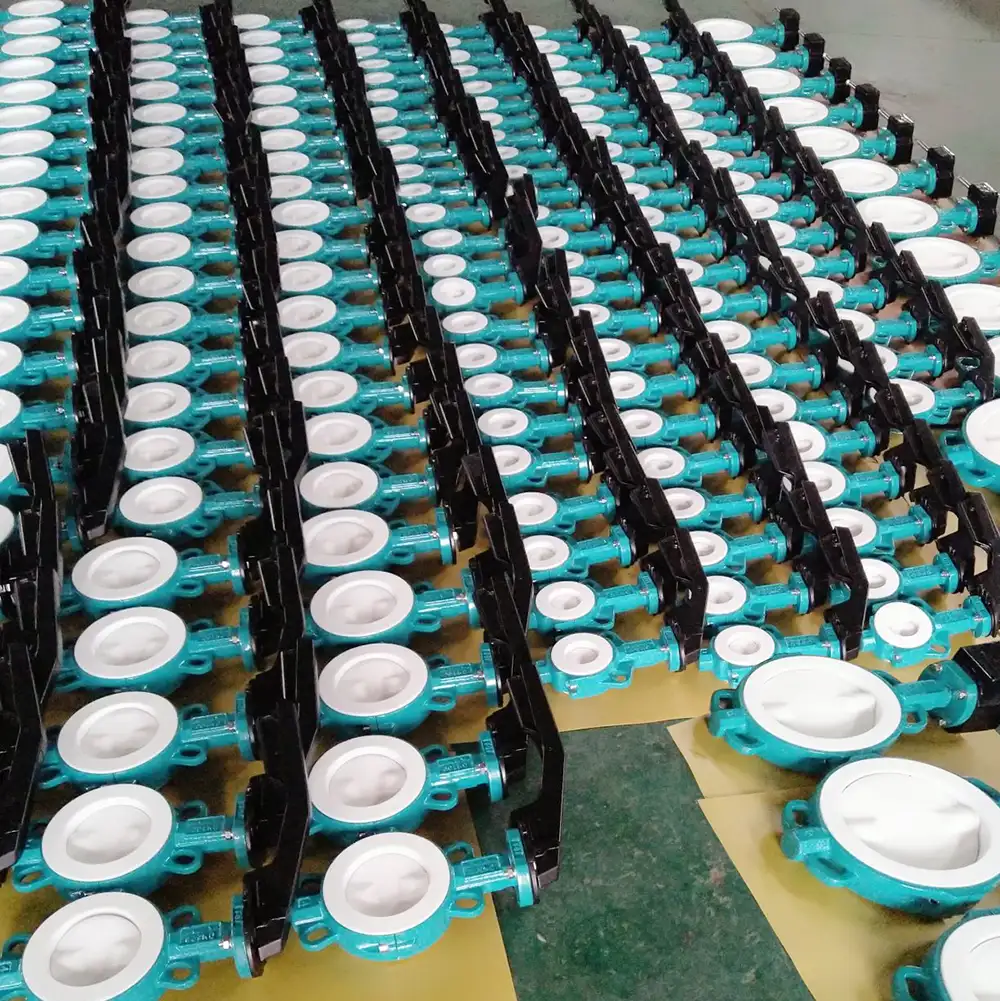
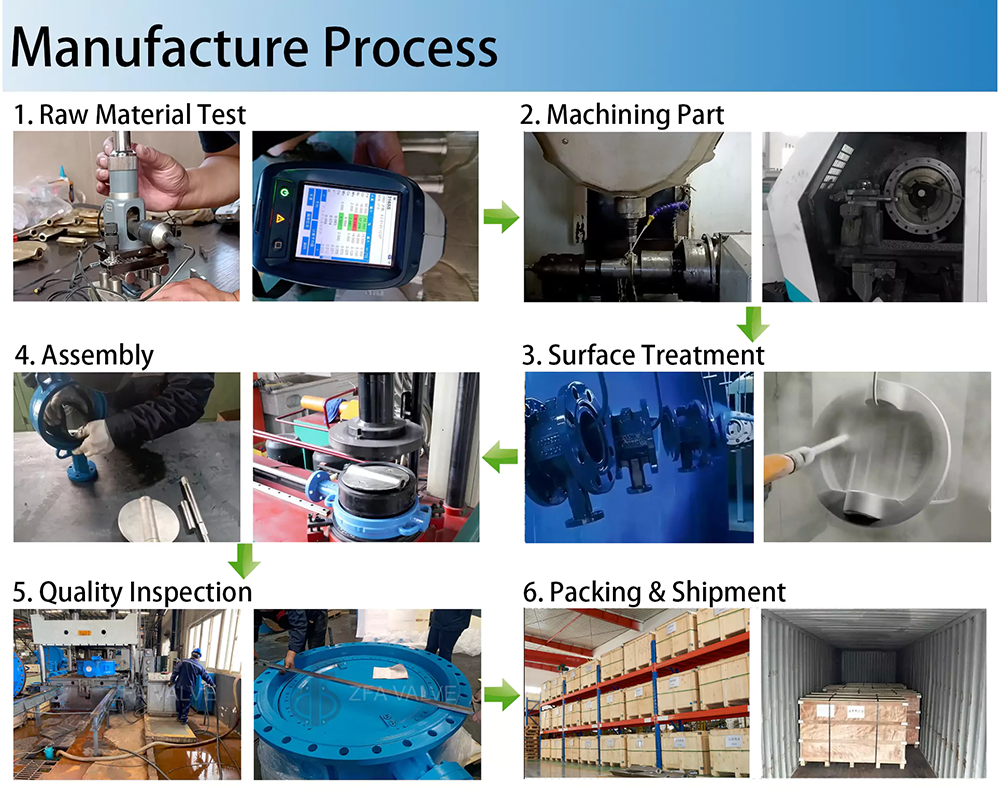
Manufacture Process of Butterfly Valve
Typical Application of PTFE Disc Butterfly Valve
- Chemical Processing – Sulfuric acid, hydrochloric acid, nitric acid, caustic soda, organic solvents.
- Water Treatment – Sodium hypochlorite, ferric chloride, chemical dosing systems.
- Chlor-Alkali – Chlorine, brine, sodium hydroxide and other corrosive media.
- Pharmaceutical – High-purity chemicals, purified water, CIP/SIP systems.
- Pulp & Paper – Bleaching chemicals, chlorine dioxide, alkaline solutions.
- Electroplating – Acid pickling solutions, chromic acid, plating chemicals.
- Mining – Acid leaching solutions and corrosive process chemicals.
- Semiconductor – High-purity acids, alkalis and ultrapure chemical delivery systems.
Certificates of China Butterfly Valve Manufacturer-Zfa
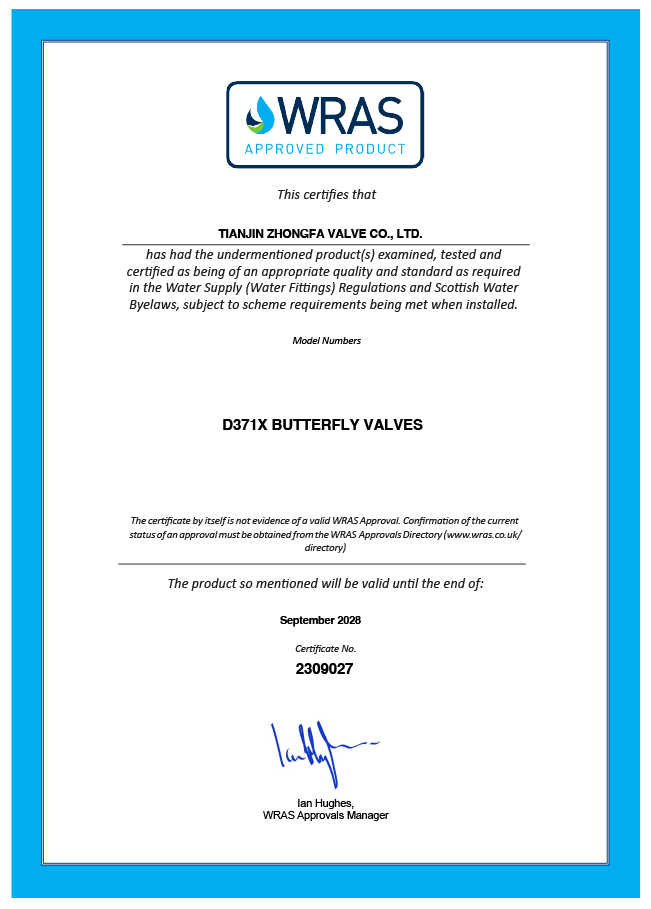
WRAS
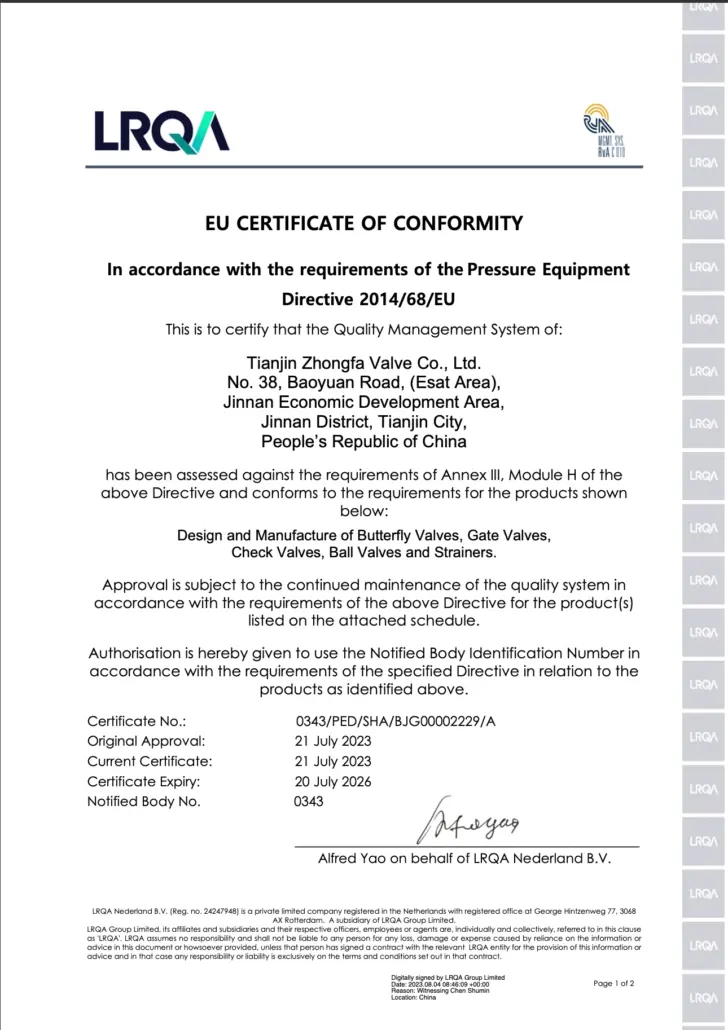
CE
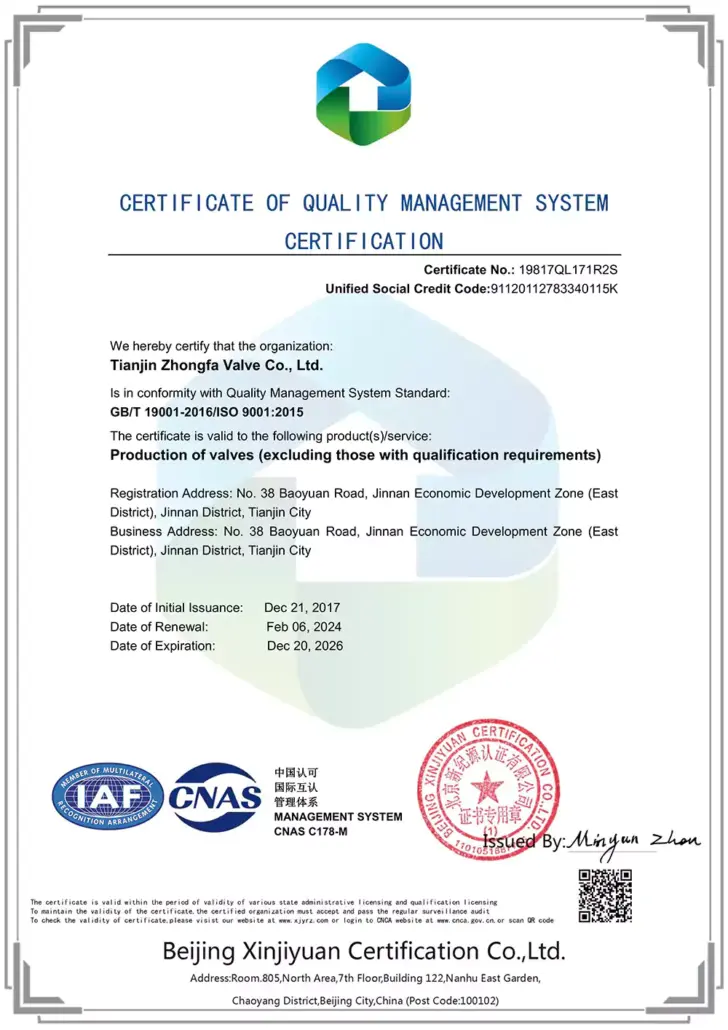
ISO 9001
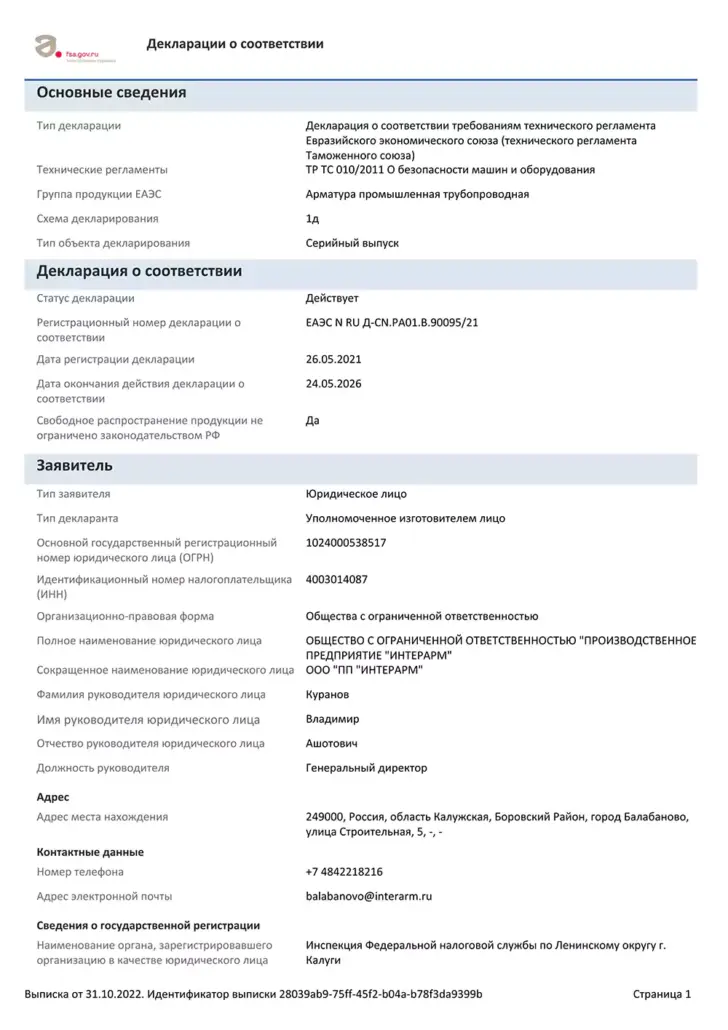
EAC Russia
FAQ of Split Body PTFE Butterfly Valve
1. What is a fully lined butterfly valve?
This split ptfe butterfly valve differs from conventional fully lined butterfly valves. While conventional valves feature a valve body interior fully lined with PTFE, the split-design version utilizes a PTFE seat that replaces the standard vulcanized lining within the flow path. Both designs effectively isolate metal components from the process medium; however, the PTFE seat design allows for seat replacement.
2. Why choose a PTFE fully lined butterfly valve rather than NBR?
NBR is primarily used for oils, fuels, and petroleum-based media. It is unsuitable for highly corrosive chemicals such as strong acids, oxidizing agents, or chlorine-containing media. Chemical attack can significantly shorten its service life.
3. How does a fully lined butterfly valve work?
The valve opens or closes by rotating the disc 90 degrees (a quarter-turn). The PTFE lining isolates the medium from the metal valve body, providing corrosion protection for the metal components.
4. Why is PN16 the max recommended pressure for PTFE-lined butterfly valves?
The PTFE disc consists of an internal metal core and an outer PTFE layer; the properties of PTFE mean the disc cannot withstand higher pressures.
5. What is the maximum operating temperature?
The operating temperature range for standard PTFE-lined butterfly valves is typically -10°C to 180°C, depending on the valve design and operating conditions.
6. Are there any installation requirements?
Ensure proper flange alignment during installation to avoid excessive piping stress. Since PTFE has limited elasticity, recommended flange gaskets should be used, and it must be ensured that the valve disc rotates freely before tightening the bolts.
7. Can PTFE butterfly valves be repaired?
Small components such as the sealing seat, PTFE disc, or actuator can usually be replaced. However, if the valve body is damaged, factory repair or valve replacement is typically required.
8. Which type of actuator is recommended?
Manual, worm gear, pneumatic, and electric actuators are available. Pneumatic or electric actuators are recommended for automated process control.
9. What are the common issues with PTFE butterfly valves?
Common problems include: liner damage due to improper installation, seat wear after prolonged use, leakage caused by incorrect selection, and actuator failure due to improper maintenance.